2026 Best Spray Nozzle Types for Every Need and Purpose?
In the world of agriculture and manufacturing, the right spray nozzle can significantly impact efficiency and effectiveness. Research shows that the global spray nozzle market is expected to grow at a rate of 6.5% annually, reaching over $3.2 billion by 2026. This growth highlights the increasing importance of selecting the correct nozzle for various applications.
According to industry expert Dr. Emily Stroud, "Choosing the right spray nozzle is crucial for optimizing performance and reducing waste." This statement emphasizes the critical role that spray nozzles play in improving application efficiency across different sectors. However, many users still face challenges in understanding the nuances of nozzle types.
It is essential to assess specific needs carefully. Different tasks often require different spray patterns and droplet sizes. Ignoring these factors could lead to suboptimal results. As we explore the best spray nozzle types for 2026, it’s vital to consider how both technology and user knowledge can evolve in this growing market.
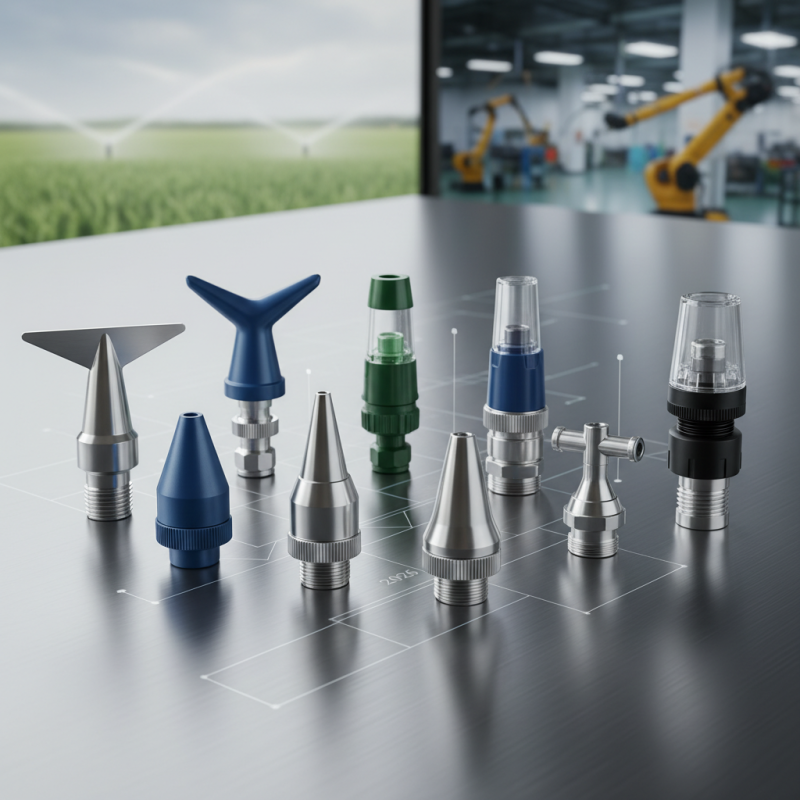
Types of Spray Nozzles: An Overview of Common Varieties
Spray nozzles are essential tools in various industries, from agriculture to construction. They can significantly improve efficiency and outcomes. Common types fall into categories based on their design and purpose. For instance, flat fan nozzles deliver a uniform spray pattern ideal for herbicide application. Studies suggest that using these nozzles can reduce chemical usage by up to 30% while maintaining effectiveness.
Another type, the hollow cone nozzle, produces a hollow spray pattern. This is beneficial for surface coverage and can effectively coat irregular surfaces. Industry reports indicate that hollow cone nozzles increase liquid surface coverage by over 25%. However, they might also lead to over-spray issues, especially in windy conditions.
Despite their advantages, not every nozzle fits every task. Choosing the wrong type can result in uneven coverage or wasted materials. Many end-users undervalue the importance of selecting the right nozzle type. An incorrect choice can lead to disappointing results. Reflections on nozzle selection could prevent costly misapplications and enhance overall productivity.
Key Factors in Selecting the Right Spray Nozzle for Your Application
When selecting a spray nozzle, several key factors should guide your decision. The application type significantly influences the nozzle design. For instance, high-pressure applications may require solid stream nozzles. These provide better penetration and distance, making them ideal for tasks like painting and disinfecting. According to industry reports, 25% of spray-related issues arise from mismatched nozzle types.
Another critical consideration is the flow rate. Nozzles with higher flow rates are beneficial for large areas, while lower flow rates suit detailed work. Using the correct flow rate can improve efficiency by up to 30%. However, many users overlook this aspect, resulting in wasted time and materials. Proper calibration is essential but often neglected.
Spray angle is also worth evaluating. A wider angle can cover more area quickly, which is advantageous for landscaping or cleaning. But precise work, such as in automotive detailing, requires narrower angles. Reports indicate that 40% of users struggle with achieving the right balance. Understanding these factors can lead to better outcomes, but many still make improper choices. Reflecting on these elements can enhance effectiveness and satisfaction in spray applications.
Performance Metrics: How Spray Nozzle Design Affects Fluid Dynamics
The design of spray nozzles plays a crucial role in fluid dynamics. Understanding how different designs affect performance can optimize various applications. According to industry studies, nozzle configurations significantly influence droplet size and distribution. For instance, hollow cone nozzles can produce smaller droplets, providing better coverage but reducing penetration depth.
Pressure and flow rates also impact performance metrics. A report by the Fluid Dynamics Institute indicates that increasing pressure leads to a finer spray pattern. However, this may not always be ideal. High pressure can result in excessive evaporation or drift in certain environments. It's vital to assess your specific needs and limitations.
Efficiency matters in spray applications. Studies show that nozzle choice can affect the uniformity of application, leading to under or overuse of liquids. Poor selection may result in uneven surface coverage. The challenge lies in balancing nozzle type with fluid characteristics. Often, designers must reflect on the intended outcome to find an optimal solution.
Industry Standards and Regulations Impacting Spray Nozzle Usage
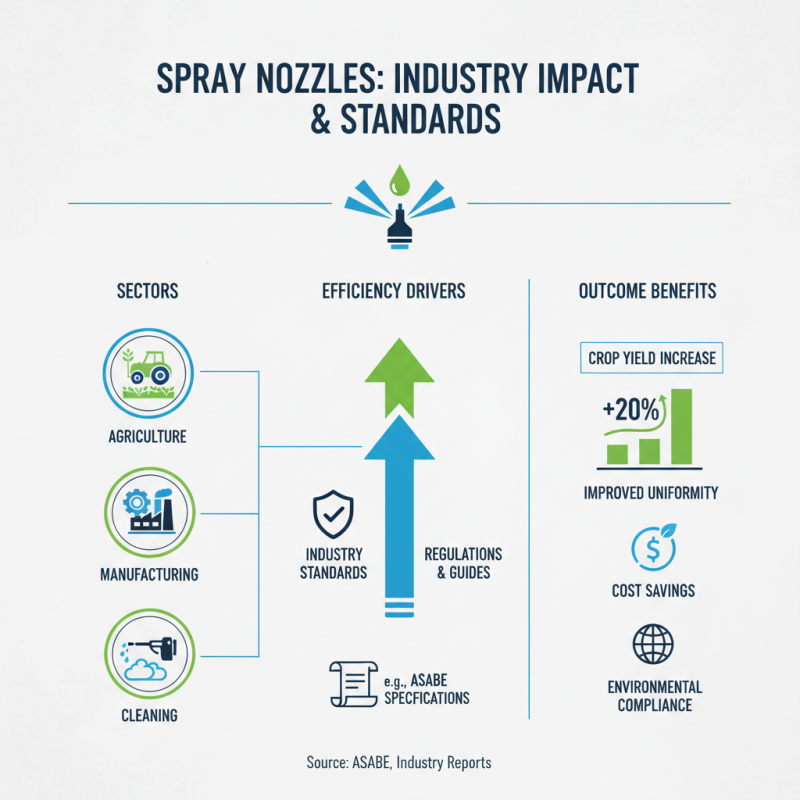
Spray nozzles play a vital role across various industries, including agriculture, manufacturing, and cleaning. Their efficiency often hinges on adherence to industry standards and regulations. For instance, the American Society of Agricultural and Biological Engineers (ASABE) outlines specifications for nozzles to enhance application accuracy. Such standards can affect yield outcomes, with reports indicating that proper nozzle use can increase crop yield by up to 20%.
Regulations also influence the design and material used in spray nozzles. The Environmental Protection Agency (EPA) sets strict guidelines to limit chemical drift and runoff. Non-compliance can lead to fines and environmental damage. Some users find it challenging to keep up with evolving regulations, impacting operational efficiency. In 2022, it was estimated that 30% of users faced issues due to outdated equipment, which posed risks for farmers and industrial operators alike.
Training and certification programs are necessary to ensure compliance with these standards. Many professionals lack adequate knowledge of the guidelines, leading to suboptimal nozzle selection. The industry must prioritize education to bridge this gap. As the landscape of environmental regulations continues to evolve, companies must navigate these complexities. Ignoring them could result in significant financial losses and reputational damage.
Innovations and Trends in Spray Nozzle Technology for 2026
As we venture into 2026, spray nozzle technology continues to evolve significantly. Innovations focus on enhancing efficiency and versatility in various applications. For instance, recent designs prioritize optimized spray patterns, allowing better coverage and reduced waste. Manufacturers are experimenting with materials that resist corrosion, extending the lifespan of nozzles in tough environments.
Trends show a growing interest in adjustable nozzles. These nozzles offer adaptability for different tasks, providing precise control over flow rates. Such features are vital in agricultural settings, where water conservation is essential. Moreover, digital integration is becoming more common. Smart nozzles can monitor usage and adjust automatically, ensuring optimal performance. However, the complexity of these systems can create challenges.
Another notable trend is sustainability. Eco-friendly nozzles made from biodegradable materials are gaining traction. These products address environmental concerns but raise questions about durability and performance. Balancing innovation with practical use remains critical. Feedback from end-users is essential for refining these technologies and ensuring they meet real-world needs.