
China Best Pressure Relief Valve Manufacturer?
China Best Pressure Relief Valve Manufacturer? The answer depends on evidence, not factory photos or bold claims. A reliable pressure relief valve manufacturer must demonstrate design control, material traceability, calibrated testing, and field experience. Buyers should examine set-pressure accuracy, blowdown performance, back-pressure limits, and documented inspection records.
Market data shows why this choice matters. Grand View Research estimates that the global pressure relief valve market will continue growing through 2030, supported by chemical processing, energy, and water infrastructure projects. MarketsandMarkets also forecasts steady expansion, although its market values differ because research methods and product definitions are not identical. The numbers are useful. They are not perfect.
Trevor Kletz, a respected process-safety authority, wrote, “If it isn’t safe, don’t do it.” His principle applies directly to valve selection. A weak specification can create dangerous assumptions around corrosion, temperature, discharge capacity, or installation orientation. A strong Chinese supplier should provide API 520 and API 526 knowledge, suitable material certificates, pressure-test reports, and practical support after delivery. Certifications alone are not enough.
Look closely at the details. Can the manufacturer explain why stainless steel, carbon steel, or alloy construction suits your medium? Can technicians show a calibrated test bench, sealed adjustment settings, and serial-number traceability? These questions reveal manufacturing maturity. Site experience matters more than polished brochures.
China has capable pressure relief valve producers, but quality varies widely. Some factories communicate well yet lack consistent testing depth. Others produce excellent valves but explain technical limits poorly. That is an uncomfortable reality. The best choice is therefore the supplier that proves safety, repeatability, and accountability with verifiable data.
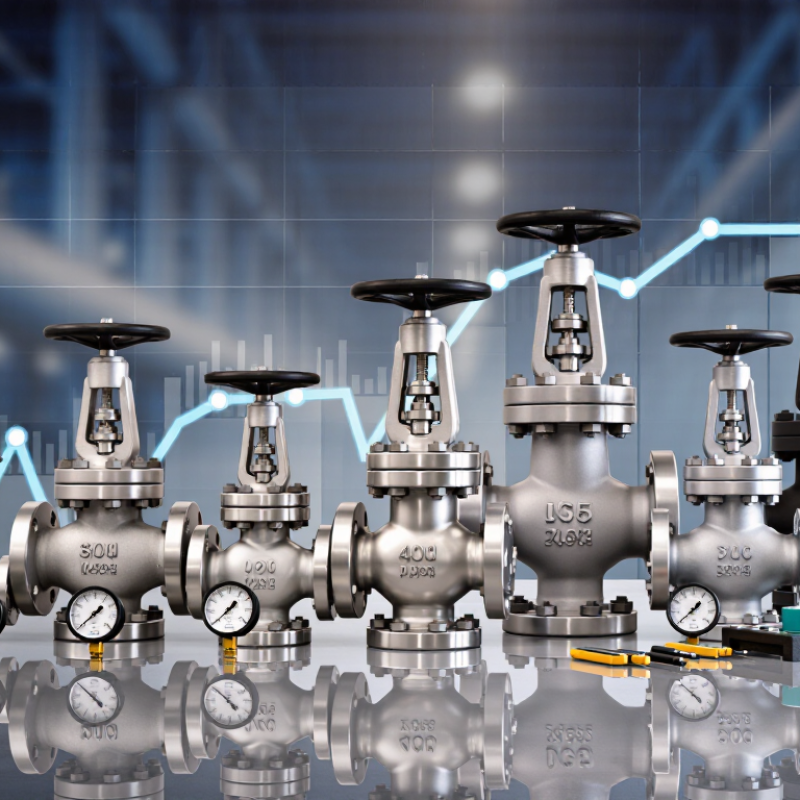
What Is a Pressure Relief Valve and Why Is It Important?
A pressure relief valve protects vessels, pipelines, and process equipment from excessive pressure. When pressure rises above a preset limit, the valve opens and releases fluid safely. It then closes when pressure returns to an acceptable range.
Without this protection, a blocked outlet, fire, control failure, or thermal expansion can damage equipment and injure workers. ASME Boiler and Pressure Vessel Code Section VIII requires suitable overpressure protection for covered pressure vessels. API 520 also provides guidance on valve sizing, selection, and installation.
The need remains substantial. A 2024 Grand View Research assessment estimated the global pressure relief valve market at several billion U.S. dollars, supported by demand from chemical, energy, and manufacturing facilities.
Market growth does not prove safe operation, however. Correct sizing matters more than appearance.
API 521 explains that engineers should evaluate credible scenarios, including blocked discharge and external fire exposure. In field inspections, the overlooked detail is often a corroded spring, an incorrect set pressure, or a discharge line installed with poor drainage. Small errors can become serious. No calculation stays perfect.
Tips:
- Confirm the set pressure against the vessel design pressure.
- Keep discharge outlets visible and unobstructed.
- Inspect seals, springs, and corrosion regularly.
- Never isolate a relief valve without engineered protection.
- Maintenance records should show test dates, results, and corrective actions.
- A qualified engineer should review unusual fluids, pulsation, back pressure, and temperature changes.
Key Standards for Evaluating Chinese Pressure Relief Valve Manufacturers
Finding the best pressure relief valve manufacturer in China requires more than comparing prices.
Start with applicable standards. API 520 covers sizing and selection, while API 526 defines common flanged relief valve dimensions. ISO 4126 addresses safety devices for protection against excessive pressure. For Chinese production, GB/T 12243 is also relevant.
A serious supplier should identify the exact standard edition, valve model, and certification scope.
Numbers need context. The 2024 Fortune Business Insights report estimates the global pressure relief valve market will grow steadily through 2032, increasing demand for documented capacity and repeatable testing.
Ask for certified flow data, set-pressure tolerance, blowdown results, and temperature limits. Materials should include heat numbers and traceability records. Testing should cover hydrostatic strength, seat leakage, and calibrated set-pressure verification.
Photos are useful, but witnessed tests are stronger evidence.
The ISO Survey 2023 recorded more than 900,000 ISO 9001 certificates in China, showing broad quality-system adoption. Yet ISO 9001 alone does not prove valve performance.
Review whether certification covers the actual manufacturing site, not only a trading office. Audit machining, spring calibration, welding controls, and final inspection records.
I would also request three years of anonymized failure data and corrective-action reports. Few suppliers publish them. That gap deserves attention.
A factory visit may reveal orderly records, but one visit cannot replace independent inspection, third-party certification, and application-specific engineering review.
Materials, Designs, and Applications of Pressure Relief Valves
China Best Pressure Relief Valve Manufacturer?
Materials, Designs, and Applications of Pressure Relief Valves
Choosing a pressure relief valve begins with the process medium, not the price. Carbon steel suits many steam and compressed-air systems. Stainless steel resists moisture, chlorides, and several corrosive fluids. For aggressive chemicals, engineers may specify nickel alloys or corrosion-resistant trim. Gasket material also matters. PTFE, graphite, and elastomers behave differently under heat, pressure, and chemical exposure. No material is perfect.
Spring-loaded valves offer simple operation and quick maintenance. They are common on boilers, pressure vessels, pumps, and compressed-air lines. Pilot-operated designs provide tighter control in high-pressure systems. However, dirty fluids can obstruct small pilot passages. That detail is easy to overlook. A relief valve should match set pressure, back pressure, temperature, flow rate, and discharge conditions. A technically correct valve can still perform poorly after installation.
Reliable manufacturers support documented testing, material certificates, dimensional checks, and calibrated set-pressure reports. Engineers should review these records before shipment. On-site inspection should confirm the valve tag, flow direction, flange rating, and discharge piping. The outlet needs safe routing and enough capacity. Poor installation can defeat excellent design. In chemical plants, power stations, water systems, and process facilities, maintenance teams should inspect seals, springs, and lifting mechanisms regularly. A practical selection may still need revision after real operating data appears.
China Best Pressure Relief Valve Manufacturer? - Materials, Designs, and Applications of Pressure Relief Valves
| Valve Design | Operating Principle | Common Body Materials | Typical Trim or Spring Materials | Typical Pressure Range | Suitable Fluids | Common Applications | Relevant Selection Considerations |
|---|---|---|---|---|---|---|---|
| Spring-Loaded Safety Valve | A calibrated spring applies closing force; the valve opens when system pressure exceeds the set pressure. | Carbon steel, stainless steel, or low-temperature carbon steel. | Stainless steel or alloy steel disc, guide, spindle, and spring; soft seat may be PTFE or elastomer where temperature permits. | Commonly used from low-pressure services to several hundred bar, depending on size, design, and certification. | Steam, air, water, gases, and many non-corrosive process fluids. | Boilers, pressure vessels, compressed-air systems, pipelines, and process plants. | Set pressure, required relieving capacity, back pressure, temperature, discharge piping, and applicable code. |
| Pilot-Operated Pressure Relief Valve | A pilot system controls the main valve, allowing accurate operation at high pressure or high flow. | Carbon steel, stainless steel, and alloy steel. | Stainless steel pilot components, alloy springs, and corrosion-resistant internal parts. | Often selected for medium- to high-pressure systems and large flow capacities. | Natural gas, hydrocarbons, steam, air, and other compatible gases or liquids. | Gas transmission, refineries, petrochemical plants, storage facilities, and high-capacity vessels. | Pilot stability, minimum operating pressure, back pressure, contamination control, and maintenance access. |
| Thermal Relief Valve | Relieves pressure caused by thermal expansion of trapped liquid in a closed section of piping or equipment. | Brass, bronze, stainless steel, or carbon steel, depending on fluid compatibility. | Stainless steel spring and disc; elastomeric seals may be used for compatible temperature ranges. | Usually low-pressure service compared with process safety valves; exact settings are application-specific. | Water, thermal oil, hydraulic fluids, and other incompressible liquids. | Blocked-in liquid lines, pumps, heat exchangers, fire-protection piping, and hydraulic systems. | Small relieving capacity may be sufficient; discharge routing and fluid expansion coefficient are important. |
| Vacuum Relief Valve | Admits air or inert gas when vessel pressure falls below the specified vacuum set point. | Carbon steel, stainless steel, aluminum, or engineered polymer materials. | Stainless steel or coated metal internals; fluoropolymer or elastomer seals where compatible. | Typically designed for very low differential pressures, often specified in millibar, pascal, or inches of water column. | Air, nitrogen, vapor, and compatible tank atmospheres. | Atmospheric storage tanks, low-pressure vessels, solvent tanks, and bulk liquid storage. | Vacuum set point, air-inflow capacity, tank breathing losses, corrosion resistance, and emissions control. |
| Bursting Disc Assembly | A non-reclosing membrane ruptures at a defined pressure to provide rapid pressure relief. | Stainless steel, nickel alloys, tantalum-lined designs, graphite, or other specified materials. | Metal membrane with optional fluoropolymer lining or protective coating. | Available for low- to very-high-pressure applications; burst pressure depends strongly on temperature and material. | Toxic, corrosive, polymerizing, viscous, or contaminated media where conventional valves may foul. | Chemical reactors, pharmaceutical equipment, cryogenic systems, and explosion or runaway-reaction protection. | One-time operation, replacement after rupture, temperature correction, fragment retention, and compatibility with a relief valve. |
| Safety Relief Valve with Soft Seat | Spring-loaded mechanism with a resilient seat to improve tight shutoff for clean gases or liquids. | Stainless steel or carbon steel body, selected according to corrosion and temperature requirements. | PTFE, PEEK, FKM, EPDM, or other engineered sealing materials; stainless steel spring and disc. | Generally used in low- to medium-temperature services within the selected seal material limits. | Clean gases, refrigerants, water, light chemicals, and compatible hydraulic fluids. | Refrigeration, instrumentation, water treatment, compressed gases, and general process equipment. | Seal compatibility, temperature cycling, leakage class, pressure buildup, and media cleanliness. |
| Metal-Seated Safety Valve | A metal-to-metal seat provides pressure protection under high temperature, high pressure, or abrasive conditions. | Carbon steel, stainless steel, chrome-molybdenum steel, or nickel alloy. | Stainless steel, hardened alloys, cobalt-based hardfacing, and high-temperature spring alloys. | Suitable for broad pressure ranges, including high-temperature and high-pressure services. | Steam, hot gas, high-temperature hydrocarbons, and fluids containing limited particulates. | Power generation, boilers, furnaces, chemical processing, and high-temperature pipelines. | Seat tightness, thermal expansion, erosion, material hardness, blowdown, and maintenance conditions. |
| Sanitary Pressure Relief Valve | Compact relief mechanism designed for hygienic service and frequent cleaning or sterilization cycles. | 316L stainless steel, with polished wetted surfaces. | 316L stainless steel, PTFE, EPDM, silicone, or other hygienic seal materials. | Usually selected for low- to medium-pressure sanitary process systems. | Food products, beverages, purified water, pharmaceutical liquids, and clean gases. | Dairy, brewing, food processing, biotechnology, and pharmaceutical manufacturing. | Surface finish, drainability, clean-in-place capability, elastomer certification, and hygienic connection type. |
How to Compare Quality, Certification, and Manufacturing Capability
China Best Pressure Relief Valve Manufacturer?
Comparing a Chinese pressure relief valve manufacturer requires more than checking price or polished photographs. During factory evaluations, inspect machining surfaces, spring storage, calibration benches, and test records. A reliable manufacturer should provide material certificates, heat numbers, pressure-test results, and clear serial-number traceability. Small details matter.
Quality should align with recognized requirements. ASME Section VIII supports pressure-vessel safety, while API 520 covers sizing and selection practices. API 527 addresses seat tightness testing, and ISO 4126-1 specifies safety-valve requirements. ISO 9001 certification helps assess process control, but it does not automatically prove valve performance. That distinction is often missed. A 2024 MarketsandMarkets report estimated the pressure relief valve market at approximately USD 4.8 billion in 2023, with continued growth driven by stricter industrial safety requirements. Market growth does not equal quality.
Certification must be verified, not merely displayed. Request certificate numbers, issuing bodies, validity dates, and product scope. Then compare them with actual test procedures. Manufacturing capability is visible in equipment: CNC machining, calibrated test rigs, controlled welding, and documented final inspection. Ask whether each valve is tested at its actual set pressure. Ideally, observe a test with a pressure gauge, timestamp, and signed report. Some suppliers provide excellent documents but weak production discipline. I have seen both. An independent inspection can expose that gap, although it adds time and cost. That trade-off may be worthwhile for critical steam, chemical, or high-pressure service.
How to Compare a China Pressure Relief Valve Manufacturer
A practical evaluation framework based on internationally recognized quality, certification, and manufacturing evidence
The chart uses a 100-point buyer evaluation model. Quality is assessed through ISO 9001 quality systems, ISO 5208 pressure testing, material traceability, and inspection records. Certification considers relevant references such as API 6D, ASME B16.34, and the EU Pressure Equipment Directive 2014/68/EU. Manufacturing capability includes pressure-temperature range, material options, production capacity, testing facilities, and calibration control.
The scores are evaluation weights rather than company rankings. Actual supplier selection should be based on valid certificates, test reports, product specifications, factory audits, and traceable documentation for the required application.
How to Select the Best Chinese Pressure Relief Valve Manufacturer
Selecting the best Chinese pressure relief valve manufacturer requires more than comparing prices. Start by matching the supplier’s experience with your application, such as steam, gas, water, or corrosive media. Ask for material certificates, pressure test records, and calibration details. A reliable manufacturer should explain seat materials, spring ranges, temperature limits, and applicable standards clearly. Avoid suppliers that provide vague answers or copied documents.
Request a factory audit, either in person or through an independent inspection service. Check machining areas, assembly benches, testing equipment, and product traceability. Each valve should have a clear serial number and inspection record. Ask for a sample before placing a large order. Examine thread quality, surface finish, nameplate information, and opening pressure. A polished website can still hide weak process control. I would not trust appearance alone.
Tips: Compare at least three suppliers. Verify certificates with the issuing organization. Confirm lead times in writing. Review warranty terms and spare-part availability. Test communication with a technical question before ordering. If the supplier cannot explain failure scenarios, reconsider the partnership. Also, define acceptance criteria before production begins. This small step prevents costly arguments later, although I have seen buyers overlook it. Keep drawings, test data, and approved samples in one controlled file. Mistakes happen, even with experienced teams. Good manufacturers respond openly and correct them quickly.
Related Posts
-
Top Strategies for Maximizing the Efficiency of Pressure Relief Valves
-
The Definitive Ultimate Guide to Pressure Regulators: Unlocking Consistent Performance and Efficiency
-
What is a Pressure Regulator and How Does It Work?
-
What is a High Pressure Hose? Understanding Applications and Benefits
-
What Is a Soft Wash Pump and How Does It Work?
-

How to Choose the Best Pressure Gauges for Your Needs in 2025