How to Choose the Best Stainless Steel Ball Valve for Your Needs?
Choosing the right stainless steel ball valve is essential for various applications. The global ball valve market is projected to reach $11.5 billion by 2027, driven by the increasing demand for durable and reliable valves. Stainless steel ball valves are known for their resistance to corrosion and high durability, making them suitable for harsh environments.
However, selecting the best option can be complicated. There are numerous factors to consider, including size, grade of stainless steel, and pressure rating. Reports suggest that 40% of users choose the wrong valve type, leading to performance issues. It’s crucial to assess your specific needs carefully and avoid making hasty decisions.
In many cases, the cheapest option can lead to expensive repairs later. Users often overlook maintenance requirements, which can result in premature valve failure. Reflecting on these details can guide you in making a more informed decision. The right choice can enhance efficiency and longevity in your applications.
Understanding the Types of Stainless Steel Ball Valves Available
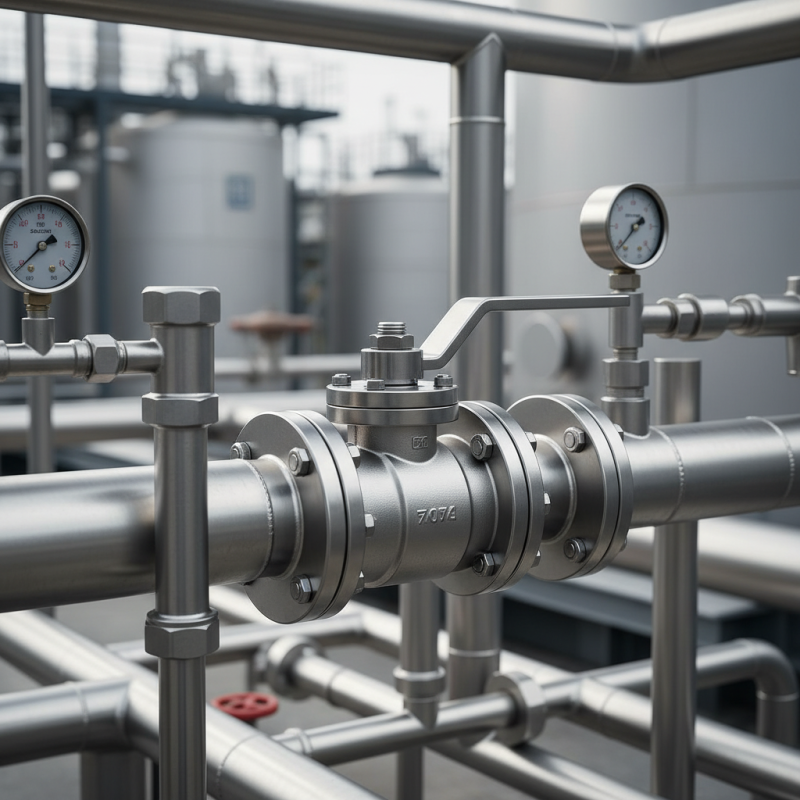
When selecting a stainless steel ball valve, it's crucial to know the types available. There are generally two main types: floating and trunnion-mounted.
Floating ball valves have a ball that is not fixed. The ball moves freely with the flow, allowing for better sealing at low pressures. They are useful in smaller applications and are easy to operate.
Trunnion-mounted ball valves, on the other hand, have a fixed ball. They provide better stability and can handle high-pressure conditions. Because of this design, they are typically used in larger pipelines. However, they can be more complicated to install and maintain. It's essential to consider your specific application before making a decision.
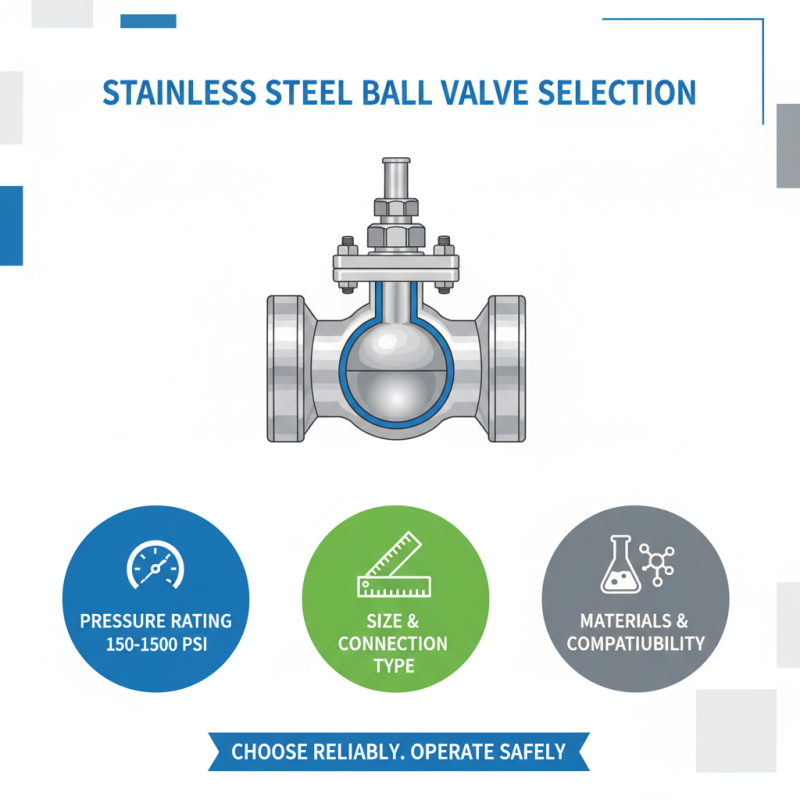
Also, pay attention to the size and connection type. Sizes vary significantly, impacting flow rates. Some connections are threaded, while others are flanged. Both affect installation needs. These details can influence your overall experience. Careful consideration of these types can prevent issues down the line.
Evaluating Key Specifications for Your Application Needs
Choosing the right stainless steel ball valve requires careful evaluation of key specifications. The most crucial factors include pressure rating, size, and materials. According to industry data, valves typically operate in a range between 150 to 1500 PSI. Understanding the specific pressure requirements of your application is essential. Ensure the valve you choose can handle these demands without risk of failure.
Size matters, too. The valve should match the pipe diameter to ensure optimal flow. A mismatch can lead to turbulence, increasing wear and energy costs. According to a recent engineering report, an oversized valve can lead to up to 30% more energy consumption, which is a substantial inefficiency in long-term operations.
**Tip:** Always consider the media the valve will handle. Different fluids have varying corrosive properties. A standard stainless steel may not withstand highly corrosive environments. Research the chemical compatibility to avoid unforeseen issues.
Lastly, consider the maintenance needs. Some valves require regular upkeep while others are more robust. If maintenance isn't feasible, choose a valve with a proven track record for reliability. Balancing initial costs with long-term performance is key. Understanding these specifications is not just about immediate needs but also future applications.
Assessing Quality and Durability Factors in Stainless Steel Ball Valves
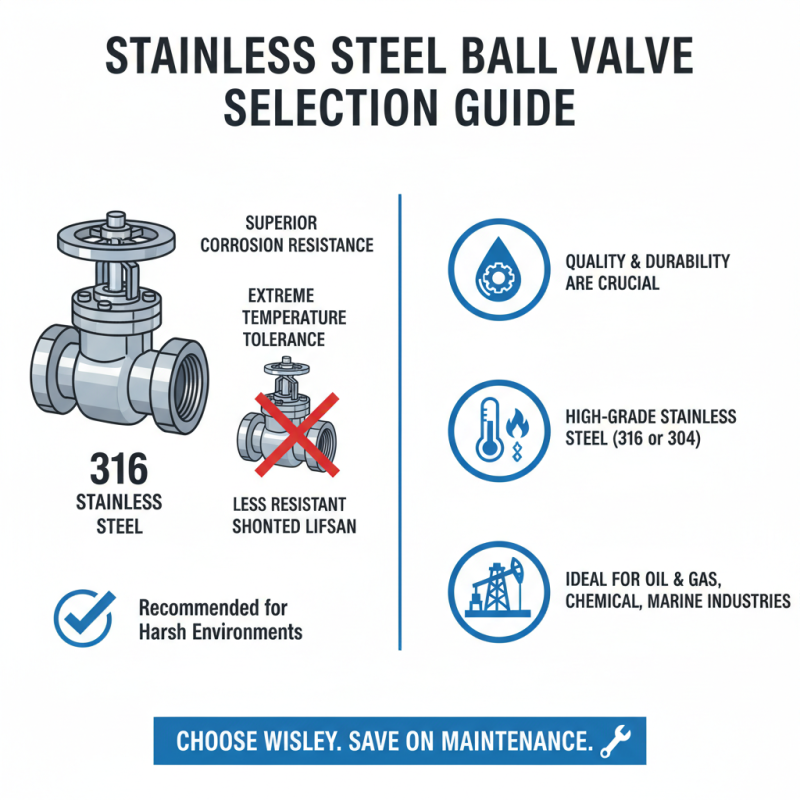
When selecting a stainless steel ball valve, quality and durability are crucial aspects to consider. High-grade stainless steel, such as 316 or 304, is often preferred due to its resistance to corrosion and extreme temperatures. Reports indicate that valves made from 316 stainless steel can withstand harsh environments, thus extending their lifespan significantly. This can be particularly beneficial in industries such as oil and gas, where equipment is subjected to rigorous conditions.
Tip: Always check for certifications like ISO or ANSI standards. These ensure the valve meets specific quality benchmarks. A valve that adheres to international standards is likely to perform better and last longer.
Another factor to evaluate is the valve's design. A well-designed ball valve minimizes flow restrictions and can enhance system efficiency. However, some designs may not effectively prevent leaks. Regular maintenance and inspection can help identify wear issues early on. Remember, not all ball valves are created equal; even slight variations can affect performance.
Tip: Consider the valve's seat material as it plays a critical role in sealing and preventing leaks. Materials like PTFE offer excellent sealing properties but may wear out faster than others under certain conditions. Always analyze your specific application to choose the best material.
Identifying the Right Size and Connection Type for Your System
When selecting a stainless steel ball valve, size and connection type are key. The right size affects flow rate and system efficiency. For example, a report by the American Society of Mechanical Engineers highlights that a valve that is too small can cause significant pressure drops, while an oversized valve might lead to inefficiencies and increased operational costs.
Determining the correct connection type is equally important. There are various standards, such as threaded, flanged, and welded connections. Each type has its strengths and weaknesses. For instance, threaded connections are easier to install, but they may not hold up under high-pressure situations. In contrast, flanged connections provide better stability but require more space. A mismatch here can result in leaks, increasing maintenance costs.
Precision in sizing and connection selection is crucial. It can be tempting to choose a simple solution, but overlooking these factors might lead to operational challenges. Some operators report issues due to improperly sized valves, resulting in downtime. Investing time in understanding your system's specifications is vital. A focus on these details can lead to improved performance and reliability.
Stainless Steel Ball Valve Size and Connection Type Distribution
Considering Budget and Cost-Effectiveness in Your Purchase Decision
When choosing a stainless steel ball valve, balancing cost and quality is key. A lower price can be tempting. However, it might lead to hidden issues. Cheaper valves might not last as long, causing more frequent replacements. Over time, that can mean spending more overall.
Examine the material used in the valve. Not all stainless steel is equal. Some types resist corrosion better than others. This detail matters. Inspecting certifications can help you understand the quality better. If a valve fails on installation, the extra cost can escalate quickly. Look for options that align with your budget while ensuring reliability.
Think about the secondary costs involved. Installation and maintenance add to your total spend. Sometimes, saving on the initial purchase can lead to higher costs later. It’s not just about the number on the price tag. Weighing all aspects can lead to a better long-term decision. Consider how each factor impacts your choice, and don’t rush the process.
How to Choose the Best Stainless Steel Ball Valve for Your Needs?
| Feature |
Description |
Cost-Effectiveness |
Recommended Applications |
| Size |
Available in various sizes ranging from 1/4" to 12". |
Choose size according to flow requirements to avoid overpaying for larger valves. |
Pipelines, water distribution. |
| Material |
Typically made of 304 or 316 stainless steel. |
316 offers better corrosion resistance, ideal for harsh environments. |
Chemical processing, marine. |
| Pressure Rating |
Commonly rated at 150, 300, or 600 PSI. |
Higher ratings generally cost more but provide versatility. |
High-pressure systems, industrial applications. |
| Connection Type |
Options include threaded, flanged, and welded. |
Select a connection type that aligns with existing systems to minimize costs. |
Buildings, infrastructure. |
| Actuation |
Manual, electric, or pneumatic options available. |
Choose manual for lower cost; consider automation for efficiency in large operations. |
Automated systems, agriculture. |