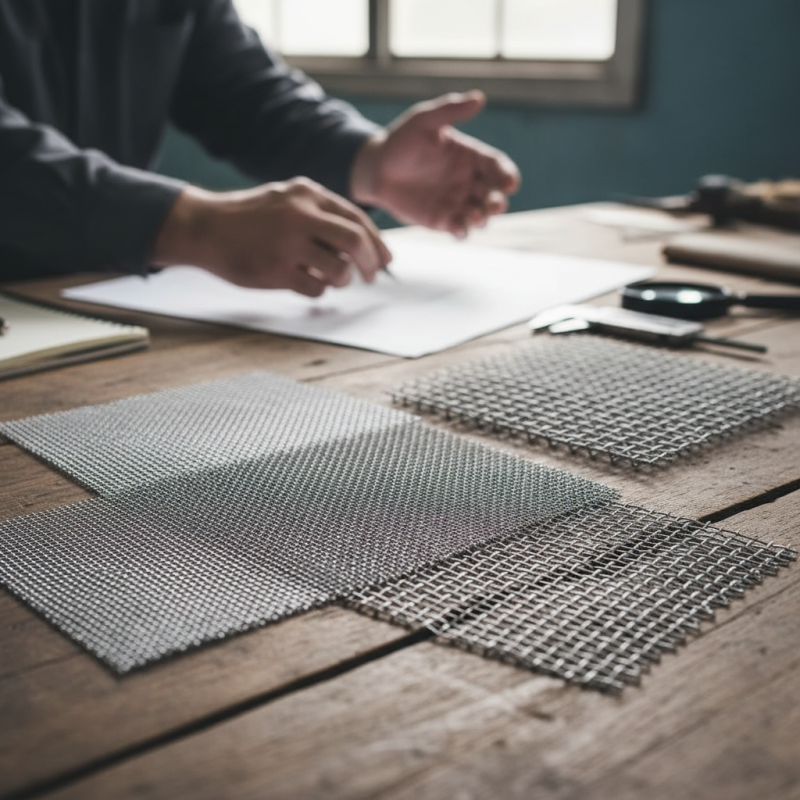
How to Choose the Right Stainless Steel Woven Wire Mesh?
Selecting the right stainless steel woven wire mesh can be challenging. Industry expert John Smith states, "Choosing the right mesh is key to performance." This highlights the importance of understanding your needs. Stainless steel woven wire mesh is used in various applications, from filtering to security.
When considering this material, think about its durability, size, and weave pattern. Each type serves different purposes. For instance, fine mesh might be ideal for filtration. However, it may not be suitable for all structural applications. A reliable choice often requires thorough research and consideration.
Mistakes can happen. Many overlook the specific requirements of their project. This can lead to underperformance or failure. Take time to assess your project's demands before deciding. By doing so, you ensure that your stainless steel woven wire mesh meets the necessary criteria.
Types of Stainless Steel Woven Wire Mesh Available in the Market
When selecting the right stainless steel woven wire mesh, understanding the types available is crucial. The market offers various options, such as plain weave, dutch weave, and twill weave meshes. Plain weave meshes are versatile and are commonly used in filtration applications. They are characterized by a simple crisscross pattern, ensuring strength and flexibility.
Dutch weave meshes, on the other hand, are designed for high-filtration applications. They have a thicker wire in the weft direction and finer wires in the warp direction. This design allows for better fluid flow while trapping finer particles. However, they may not be as robust against physical impacts. Twill weave meshes provide a balance between the two, offering increased durability and flexibility.
According to industry reports, the global stainless steel wire mesh market was valued at around $3 billion in 2022. However, some manufacturers struggle with quality control. Issues can arise from using low-grade stainless steel, compromising the mesh's strength and corrosion resistance. Buyers need to pay attention to these details before making purchases.
Key Factors to Consider When Choosing Stainless Steel Woven Wire Mesh
When choosing stainless steel woven wire mesh, several factors are crucial. The type of stainless steel alloy affects durability and resistance to corrosion. Common grades include 304 and 316, with 316 offering better resistance in harsh environments. Consider the wire diameter as well; thicker wires provide greater strength but may limit flexibility.
The mesh opening size is another essential aspect. Smaller openings filter fine particles effectively but may restrict airflow. Conversely, larger openings allow for better ventilation but may not filter smaller debris. Always consider the intended application. A mesh for filtration needs different specifications than one for security purposes.
Maintenance is an often-overlooked detail. Stainless steel is low-maintenance but can still collect dirt and grime. Regular cleaning is needed to maintain its appearance and functionality. Evaluate the specific environment as well; exposure to extreme temperatures or chemicals could affect performance. Think about these factors carefully for the best choice.
How to Choose the Right Stainless Steel Woven Wire Mesh? - Key Factors to Consider When Choosing Stainless Steel Woven Wire Mesh
| Factor | Description | Example Applications |
| Wire Diameter | The thickness of the wire affects the mesh strength and openness. | Filtration, sieving |
| Mesh Size | The number of openings per linear inch determines the level of filtration. | Food processing, mining |
| Material Grade | Different stainless steel grades (e.g., 304, 316) provide varied corrosion resistance. | Chemical processing, marine applications |
| Weave Pattern | The arrangement of the wire (plain, twill, etc.) impacts the mesh's strength and flexibility. | Architectural applications, industrial filters |
| Open Area | Percentage of the mesh area that is open, influencing flow and pressure drop. | Air filtration, fluid applications |
| Finish Type | Surface finishing (e.g., smooth, polished) affects aesthetics and cleaning. | Food service, medical environments |
Applications of Stainless Steel Woven Wire Mesh in Various Industries
Stainless steel woven wire mesh is vital across multiple sectors. In the food and beverage industry, it prevents contamination while providing strength. According to a report by MarketsandMarkets, the stainless steel mesh market is expected to reach USD 2.4 billion by 2025. This demand reflects its widespread use in filtration systems. However, not all meshes are created equal. The wrong choice can lead to supply chain issues.
In the construction sector, stainless steel woven wire mesh enhances durability. It’s used in concrete reinforcements, ensuring stability. Its corrosion resistance is crucial in harsh environments. Yet, some applications might require different alloys or mesh sizes. Industry experts note that selecting the wrong type can result in structural failures, which can be costly.
The automotive industry employs stainless steel mesh in creating screens and filters. This helps maintain engine efficiency and safety. But, there is often confusion about the best specifications. Many companies overlook the wire diameter or mesh opening size, leading to inefficiencies. This choice impacts overall performance and lifecycle, highlighting the importance of informed decision-making.
Maintenance and Care for Stainless Steel Woven Wire Mesh Products
Stainless steel woven wire mesh is valued for its durability and resistance to corrosion. However, proper maintenance is essential for longevity. Regular cleaning is vital. Use mild soap and water for routine maintenance. A soft brush works well for stubborn dirt. Avoid abrasive materials, which can scratch the surface.
Inspect the mesh regularly. Look for signs of wear or damage. Addressing small issues promptly can prevent bigger problems. If you notice rust, attend to it quickly. Stainless steel can still corrode under certain conditions. In humid environments, extra care is needed. Consider using a protective coating if necessary.
Storing stainless steel woven wire mesh correctly can also enhance its lifespan. Keep it in a dry location. Avoid moisture exposure, which can lead to rust. While stainless steel is resilient, it’s not indestructible. A few extra steps in care can save time and costs later on. Reflection on your maintenance routine is crucial; perhaps improvement is needed.
Common Mistakes to Avoid When Selecting Woven Wire Mesh Solutions
Choosing the right stainless steel woven wire mesh can be tricky. Many people fail to consider the application requirements. For example, a heavier wire mesh may be needed for strength. Using a mesh that is too fine can lead to compromises in durability.
Common mistakes include ignoring the environmental factors. Corrosion resistance is crucial in harsh conditions. Yet, not all stainless steels offer the same level of protection. Temperature also plays a role. Some meshes can't handle extreme heat or cold.
Another common error is neglecting the mesh size. A larger opening might be tempting for airflow. But it can lead to unwanted contaminants entering. Always think about your specific needs. Balance is key. Overlooking these aspects can lead to costly consequences. Inadequate planning could mean wasted time and resources.
Choosing the Right Stainless Steel Woven Wire Mesh