How to Choose the Best Power Washer Hose for Your Cleaning Needs?
Choosing the right power washer hose can significantly impact your cleaning tasks. A suitable hose enhances efficiency and durability. It is essential to consider several factors before making a decision.
Start by assessing the length of the power washer hose you need. A longer hose offers greater reach for outdoor cleaning, while a shorter one is more maneuverable for smaller jobs. Material also matters. Durable materials resist wear and tear from high pressure. Look for hoses that offer kink resistance and flexibility.
Compatibility is another crucial aspect. Ensure that the hose fits your power washer model. Mismatched types can lead to leaks and inefficiencies. Lastly, consider the pressure rating. A hose must handle the pressure of your power washer to prevent accidents. Reflect on your needs to choose wisely.
Understanding Power Washer Hose Types and Their Applications
When selecting a power washer hose, understanding its types is crucial. There are generally three main types: rubber, PVC, and poly. Rubber hoses are durable and can withstand high pressure and varying temperatures. They are ideal for heavy-duty jobs. PVC hoses are lightweight and easy to maneuver, but they may not hold up as well under stress. Poly hoses strike a balance between durability and flexibility, making them suitable for multiple applications.
Consider the hose's length as well. A longer hose allows you to reach difficult spots but may reduce pressure. Shorter hoses generate higher pressure but can limit your working area. Are you tackling large outdoor spaces or smaller, confined areas? Each scenario calls for different hose considerations. Think about the type of surfaces you will clean. Delicate surfaces require gentler pressure, while tough stains call for high power.
Maintenance is another aspect to reflect on. A well-maintained hose can last longer. Check for cracks or leaks regularly. Not every hose performs equally over time. Some users may find that their hose degrades faster than expected. This can lead to frustrating pauses during cleaning tasks. Understanding the specific demands of your cleaning needs is essential for making the right choice.
Key Factors to Consider When Selecting a Power Washer Hose
When selecting a power washer hose, several key factors should guide your choice. The hose length plays a critical role. Longer hoses provide more flexibility, allowing you to reach distant areas without moving your power washer. However, longer hoses can also lead to a drop in pressure. Choose a length that balances convenience with effective cleaning. A length of around 25 to 50 feet is often ideal for most tasks.
The hose diameter is another essential consideration. Common diameters are 1/4 inch, 3/8 inch, and 1/2 inch. A wider diameter hose can deliver more water flow and pressure, which is particularly beneficial for tough cleaning jobs. However, thicker hoses can be heavier and more cumbersome to manage. Assess your cleaning needs and choose appropriately.
Material is key as well. Most hoses are made of rubber or plastic. Rubber hoses are more durable and resistant to high temperatures. Plastic hoses tend to be lighter but may not withstand rigorous tasks. Think about the conditions you'll use it in. Frequent use may warrant a sturdier material. While the wrong choice can lead to wear and tear, it's also a chance to reevaluate your cleaning requirements based on real-life experiences.
Material Durability: Choosing Between Rubber and PVC Hoses
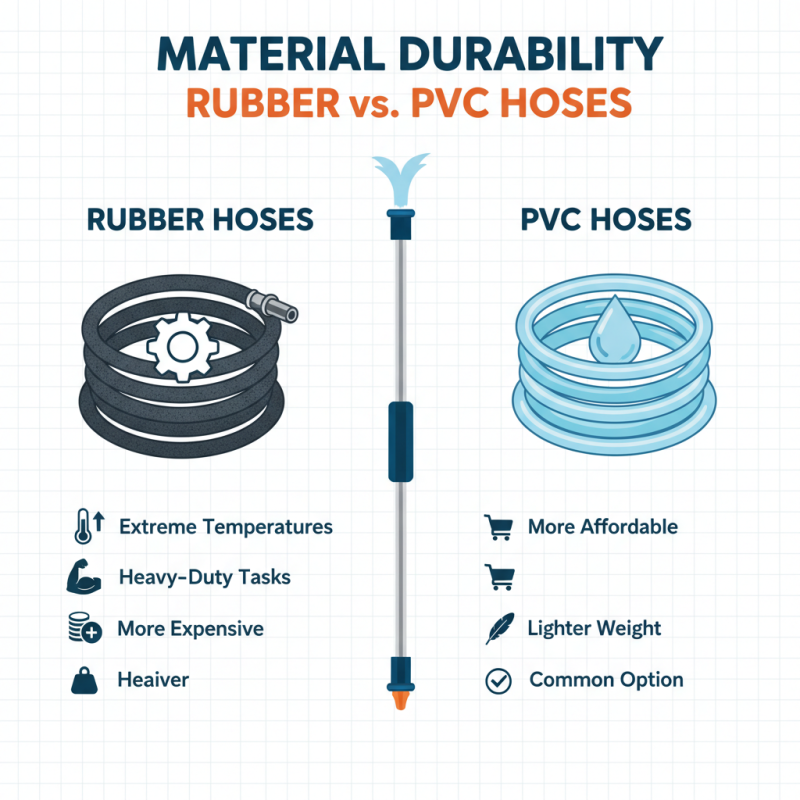
When selecting a power washer hose, the material plays a critical role. Rubber and PVC hoses are common options, each having benefits and drawbacks. Rubber hoses are known for their durability and can withstand extreme temperatures. They are ideal for heavy-duty tasks. However, they can be heavier and more expensive than PVC options.
PVC hoses, on the other hand, are lightweight and affordable. They are easier to handle and store, making them perfect for lighter cleaning tasks. But they may not hold up as well under high pressure or harsh weather conditions. Be cautious when choosing PVC for frequent, heavy use. Its longevity may not match that of rubber.
Tips: Always check the hose's pressure rating. This ensures it can handle your cleaning needs without bursting. Consider the length of the hose too; longer hoses provide flexibility but can decrease pressure. Lastly, read user reviews. They offer insights into real-world performance. Reflect on your cleaning habits. A hose that suits one user might not be ideal for you. Choose wisely to meet your unique requirements.
Determining the Optimal Length for Your Power Washer Hose Needs
Choosing the right length for your power washer hose is crucial. A short hose can limit your mobility. You may find it challenging to reach all areas of your property. On the other hand, a hose that is too long can reduce water pressure. You might end up wasting time adjusting the hose position frequently.
For most residential tasks, a 25-foot hose is typically sufficient. It allows you to clean your driveway, deck, or siding without hassle. If your property is larger, consider a 50-foot hose. This extra length can be very helpful for extensive outdoor areas. Yet, a longer hose means you need to manage the coils. They can easily get tangled or damaged.
Reflect on how you will use the hose. Practical experience shows that a mid-range length is often ideal. You might appreciate the balance of flexibility and ease of use it provides. Always think about storage space too. A longer hose can be cumbersome when not in use. Careful planning will ensure your power washer hose meets your needs effectively.
Matching Hose Diameter to Pressure Washer Specifications and Usage
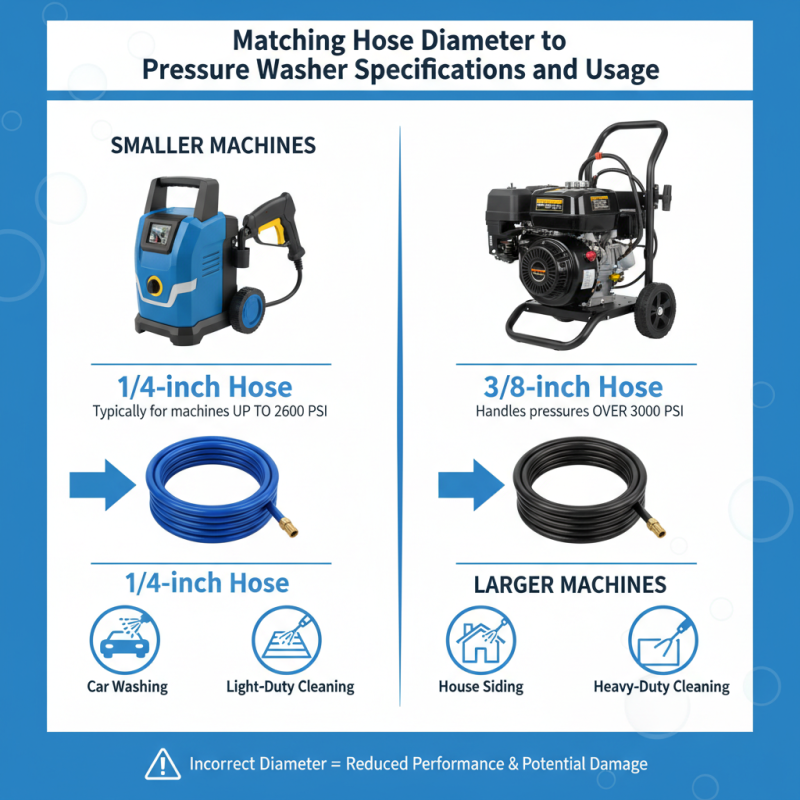
When selecting a power washer hose, understanding the hose diameter is crucial. A hose that fits your pressure washer’s specifications ensures optimal pressure balance. For instance, a 1/4 inch hose is typically suited for machines up to 2600 PSI. In contrast, a 3/8 inch hose can handle pressures over 3000 PSI effectively. Using an incorrect diameter can lead to reduced performance and potential damage.
The length of the hose also affects performance. Longer hoses can reduce pressure, especially if they are too narrow. A report by the Pressure Washer Manufacturers’ Association (PWMA) reveals that using a proper diameter and length can maintain efficiency by up to 20%. This means that choosing the right specifications can lead to more effective cleaning and save time.
Tip: Always check manufacturer recommendations before purchasing a hose. Look for materials that resist kinks and abrasions for a longer lifespan. Regular inspections for wear and tear can prevent unexpected issues. Remember, not choosing wisely can result in inefficiency, costing both time and money.