How to Choose the Best Pressure Washer Pump for Your Needs?
Choosing the right pressure washer pump is essential for achieving optimal cleaning results. According to industry expert Sarah Jenkins, "A strong pump is the heart of any pressure washer." Your selection can significantly impact efficiency and effectiveness.
Consider your cleaning tasks carefully. Different pumps deliver varying pressure and flow rates. For residential use, a pump with moderate pressure may suffice. However, heavy-duty tasks may require a more robust option. Pump durability is another critical factor. Look for models made from high-quality materials to ensure longevity.
Many consumers overlook these details. They may buy a pump that doesn’t match their needs. A mismatched pressure washer pump could lead to unsatisfactory results. Reflect on your needs and research thoroughly. Make a choice that aligns with your specific requirements.
Understanding Pressure Washer Pumps: Types and Functions
Understanding pressure washer pumps is crucial for effective cleaning. These pumps are the heart of your pressure washer, converting engine power into high-pressure water. They can be categorized into three main types: axial cam, triplex, and diaphragm pumps. Each type offers different performance levels suited to various tasks.
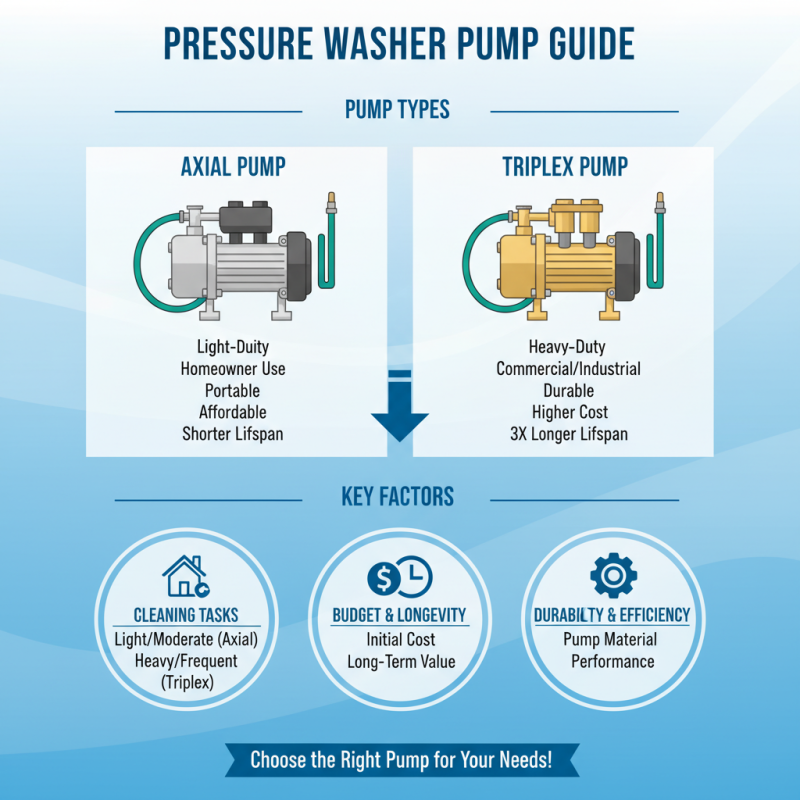
Axial cam pumps are common in residential models. They are affordable and easy to maintain but may not handle heavy-duty jobs. Triplex pumps are often used in commercial applications. They provide higher pressure and longer life but come at a higher cost. Diaphragm pumps are unique; they are suitable for handling detergents and can be useful for specific cleaning tasks. According to industry data, triplex pumps can last up to twice as long as axial cam pumps when used in appropriate settings.
When choosing a pump, consider your cleaning needs. Are you tackling light jobs like washing cars? A more affordable axial pump may suffice. For larger projects, such as cleaning driveways, invest in a triplex pump for better performance. Factor in the longevity and the type of jobs you often handle. Incomplete knowledge about pump specifications can lead to poor purchasing decisions. Shallow research often results in a mismatch of needs and capabilities.
How to Choose the Best Pressure Washer Pump for Your Needs?
| Pump Type |
Max Pressure (PSI) |
Flow Rate (GPM) |
Material |
Typical Applications |
| Axial Cam Pump |
1500 - 3000 |
1.2 - 2.5 |
Aluminum |
Residential cleaning, light to moderate tasks |
| Triplex Plunger Pump |
2000 - 4000 |
2.5 - 4.0 |
Brass/Steel |
Commercial cleaning, heavy-duty tasks |
| Electric Pump |
1300 - 2000 |
1.5 - 2.0 |
Plastic |
Light cleaning, car washing, small outdoor areas |
| Gasoline Pump |
2500 - 4000 |
2.4 - 4.0 |
Cast iron |
Construction sites, professional cleaning |
| Heavy-Duty Pump |
3000 - 5000 |
4.0 - 5.0 |
Stainless steel |
Industrial applications, extreme cleaning tasks |
Key Factors to Consider When Choosing a Pressure Washer Pump
When choosing a pressure washer pump, several key factors demand attention. The pump type significantly impacts performance. Generally, there are two varieties: axial and triplex pumps. Axial pumps are typically lighter and easier to handle. They are ideal for light to moderate cleaning tasks, making them popular among homeowners. In contrast, triplex pumps offer durability and efficiency, particularly for heavy-duty applications. According to industry reports, triplex pumps can last up to three times longer than axial pumps. This longevity can justify a higher initial cost for those with significant cleaning needs.
Another critical factor is the pump's PSI (pounds per square inch) rating. It determines the pressure exerted, directly affecting cleaning efficiency. For most residential uses, a rating between 1300 to 2000 PSI is sufficient. However, for more stubborn stains or commercial use, higher ratings are necessary. Yet, a higher PSI doesn't always mean better cleaning. It might lead to surface damage if not handled with care. Balancing power with safety is crucial here.
Lastly, flow rate, measured in GPM (gallons per minute), is an essential specification. A high flow rate results in faster cleaning, but it's essential to ensure compatibility with other components. Not all cleaning tasks require high flow rates. Users should consider the job requirements carefully. Many overlook this factor and end up with poor cleaning experiences. Selecting the right pump requires thoughtful consideration of these aspects.
Evaluating Pump Specifications: PSI, GPM, and Engine Compatibility
Choosing the right pressure washer pump revolves around understanding key specifications. PSI, or pounds per square inch, indicates the pressure the pump generates. Higher PSI means stronger water pressure. This is vital for tough stains and heavy dirt. However, if PSI is too high, it could damage fragile surfaces. Balancing pressure is critical.
Next is GPM, or gallons per minute. This measures water flow. A higher GPM provides faster cleaning. But be cautious—too much water flow can lead to wastage and higher costs. You should match GPM with your cleaning needs. Consider what surfaces you will clean most often.
Lastly, engine compatibility matters. Not all pumps fit all engines. Check the power output and size. A mismatched pump can lead to inefficiency. Understanding these components can help in finding the right fit. Too often, users overlook these details, leading to poor performance. Take your time to evaluate carefully.
Maintenance Tips for Prolonging the Life of Your Pressure Washer Pump
Maintaining your pressure washer pump is crucial for its longevity. Regular care helps prevent costly repairs. A clean pump runs efficiently. Keep it free of debris and dirt. Check its filter often. A clogged filter can restrict water flow. This may lead to pump overheating.
Consider using a low-pressure detergent during seasonal cleaning. Harsh chemicals can damage the pump. Always read the instructions carefully. Sometimes, people skip this step. They end up frustrated when issues arise. Protect your pump from cold weather. Use a heated garage or insulated storage. This avoids freezing, which can crack the body.
Routine checks are essential. Inspect hoses for leaks or wear. Replace damaged components directly. Minor problems can escalate quickly. Don't ignore unusual sounds or vibrations. These can signal bigger issues. Tune into what your equipment tells you. Being proactive can save you time and money later.
Comparing Brands and Models for Optimal Performance and Value
When selecting a pressure washer pump, comparing brands and models is essential for achieving optimal performance. According to recent industry reports, consumers should evaluate critical performance metrics such as PSI and GPM. A pump's PSI (pounds per square inch) indicates its cleaning power. Higher PSI usually means more pressure, leading to better dirt removal. GPM (gallons per minute) reflects water flow, which affects cleaning efficiency.
Tips: Always check the compatibility of the pump with your existing pressure washer. An incompatible pump can lead to inefficiency and potential damage.
Model comparison should consider not only performance but also durability and maintenance costs. Some models may offer higher performance but require frequent repairs. A report noted that regular maintenance can extend a pump’s lifespan by 30%. Beware of features that sound appealing but may add complexity. Consider the long-term value of maintenance labor and replacement parts.
Tips: Look for user reviews that specifically address maintenance experiences. Real-world feedback can provide insights that technical specifications often miss.