2026 How to Choose the Right Coiling and Packing Machine?
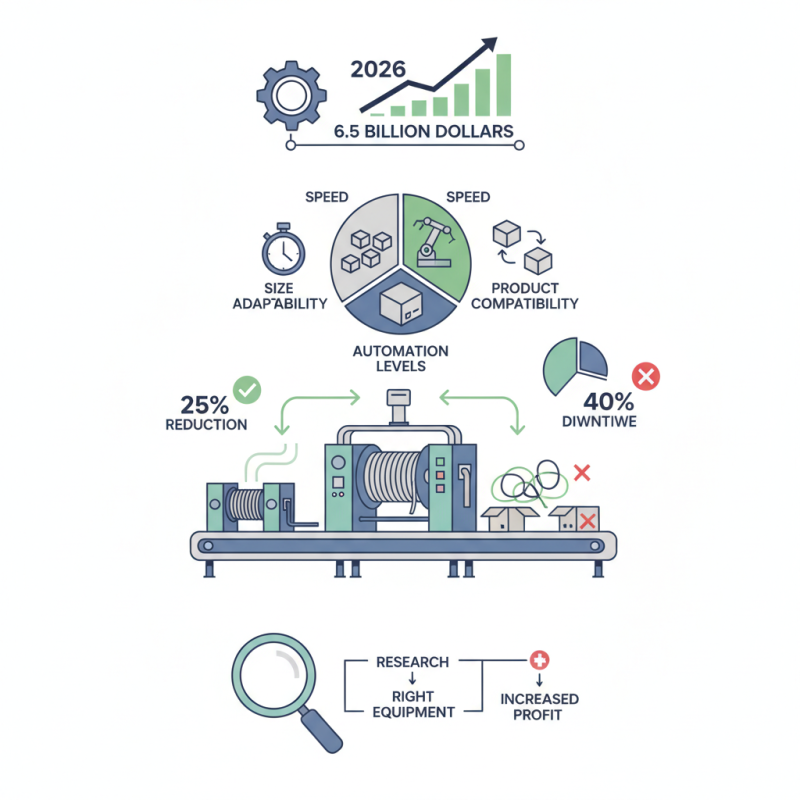
Choosing the right Coiling and Packing Machine is crucial for businesses in manufacturing. In a market projected to reach $6.5 billion by 2026, efficiency is key. Accurate packing directly affects customer satisfaction and supply chain costs. Selecting the appropriate machine ensures optimal performance.
Many manufacturers overlook the importance of machine compatibility with product types. Not all coiling and packing machines are equal. Features such as speed, size adaptability, and automation levels are vital considerations. Data shows that companies prioritizing these features see a 25% reduction in waste.
Investing in the right equipment can be challenging. Mistakes can lead to increased downtime and supply chain interruptions. Industry reports indicate that 40% of companies experience these issues due to improper machine selection. Manufacturers must reflect on their specific needs. Time spent on research can yield significant returns.
Understanding the Different Types of Coiling and Packing Machines
Choosing the right coiling and packing machine requires a solid understanding of the available types. There are several machines on the market. Each one has unique features. Some machines are designed for heavy-duty tasks. Others cater to lighter packaging needs. You might find it overwhelming at first glance. It's important to evaluate your specific requirements.
Consider box dimensions when selecting a machine. Different machines accommodate various shapes and sizes. Automatic machines speed up the packing process. Semi-automatic machines require more manual input but can be flexible. Remember that material type also matters. Some machines work better with plastic film, while others excel with paper.
Think about your production volume. A high-output system could be beneficial for larger operations. Reflect on the initial cost versus long-term efficiency. Investing in a more efficient machine may save money later. Don't focus solely on brand reputation. Instead, look for versatility and ease of use. These factors ensure the machine suits your evolving needs.
Test machines where possible. Practical experience will help clarify your decision. Aim for a balance between cost and capability.
Key Factors to Consider When Selecting Coiling and Packing Machines
Choosing the right coiling and packing machine involves several key factors. Understanding your specific needs is crucial. Consider the type of products you will be coiling and packing. Different machines are designed for various materials. Will you be working with delicate items or robust products? This question shapes your decision.
Next, think about production volume. Some machines handle high-speed operations, while others cater to smaller batches. Assess your daily output requirements. Machines that seem perfect can sometimes fall short in real-world scenarios. Maintenance is another area to reflect on. A machine that is easy to maintain can save time and reduce downtime.
Finally, consider your budget. Cheaper machines may lead to higher costs in the long run. It's wise to weigh upfront costs against long-term reliability. Look for features that can enhance efficiency but avoid unnecessary complexities. Trust your instincts but also do thorough research. The right choice should align with both current and future needs. Balancing these factors is not easy, but it is vital for success.
Assessing Production Requirements for Coiling and Packing Solutions
When assessing production requirements for coiling and packing solutions, understanding your specific needs is crucial. Start by evaluating the type of materials you'll be working with. This can impact the design of your machine. Different materials require different coiling mechanisms. Consider the size and thickness of the product, as it directly affects efficiency and speed.
Tips: Always document your production volume. This helps in selecting a machine with the right capacity. If your output varies, consider machines with adjustable settings.
It's also important to analyze your packaging requirements. The machine should not only coil but also pack effectively. The packing speed needs to match the coiling output to avoid bottlenecks. Think about the durability of the packaging. It should preserve quality during transportation.
Tips: Involve your team in the assessment process. Their insights can reveal practical challenges not immediately visible. Testing different machines before purchase can also help in understanding their capabilities. Look for user feedback on maintenance needs, as this impacts long-term efficiency.
Evaluating Cost and Budget Considerations for Packaging Equipment
When considering a coiling and packing machine, cost is a major factor. A high-quality machine can be a significant investment. Determining your budget is critical. Look at both initial costs and long-term expenses. Maintenance, spare parts, and potential upgrades all add up quickly.
It's also important to evaluate the efficiency of the machine. An affordable option might not always be the best for your needs. Sometimes, a cheaper machine can lead to higher operational costs. Think about the materials you will pack and the volume required. Efficiency directly affects your bottom line. Ensure that the machine you choose meets your production demands, even if it means spending a bit more upfront.
Don't forget about potential hidden costs. Installation, training, and downtime during setup can increase your budget. If a machine is too complicated, it may require extensive training for staff. This can further inflate your costs. Reflect on your timeline and production capabilities. A miscalculated budget now can lead to issues later. Investing in the right tools is essential for success.
The Importance of After-Sales Support and Maintenance Services
When selecting a coiling and packing machine, after-sales support plays a crucial role. A reliable service team can make a significant difference. Imagine needing urgent repairs but facing long wait times. This can halt production and result in lost revenue.
Proper maintenance services are essential. You may find that a machine requires regular checks. Ignoring this can lead to costly breakdowns later. Investing in a service plan can seem excessive. However, it often saves money in the long run. A machine without support can become a burden, not an asset.
Consider the training provided with the purchase. Support doesn’t end with the sale. Employees must understand how to operate the machine properly. Inadequate training leads to inefficiencies and errors. Reflecting on these aspects helps ensure you make a wise choice.