
How to Choose a Dry Type Transformer Substation?
Choosing a Dry Type Transformer Substation is not simply a matter of comparing ratings and prices. The decision affects fire safety, acoustic comfort, maintenance access, energy losses, and future capacity. A transformer humming beside a hospital corridor, factory line, or office entrance creates practical consequences that a specification sheet may overlook.
The International Energy Agency’s Electricity 2024 report highlights continuing global electricity-demand growth, driven by industry, cooling, data centers, and electrification. MarketsandMarkets also identifies rising demand for dry-type transformers in commercial buildings, renewable-energy facilities, and industrial applications. These trends support careful selection, but market forecasts are not design approvals. Local load profiles, short-circuit levels, ventilation, altitude, humidity, and applicable standards still control the final decision. IEC 60076-11 provides the main international framework for dry-type transformer requirements, including insulation systems and thermal performance.
John J. Winders Jr., author of Power Transformers: Principles and Applications, states, “The transformer is one of the most important components in an electrical power system.” His observation remains practical. A compact substation may use cast-resin insulation, a copper or aluminum winding, and an enclosure suited to its environment. Yet the best option can change after one overlooked detail, such as limited airflow above the enclosure or a future motor starting current.
This guide explains how to compare capacity, insulation class, cooling method, efficiency, protection, noise, footprint, and lifecycle cost. It also questions a common assumption: smaller equipment is not always the more economical choice. A reliable Dry Type Transformer Substation should fit the building, the grid, and the people maintaining it.
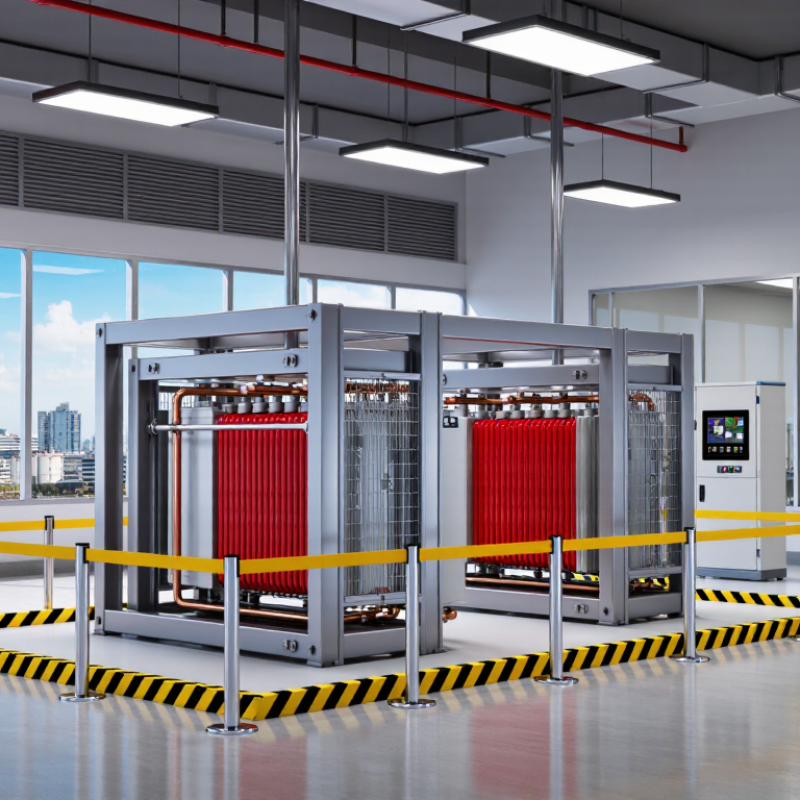
Define the Power Requirements and Operating Conditions
How to Choose a Dry Type Transformer Substation?
Define the Power Requirements and Operating Conditions
Start with the real load profile, not only the nameplate rating. List motors, lighting, HVAC systems, elevators, and future equipment separately. Record starting currents, daily peaks, harmonics, and the expected load-growth rate. The IEA Electricity 2024 report forecasts global electricity demand growth of about 4% in 2024 and 4% in 2025. Your substation may need room for expansion.
Measure the environment carefully. A dry type transformer installed in a clean indoor room faces different risks from one near dust, moisture, or chemical vapors. Check altitude, ambient temperature, ventilation, fire separation, and enclosure protection. IEC 60076-11 addresses dry type transformer insulation, temperature rise, and environmental performance. It should guide technical specifications, not replace site measurements. Small details matter.
Choose capacity after applying diversity and demand factors. Then verify short-circuit withstand, impedance, protection coordination, and harmonic heating. IEEE guidance commonly treats nonlinear loads as a serious transformer-design concern. The U.S. Department of Energy has reported that transformer losses represent roughly 2% to 3% of national electricity consumption, so efficiency deserves attention beyond purchase price. A larger unit is not automatically safer. Oversizing can increase cost and reduce operating efficiency at light loads. I have seen projects rely on estimated demand instead of measured data. That approach is convenient, but weak. Recheck the assumptions before freezing the design.
Compare Transformer Ratings, Voltage Levels, and Load Capacity
Choosing a dry type transformer substation starts with three numbers: kVA rating, voltage level, and expected load. The transformer rating must cover the diversified demand, not the simple sum of every connected device. Calculate real power, power factor, motor starting current, and future expansion. A 1,000 kVA unit at 0.9 power factor supplies about 900 kW before derating. Heat, altitude, enclosure design, and ventilation can reduce that usable capacity. Do not ignore them.
Voltage levels affect insulation, clearances, cable size, and protection settings. Medium-voltage primary systems commonly use 11 kV, 13.8 kV, or 33 kV, while secondary systems often supply 400 V, 415 V, or 480 V. Match the transformer ratio to the utility connection and the facility’s actual equipment. IEC 60076-11 classifies dry type transformers by insulation and thermal behavior, but site conditions still require engineering verification. A neat spreadsheet can mislead.
Load growth deserves a practical review. The International Energy Agency’s Electricity 2024 report expects global electricity demand to grow by an average 3.2% annually from 2024 to 2026. That trend supports reserving capacity for electrification, cooling, automation, or data-processing equipment. However, oversizing also increases purchase cost and can raise no-load losses. Measure existing feeders with power-quality instruments when possible. A short monitoring period may reveal poor power factor, harmonic heating, or an underestimated peak. Recheck the design before selecting the final kVA rating.
Evaluate Insulation, Cooling Methods, and Fire Safety
How to Choose a Dry Type Transformer Substation?
Insulation should be evaluated under real site conditions, not only catalog ratings. Check the voltage class, temperature rise, partial-discharge performance, and creepage distances. Humid rooms, coastal air, dust, and high altitude can weaken insulation over time. Cast-resin insulation generally resists moisture better than untreated solid insulation, but it still needs clean surfaces and correct ventilation. Ask for documented routine and type-test results under applicable electrical standards. Do not accept vague claims.
Cooling affects both capacity and service life. Natural air cooling is quiet and simple, while forced-air cooling can support short-term overloads. Confirm the expected load profile before selecting fans. A substation serving cranes, pumps, or data equipment may experience sharp thermal changes. Install temperature sensors near the hottest winding areas. Fans should have alarms, manual testing, and sensible redundancy. Filters require maintenance. Small details matter.
Fire safety needs more than the absence of transformer oil. Insulation, cables, dust, and nearby materials can still burn. Use fire-rated enclosures, suitable separation distances, smoke or heat detection, and emergency shutdown controls. Ventilation openings must not spread flames into adjacent rooms. Local fire and electrical codes should guide the final design. A low-cost enclosure may appear practical, yet poor airflow can create hot spots. That assumption deserves another review. Check access routes, extinguishing compatibility, and inspection records before energizing the substation.
How to Choose a Dry Type Transformer Substation? - Evaluate Insulation, Cooling Methods, and Fire Safety
| Evaluation Dimension | Cast Resin Transformer | VPI Transformer | Open Ventilated Transformer | Selection Guidance |
|---|---|---|---|---|
| Insulation Construction | Encapsulated High-voltage windings are encapsulated in epoxy resin, providing a solid insulation system around the conductors. | Impregnated Coils are impregnated with resin under vacuum and pressure, then cured to improve mechanical and dielectric strength. | Air-Insulated Windings use solid insulation materials and surrounding air for cooling; the coils are not fully encapsulated. | Select cast resin where moisture, dust, or limited maintenance access creates a demanding environment. Use VPI or open ventilated designs where the installation room is clean and adequately controlled. |
| Typical Thermal Class | Commonly available with Class F insulation rated at 155°C or Class H insulation rated at 180°C, depending on the design. | Commonly designed with Class F or Class H insulation systems, subject to the manufacturer’s tested construction. | Class F and Class H systems are available; the permissible temperature rise depends on materials, cooling, and the specified duty. | Match the insulation class and temperature rise to the load profile, ambient temperature, altitude, harmonics, and required service life. |
| Cooling Method | AN / AF Air Natural cooling is standard. Air Forced fans can increase capacity temporarily or continuously when specified. | AN / AF Natural-air operation is common, with optional forced-air fans for higher capacity or peak-load support. | AN / AF Cooling depends strongly on unobstructed airflow through the windings and correct room ventilation. | Use AN for normal loading and low operating complexity. Consider AF when peak demand, space limitations, or future load growth requires additional capacity. |
| Moisture and Condensation Resistance | The resin surface offers good resistance to humidity and occasional condensation, but it is not a substitute for proper drainage and ventilation. | Resistance varies with resin system and coating quality. Extended condensation or water exposure can reduce insulation reliability. | More sensitive to high humidity, condensation, dust, and conductive contaminants because the windings are directly exposed to the surrounding air. | For humid, coastal, dusty, or intermittently occupied locations, prioritize a suitable enclosure, anti-condensation heaters, controlled ventilation, and an appropriate protection rating. |
| Fire Safety | Contains no liquid insulation oil, eliminating oil-spill hazards. Fire performance still depends on the resin system, enclosure, and tested classification. | Contains no liquid insulation oil and can be specified with low-flammability materials. Confirm the complete transformer’s fire classification. | Contains no liquid insulation oil, but exposed insulating materials must be evaluated for flame propagation, smoke, and installation conditions. | For buildings with strict fire requirements, request a tested low-flammability classification such as F1 under IEC 60076-11 where applicable, and coordinate with the local fire code. |
| Enclosure and Ingress Protection | Often installed in an enclosure rated for the site conditions, such as IP20 for basic indoor protection or higher ratings where access and dust protection are required. | May be supplied as open equipment or inside a ventilated enclosure. The enclosure must maintain sufficient airflow without compromising protection. | Commonly requires a clean, dry electrical room or a carefully designed ventilated enclosure to prevent foreign objects and dust from reaching the coils. | Select the enclosure rating according to personnel protection, dust, water exposure, ventilation, and maintenance requirements. Higher IP ratings generally require thermal derating or larger cooling paths. |
| Partial Discharge and Insulation Quality | Properly manufactured cast resin coils can provide stable dielectric performance. Partial discharge limits must be confirmed from routine or type-test documentation. | Performance depends on vacuum impregnation quality, curing, void control, and coil design. Test values should be obtained for the specific transformer. | Insulation performance depends on coil geometry, materials, cleanliness, and environmental control. Testing is especially important for medium-voltage applications. | Do not compare designs using generic claims. Request applicable routine, type, and special test reports, including partial-discharge results where required by the project specification. |
| Noise and Vibration | Audible noise is mainly produced by the magnetic core and can increase with load, flux density, enclosure design, or cooling fans. | Similar core-related noise behavior; mechanical bracing and mounting quality influence transmitted vibration. | Core noise remains the main source, while fan noise may become significant during forced-air operation. | Specify the maximum sound-pressure level, measurement method, room conditions, and fan operating mode rather than relying on a generic noise value. |
| Altitude and Ambient Temperature | Operation above 1,000 m elevation or in high ambient temperatures may require insulation coordination, cooling, or capacity derating. | The same altitude and ambient-temperature considerations apply; reduced air density decreases cooling effectiveness. | Particularly dependent on ventilation because natural-air cooling becomes less effective as air density decreases. | Provide installation altitude, minimum and maximum ambient temperature, solar exposure, and ventilation conditions before final sizing. |
| Maintenance Requirements | No oil sampling or oil-leak inspection is required. Periodic cleaning, terminal inspection, fan checks, and thermal scanning are still necessary. | Requires regular cleaning and inspection of coils, terminals, supports, and cooling equipment. Moisture and contamination should be monitored. | Usually requires more frequent cleaning because exposed windings can accumulate dust and contaminants that reduce cooling and insulation performance. | Choose the design according to the available maintenance staff, shutdown access, environmental cleanliness, and required maintenance interval. |
| Best-Fit Applications | Indoor substations, commercial buildings, hospitals, transit facilities, data centers, and sites where moisture and fire risk require additional control. | Industrial plants, utility rooms, commercial facilities, and projects seeking a compact dry transformer with a proven impregnated-coil construction. | Clean indoor electrical rooms, light industrial facilities, and installations where environmental control and routine cleaning are readily available. | Base the final choice on total cost of ownership, environmental conditions, fire requirements, load growth, short-circuit duty, and applicable standards. |
Check Installation Space, Environmental Protection, and Maintenance Access
How to Choose a Dry Type Transformer Substation?
Choosing a dry type transformer substation starts with the installation room, not the nameplate. Measure the equipment footprint, cable bending radius, door swing, and working clearance. Leave space for lifting equipment and future component replacement. A compact room may fit today. However, it can create serious maintenance delays later. Check ceiling height, floor loading, ventilation paths, and access for large panels. Record these measurements before ordering equipment, then verify them against local electrical and fire requirements.
Environmental protection deserves equal attention. Indoor locations can still contain dust, moisture, salt, chemicals, or corrosive gases. Do not assume indoor means harmless. Select an enclosure and protection level suitable for the actual site conditions. Consider condensation during cold starts, especially in poorly heated rooms. Keep the transformer away from leaking pipes, wash-down areas, and direct sunlight. In dusty facilities, filtered ventilation and planned cleaning may be essential. A small environmental mistake can reduce insulation performance and shorten service life.
Maintenance access must remain practical after installation. Technicians need room to inspect terminals, clean windings, test insulation, and use thermal scanning equipment. Keep access routes clear, even when other building systems are added later. Provide adequate lighting and safe isolation points. Maintain inspection records with dates, findings, and corrective actions. One overlooked detail is often the emergency exit route. Review the layout with a qualified engineer and the maintenance team; drawings alone may miss real working difficulties.
Verify Standards, Efficiency, Cost, and Supplier Support
How to Choose a Dry Type Transformer Substation?
Standards should be checked before comparing prices. Specify IEC 60076-11 or the applicable national standard. Confirm insulation class, temperature rise, short-circuit strength, enclosure rating, and routine test requirements. Ask for certified test reports, not only a compliance statement. In field projects, missing ventilation data often causes avoidable redesigns. That detail matters.
Efficiency deserves a lifecycle calculation. The U.S. Department of Energy’s 2024 distribution transformer rule estimates 3.6 quadrillion Btu in energy savings over 30 years. It also projects approximately 340 million metric tons of avoided carbon emissions. Compare no-load and load losses at the site’s actual load profile. A cheaper unit may cost more after years of energized losses.
A low first quote can look brilliant. It can also be a trap. Include transport, installation, maintenance, noise control, and replacement risks in the total-cost model.
Tips:
Request three comparable quotations. Require guaranteed losses, delivery milestones, spare-part availability, and response times. Check whether the supplier provides drawings, commissioning support, thermal calculations, and technician training. Ask for references from similar humidity, altitude, and load conditions.
Supplier support is often overlooked, yet downtime can exceed the transformer’s purchase price.
My own caution is simple: spreadsheet assumptions are rarely perfect. Recheck them with measured load data before approving the substation.