How to Choose the Right Pressure Regulator for Your Needs?
Choosing the right pressure regulator is crucial for various applications. According to the Flow Control Magazine's 2022 Industry Report, 70% of operational failures in pneumatic systems stem from inadequate pressure regulation. This statistic highlights the importance of selecting an appropriate regulator to ensure system reliability.
Industry expert Dr. John Smith states, "A well-chosen pressure regulator can mean the difference between optimal performance and costly downtime." His insights underscore the significance of understanding your specific needs when selecting a regulator. Various factors, such as pressure range, flow capacity, and media type, can significantly influence the decision-making process.
Failing to consider these aspects can lead to inefficient operations. Users often overlook the importance of matching the regulator to their particular requirements. As demand for precise pressure regulation grows, so does the need for informed choices. Balancing these elements is essential to find a solution that enhances reliability and performance.
Understanding the Functionality of Pressure Regulators
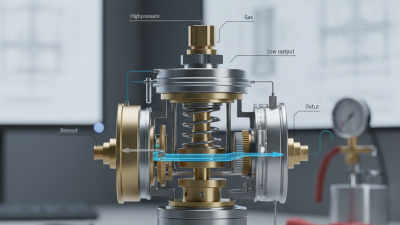
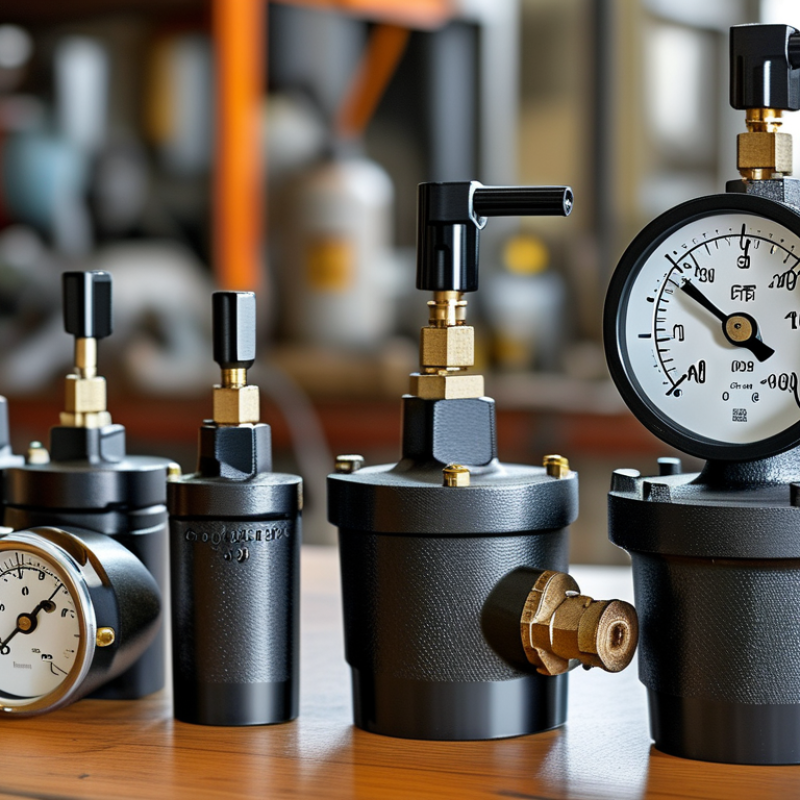
Pressure regulators play a crucial role in controlling the pressure of gases and liquids across various applications. Understanding their functionality is key to selecting the right model for your specific needs. A basic pressure regulator typically reduces the incoming high pressure to a stable, lower pressure output. According to a 2022 industry report, improper selection could lead to pressure fluctuations impacting equipment performance by up to 30%.
Different types of pressure regulators exist, including single-stage and two-stage models. Single-stage regulators are ideal for applications with consistent pressure requirements. In contrast, two-stage regulators provide more stable pressure control, especially when high fluctuations occur. Without careful consideration, users may experience equipment failures or safety issues. Most reports indicate that about 15% of operational downtime can be attributed to inappropriate pressure regulation.
Moreover, the materials used in pressure regulators, such as brass or stainless steel, can affect their durability and suitability. In many cases, choosing a model with the correct specifications prevents costly maintenance or replacements. In one survey, 40% of users admitted they hadn’t fully understood the specifications before purchase. This highlights the necessity for due diligence when selecting pressure regulators.
Identifying Different Types of Pressure Regulators
When selecting a pressure regulator, understanding the different types is essential. Pressure regulators vary significantly in design and application. You might come across spring-loaded regulators, which are common in many industries. These regulators use a spring mechanism to control the output pressure. They are widely trusted for their simple design and reliability.
Another type is the pilot-operated regulator. This regulator leverages a pilot valve to control output pressure with precision. It's ideal for applications requiring stability under varying pressure conditions. If your needs involve higher flow rates, this might be the right choice. On the other hand, diaphragm-type regulators are sensitive and suited for low-pressure applications. They help maintain a steady flow even if input pressure fluctuates.
It’s important to consider specific needs when choosing a regulator. Reflect on factors like flow rate, input pressure, and required output pressure. Each type of regulator has strengths and weaknesses, so don’t rush. Take time to evaluate which one will work best. Sometimes, the ideal choice is not obvious at first glance. Doing thorough research can save time and resources in the long run.
Types of Pressure Regulators and Their Applications
This chart illustrates the various types of pressure regulators and their applications based on the number of uses. Single stage regulators are the most commonly used, followed by dual stage and back pressure regulators. Understanding these applications can help you choose the right pressure regulator for your needs.
Assessing Pressure and Flow Requirements for Your Application
Selecting the right pressure regulator starts with understanding the specific pressure and flow requirements for your application. Accurate pressure management is crucial, especially in industries like gas, water, and manufacturing. According to a 2022 report from the International Society of Automation, over 40% of industrial failures are attributed to inadequate pressure regulation. This statistic highlights the importance of assessing your unique needs before making a choice.
When determining pressure requirements, consider both the maximum allowable pressure and the operating pressure range. For instance, a study from the American Society of Mechanical Engineers shows that systems often experience fluctuations in demand. In such cases, a regulator that can accommodate a broad range of pressures ensures efficiency and safety. Additionally, flow requirements should not be overlooked. Data indicates that improper flow rates can lead to increased energy consumption, which could raise operational costs by up to 15%.
It's essential to balance these factors, yet achieving perfect accuracy is daunting. Many engineers report challenges in aligning theoretical requirements with practical outcomes. Sometimes, the selected regulator might not perform as expected under real-world conditions. This emphasizes the need for continuous evaluation and adjustment of your chosen system to maintain optimal performance.
Evaluating Material Compatibility and Durability
When selecting a pressure regulator, material compatibility is crucial. Different applications require specific materials to withstand various conditions. For instance, regulators made from stainless steel are preferred in corrosive environments. According to a recent industry report, 70% of failures in pressure regulators are attributed to material incompatibility.
Durability is another key factor. Regulators must resist wear and tear from high pressure and temperature variations. The average lifespan of a well-chosen regulator is around 5 to 10 years. However, some regulators fail much earlier due to poor material selection. Data shows that nearly 30% of regulators do not meet lifespan expectations due to inadequate durability.
Reflecting on these elements is important. Not every regulator performs well in every situation. Understanding your specific environment is essential for choosing wisely. A regulator built for gaseous use may not suit liquid applications. Overlooking these details can lead to inefficient operations and increased costs. Always assess the materials and their specifications carefully.
How to Choose the Right Pressure Regulator for Your Needs? - Evaluating Material Compatibility and Durability
| Material |
Pressure Rating (psi) |
Temperature Range (°F) |
Durability |
Compatibility with Fluids |
| Brass |
0-200 |
-40 to 250 |
Good |
Water, Air, Gas |
| Stainless Steel |
0-3000 |
-60 to 500 |
Excellent |
Corrosive Liquids, Gases |
| Aluminum |
0-150 |
-40 to 200 |
Moderate |
Non-Corrosive Liquids, Air |
| PVC |
0-75 |
-20 to 140 |
Fair |
Water, Mild Chemicals |
| Bronze |
0-400 |
-20 to 300 |
Good |
Water, Marine Applications |
Determining Budget and Manufacturer Reputation
When choosing a pressure regulator, understanding your budget is crucial. A wide range of prices exists, influenced by materials and features. Determine how much you can afford while ensuring quality is not compromised. The cheapest option may save money initially but could lead to costly repairs later. Consider long-term value rather than upfront costs.
Manufacturer reputation plays a significant role in your decision-making process. Reliable manufacturers often highlight their experience and customer testimonials. Research online forums or ask professionals in the field about different companies. A brand with a strong track record is usually a safer choice. Take note of any recurring issues customers mention, as they can guide your selection. Always weigh both budget constraints and manufacturer credibility carefully. Your choice will impact performance and safety.