
Top 10 Diamond Cut Alloy Wheel Machines for Global Buyers
Global buyers evaluating a Diamond Cut Alloy Wheel Machine face a practical challenge: matching finish quality with reliable production. OICA reported approximately 93.5 million motor vehicles produced worldwide in 2023. That figure signals a vast vehicle supply chain, but it does not measure demand for diamond-cut wheels directly.
The International Energy Agency’s Global EV Outlook 2024 estimated nearly 14 million electric car sales in 2023, close to 18% of global car sales. Changing vehicle designs and trim options can influence wheel specifications. Still, this trend alone cannot predict machine sales. Buyers should assess each machine’s spindle performance, clamping method, probing accuracy, software, and ability to handle different wheel sizes. A bright, even face matters. So do repeatable results and manageable setup times.
This guide compares ten machines through those operational details, alongside service access, training, and parts availability. A showroom finish is only part of the decision. Ask suppliers for sample cuts on representative wheels, cycle-time data, and clear maintenance requirements. Check how the machine handles damaged or previously refinished surfaces. These points can expose gaps that a specification sheet may hide. No single model suits every workshop, and published claims need verification. That deserves a second look. The aim here is a grounded shortlist, not a promise that one machine fits every market or production line.
What Defines a Diamond-Cut Alloy Wheel Machine
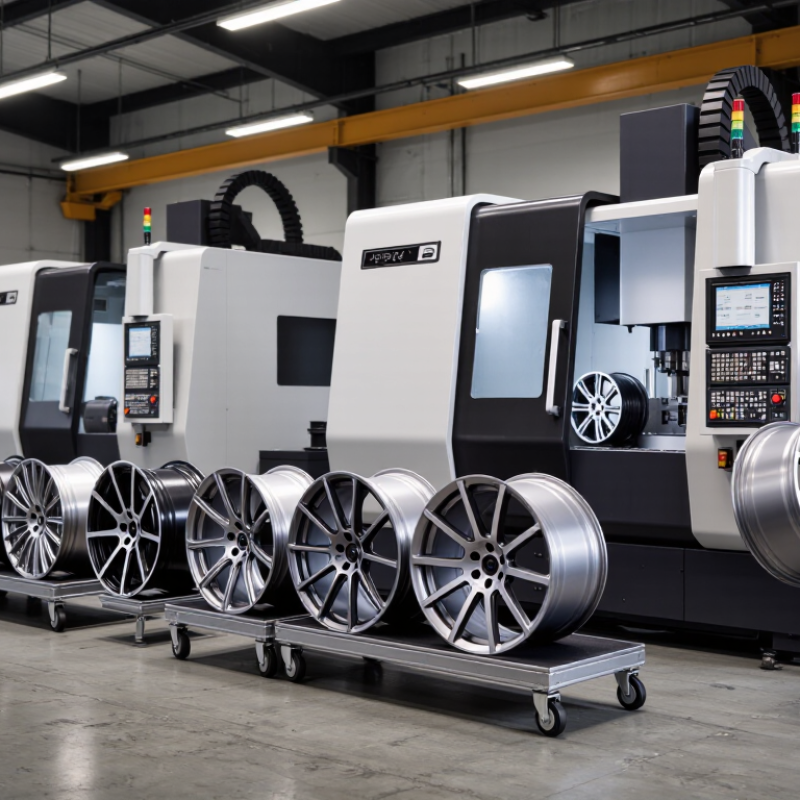
A diamond-cut alloy wheel machine is a precision lathe designed to skim a wheel’s front face with a diamond-tipped cutting tool. The wheel is secured on a spindle, then rotated while the tool follows a programmed path. This removes a thin layer of metal and creates fine, directional lines that reflect light. The machine’s defining features include stable clamping, controlled tool movement, accurate measurement, and adjustable cutting depth. It is not simply a polishing machine.
In practical use, the wheel must sit firmly and run true; even slight movement can leave uneven lines. A probe or careful measurement helps map the face before cutting, especially around curved spokes. The operator also needs to check how much material remains, since repeated cuts reduce the wheel’s usable surface. Results depend on setup and wheel condition, not just machine specifications. A bright finish can still reveal small flaws. That part is easy to underestimate.
Tips: Clean the wheel and inspect it for cracks before machining. Use a shallow test pass when settings are uncertain. Keep a record of cutting depth and tool condition; it makes repeat work more consistent, though not perfect.
How Diamond-Cut Wheel Machining Works
Top 10 Diamond Cut Alloy Wheel Machines for Global Buyers
How Diamond-Cut Wheel Machining Works
A diamond-cut finish is created by removing a very thin layer from a wheel’s face with a single-point cutting tool. The wheel is clamped onto a rotating spindle, and a probe or scanning system measures its profile. The CNC machine follows that shape, cutting fine, even lines into the alloy. Those bright lines catch the light.
Many wheels are painted or coated before machining. Cutting exposes the lighter metal beneath, creating contrast between the machined face and darker sections. Coolant helps control heat and clear chips, while careful clamping reduces vibration. Even a small setup error can leave visible rings or an uneven face.
The process is precise, but not magic. Metal removal is permanent. A skilled operator checks the wheel’s condition and avoids cutting deeper than needed, since too much machining can weaken the face. After cutting, the exposed surface needs a suitable protective coating to limit corrosion. Runout and balance should also be checked; a glossy finish alone says little about how smoothly a wheel will perform. Not every wheel qualifies, and that judgment can be imperfect. A cautious inspection is worth the extra time.
Key Specifications for Comparing Wheel Machines
Compare diamond-cut alloy wheel machines by their working range, not brochure maximums. Record supported wheel diameter, width, clamping method, spindle speed, axis travel, and typical cycle time. Check spindle runout and clamping repeatability with the same test wheel across several setups. Small errors matter. Ask how cutting depth, feed rate, and tool geometry affect the finish. A polished sample helps, but it cannot prove repeatability. Looks can mislead.
OICA’s 2023 production report recorded 93.5 million motor vehicles built worldwide. This figure shows the scale and variety of vehicle production; it is not a forecast for wheel-machine sales. For buyers serving mixed vehicle types, confirm that fixtures hold different wheel designs securely and that CNC settings can be saved and retrieved. Request a trial cut on a representative wheel, then inspect the face under consistent lighting for uneven tool marks. One weak point in many comparisons is the quoted cycle time: ask whether loading, setup, and inspection are included. Also check extraction, guarding, and routine maintenance access, since these affect daily operation as much as headline specifications.
Top 10 Diamond Cut Alloy Wheel Machines for Global Buyers - Key Specifications for Comparing Wheel Machines
Use these reference points to compare machine configurations. Capacity, performance, and electrical requirements vary by model; confirm every value against the supplier’s technical datasheet and a sample-wheel test.
| No. | Specification to Compare | Useful Reference | Why It Matters | Buyer Check |
|---|---|---|---|---|
| 1 | Wheel diameter capacity | Passenger-car wheels commonly fall around 14–22 in; larger SUV and specialty wheels can exceed this range. | Sets the largest wheel the machine can safely accommodate. | Confirm maximum and minimum wheel diameter, not just the advertised nominal size. |
| 2 | Wheel width and workpiece load | Check the manufacturer’s maximum wheel width and weight; these limits are machine-specific. | A wheel may fit by diameter but still exceed the chuck, fixture, or spindle load limit. | Compare the limits with the widest and heaviest wheels in your service mix. |
| 3 | Centering and clamping system | A suitable system should support the wheel’s center bore and mounting-face geometry using compatible adapters. | Accurate, repeatable mounting is essential for concentric machining and consistent results. | Ask which adapters are included and how the system handles different center bores and wheel designs. |
| 4 | CNC axes and scanning method | Compare the machine’s controlled axes and whether wheel profiling uses a probe, laser, or another measurement method. | Automation and profiling method affect setup, repeatability, and the range of wheel-face shapes that can be processed. | Request a demonstration using a wheel with a similar face profile to your typical jobs. |
| 5 | Cutting tool and compatible materials | Diamond-cut finishing is used on suitable aluminum-alloy wheel faces; tool type and cutting parameters must match the workpiece and finish requirement. | Tool compatibility affects surface finish, tool life, and process cost. | Confirm approved tool specifications, replacement availability, and recommended settings. |
| 6 | Spindle speed and feed control | Compare the documented spindle-speed range and whether feed and cutting depth can be adjusted for different jobs. | Appropriate speed and feed settings help achieve the required finish without unnecessary material removal. | Request sample results and operating recommendations for common wheel finishes. |
| 7 | Positioning accuracy and repeatability | Use the accuracy and repeatability figures published for the complete machine; there is no single value that applies to every configuration. | These figures help indicate how consistently the machine can follow a programmed profile. | Ask how accuracy is measured and whether the stated figure is positioning accuracy, repeatability, or finished-part runout. |
| 8 | Cycle time and setup workflow | Cycle time depends on wheel condition, scanning, program preparation, cutting settings, and operator handling. | A headline cutting time may not include loading, measurement, setup, or inspection. | Compare a complete, timed workflow on representative wheels rather than a cutting-only estimate. |
| 9 | Electrical supply and installation | Industrial supplies vary by country; common systems include 200–240 V and 380–415 V, with frequency and phase also depending on location and machine configuration. | A mismatch can require electrical upgrades or a compatible machine configuration. | Verify voltage, phase, frequency, rated current, grounding, and local compliance before ordering. |
| 10 | Safety, training, and after-sales support | Review guarding, emergency-stop provisions, operating documentation, training, spare parts, and service arrangements for the destination country. | These factors affect safe operation, uptime, and long-term ownership cost. | Confirm applicable local requirements, warranty terms, response times, and parts lead times in writing. |
Top 10 Diamond-Cut Alloy Wheel Machines for Global Buyers
Global buyers comparing the top 10 diamond-cut alloy wheel machines should look beyond advertised cutting speed. OICA reported approximately 93.5 million motor vehicles produced worldwide in 2023, underscoring the scale of the automotive supply chain. The IEA’s Global EV Outlook 2024 recorded nearly 14 million electric cars sold in 2023, about 18% of new car sales. These figures do not predict wheel-machine demand directly, but they show why flexible servicing capacity matters.
Compare spindle accuracy, wheel-fixture stability, probing repeatability, and software support. Ask suppliers to demonstrate a real repair, including setup and edge finishing. Watch the cutter pass over the rim: vibration, uneven tool marks, or excessive material removal can affect the finished appearance. Check compatible wheel diameters, electrical requirements, coolant handling, and operator training before comparing prices. Details matter.
A useful top-10 shortlist should separate production-focused systems from machines designed for repair shops. Request sample results and service response times for your region. I would not rank equipment by brochure speed alone; that shortcut can mislead. One awkward detail is operator skill: even capable equipment needs careful setup and inspection. Buyers should confirm measurement procedures, replacement-tool availability, and the process for checking a finished wheel against the agreed repair specification.
How to Match a Machine to Workshop Needs and Regional Markets
Matching a diamond-cut alloy wheel machine starts with the work, not the brochure. S&P Global Mobility reported that the average age of U.S. light vehicles reached 12.6 years in 2024. That suggests a sizeable maintenance market, but it does not predict demand in every town. Check local repair volumes, wheel sizes, finish expectations, and how often customers request complex multi-face cuts. Small details matter: a tight workshop may need a compact machine, while a high-volume shop may value faster setup and repeatable CNC tool paths.
Regional vehicle production offers useful context, not a direct sales forecast. OICA recorded about 93.5 million motor vehicles produced worldwide in 2023. Buyers should compare each machine’s clamping range, spindle performance, measurement system, guarding, and extraction provisions against the wheels they actually handle. Ask for a live demonstration using a damaged wheel similar to local repair jobs. Watch the setup, not just the cutting.
Then check practical fit. Confirm electrical supply, floor space, operator training, spare-part access, and calibration support in your region. These costs are easy to underestimate. A technically capable machine can still become an expensive bottleneck if service is distant or software training is limited. Some shops may not need advanced automation; others may regret buying too little capacity. The right choice is rarely obvious from a specification sheet alone.
Top 10 Diamond Cut Alloy Wheel Machines for Global Buyers
How to Match a Machine to Workshop Needs and Regional Markets
The chart presents a suggested 100-point evaluation framework, not measured market-survey results. Adjust the weights to reflect local wheel sizes, workload, operator skills, service access, and applicable safety requirements.