What Are the Top Polymer Heat Exchanger Types in 2026?
By 2026, choosing a Polymer Heat Exchanger means balancing corrosion resistance, heat-transfer needs, operating pressure, and maintenance access. A polypropylene unit may suit a chemical rinse line, while PVDF or fluoropolymer designs may handle more demanding fluids. The right choice depends on actual conditions—not just the material name.
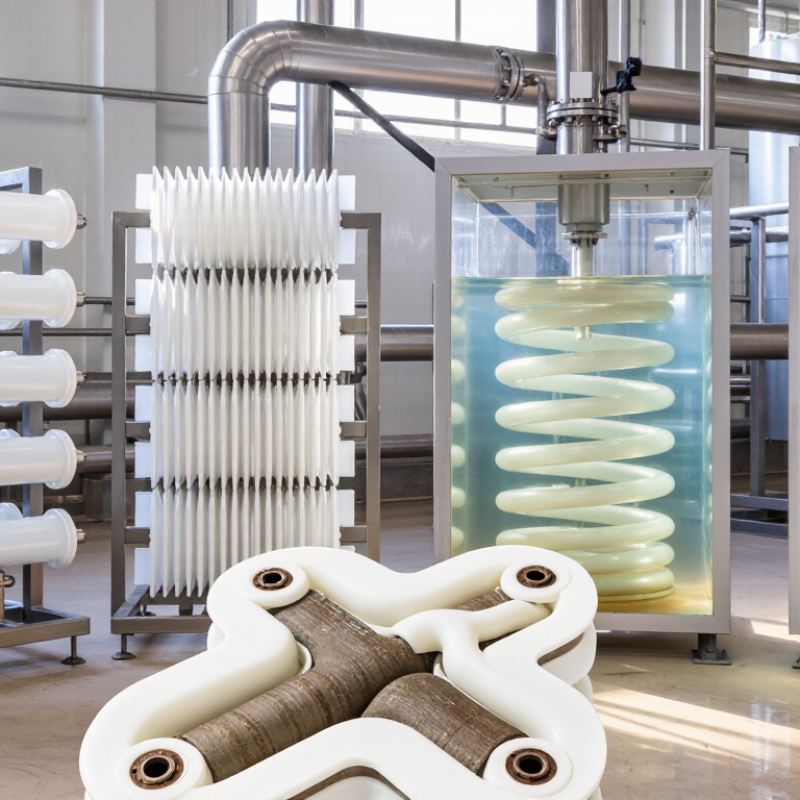
Common designs include shell-and-tube, plate, coil, and immersion heat exchangers. Each has a different footprint and flow path. A compact plate unit can fit a tight process area; a coil can work well in a tank. Picture the details: a narrow passage carrying process liquid, a gasket exposed to cleaning chemicals, or a tube bundle that must be inspected between production runs. Small design choices matter.
Heat-transfer authority Ramesh K. Shah is known for work on heat exchangers. A practical paraphrase of the engineering lesson reflected in that work is: “Good thermal design must account for the whole system, not just the exchanger.” This is a paraphrase, not a verified direct quotation. It is worth saying plainly.
Polymer equipment can resist corrosion, but it does not automatically outperform metal. Lower thermal conductivity, temperature limits, pressure requirements, fluid compatibility, and fouling all deserve attention. Some comparisons also depend on test conditions, which are not always easy to match. That uncertainty matters. This guide compares the leading polymer heat exchanger types for 2026, outlining their strengths, trade-offs, and the operating details engineers should verify before selecting a design.
How Polymer Heat Exchangers Transfer Heat
What Are the Top Polymer Heat Exchanger Types in 2026?
A polymer heat exchanger moves heat across a solid wall separating two fluid streams. The hot fluid warms the polymer surface; heat conducts through the wall and enters the cooler stream. The fluids stay apart. Inside narrow tubes or channels, flowing liquid continually replaces the thin boundary layer touching the wall. This convection, combined with conduction, drives heat transfer.
Polymers usually conduct heat less readily than metals, so designers may use thin walls, many channels, or large surface areas. Plate, tubular, and hollow-fiber designs arrange those surfaces differently. The right geometry depends on fluid chemistry, temperature, pressure, and cleaning needs—not just the material. The U.S. Department of Energy’s 2008 report, Waste Heat Recovery: Technology and Opportunities in U.S. Industry, estimates that 20–50% of industrial energy input can leave as waste heat. That broad estimate is not a polymer-specific performance promise. In practice, deposits can narrow channels and slow heat transfer. Easy to overlook. Polymer equipment can resist corrosion, but it still has temperature and pressure limits. A careful design checks those limits against real operating conditions, including start-up and cleaning cycles. I would not treat a catalog heat-transfer figure as a guarantee for a fouling process.
What Are the Top Polymer Heat Exchanger Types in 2026?
How Polymer Heat Exchangers Transfer Heat
Polymer heat exchangers transfer heat through solid polymer walls separating two fluid streams. Their corrosion resistance can be valuable in demanding chemical environments, while their relatively low thermal conductivity makes wall thickness, surface area, flow, and operating conditions important design considerations.
| Configuration | How heat is transferred | Typical applications | Potential advantages | Key design considerations |
| Tube-bundle (shell-and-tube) | One fluid flows through polymer tubes while another flows around them in the shell. Heat passes through the tube walls without the streams mixing. | Corrosive liquid service, chemical processing, and heat recovery. | Separates the fluids physically and can be configured for different flow arrangements and duties. | Tube-wall thickness, pressure and temperature limits, flow distribution, and fouling affect performance. |
| Plate-and-frame | Hot and cold fluids pass through alternating channels separated by polymer plates; heat conducts across each plate from the warmer stream to the cooler one. | Liquid-to-liquid heat exchange where corrosion resistance and compactness are priorities. | A large heat-transfer area can fit into a compact arrangement. | Plate material, joining method, channel design, pressure rating, and cleanability must suit the service. |
| Immersion coil | A polymer coil sits directly in a tank or vessel. Heat crosses the coil wall between the fluid inside the coil and the surrounding process fluid. | Tank heating or cooling, chemical baths, and temperature control in vessels. | Provides direct heat exchange with a tank contents and can avoid exposing metal surfaces to corrosive liquids. | Tank mixing, coil placement, accessible surface area, and polymer temperature limits influence heat-transfer rate. |
| Fluoropolymer tube-bundle | Heat transfers through thin fluoropolymer tubes between separated fluid streams, using the same basic conduction-and-convection path as other tubular designs. | Applications requiring chemical compatibility with aggressive process fluids. | Fluoropolymers can offer broad chemical resistance, depending on the specific polymer and operating conditions. | Chemical compatibility must be checked for the actual fluid, concentration, temperature, and exposure time; low thermal conductivity can constrain duty. |
| Air-to-liquid polymer tube exchanger | Air flows across polymer tubes carrying liquid. Heat moves from one stream through the tube wall to the other; external fins or increased surface area may be used in some designs. | Corrosive exhaust or process-air heat recovery and other gas-to-liquid duties. | Can provide a nonmetallic heat-transfer surface in corrosive gas environments. | Air-side heat transfer, condensate drainage, dust or deposit buildup, and the temperature limits of the polymer require attention. |
Selection note: The best configuration depends on fluid compatibility, required heat duty, pressure, temperature, fouling tendency, and maintenance needs. Actual performance should be confirmed using application-specific thermal and mechanical design data.
Which Polymer Heat Exchanger Types Stand Out in 2026?
In 2026, polymer plate heat exchangers stand out where corrosion resistance and compact installation matter. Their thin, closely spaced channels can transfer heat efficiently while keeping process fluids separate. They suit chemical dosing lines, wastewater treatment, and other systems with aggressive fluids. But narrow passages can clog when liquids carry fibers or suspended solids. Cleanability deserves attention.
Polymer shell-and-tube designs offer a different balance. Tubes made from materials such as PVDF or polypropylene can resist many corrosive fluids, while the shell provides a familiar, serviceable layout. They are often considered for lower-pressure duties, though exact limits depend on material, temperature, geometry, and operating conditions. Check the full design data, not just the polymer name.
Coil and immersion-style polymer exchangers can be useful in tanks, where a simple loop can heat or cool liquid directly. They are practical when space is available and flow is uneven. Still, polymer conducts heat less readily than metal, so equipment may need more surface area. That trade-off is easy to underestimate. Material compatibility should be checked against the actual fluid and cleaning routine, since small changes in concentration or temperature can alter performance.
How Plate, Shell-and-Tube, Coil, and Immersion Designs Differ
Polymer heat exchangers are useful when corrosion resistance matters more than maximum heat-transfer speed. Plate designs stack thin channels, creating a compact unit with a large exchange area. They suit clean, compatible fluids and tight equipment rooms. However, narrow passages can foul, and cleaning access varies by design. Shell-and-tube units use many tubes inside a larger shell. They are often easier to adapt for different flow rates, but usually take up more space. A practical choice depends on fluid chemistry, pressure, temperature, and maintenance access—not material alone.
Coil designs route fluid through a curved tube placed in a tank or process stream. Their simple geometry can make installation straightforward, though uneven flow may leave parts of the coil underused. Immersion designs place heat-transfer elements directly in a bath. They can heat or cool tanks without a separate external loop. The trade-off is that deposits may build up on exposed surfaces. Small details matter.
Tips: Check chemical compatibility at the actual operating temperature, not just room temperature. Ask for pressure and temperature limits, inspect cleaning access, and compare expected flow rates. Leave space to remove or service the unit. One detail is easy to overlook: polymer’s lower thermal conductivity can require more surface area, so a compact-looking design may not deliver the needed duty.
Where Each Polymer Heat Exchanger Type Is Best Suited
Polymer heat exchangers suit processes where corrosion resistance matters more than maximum heat-transfer intensity. NACE International’s IMPACT study estimated global corrosion costs at US$2.5 trillion annually, or 3.4% of global GDP. That broad estimate is not specific to heat exchangers, but it shows why material selection deserves attention. Fluoropolymer tube bundles, such as PTFE or PFA designs, are often suited to aggressive acids and contaminated streams. Their chemical resistance is valuable, though lower thermal conductivity can mean larger equipment or slower heat transfer.
Polypropylene and PVDF shell-and-tube units are practical for water treatment, pickling lines, and moderate-temperature chemical baths. They tolerate many corrosive liquids, and individual tubes can be easier to inspect than tightly packed channels. Polymer plate exchangers fit cleaner, space-limited duties where close temperature control matters. Yet narrow passages can foul; a design that looks compact on paper may be troublesome with solids or viscous fluids. These materials also have temperature and pressure limits, so confirm both against actual operating conditions.
Tips: Match the polymer to the chemical concentration, temperature, and cleaning method—not just the fluid name. Ask for pressure-drop and fouling data at your real flow rate. Small differences matter. Be cautious with generic compatibility charts; mixtures and temperature swings can change performance.
How to Choose a Polymer Heat Exchanger for an Application
Choosing a polymer heat exchanger starts with the fluids, not the equipment shape. Plate units suit compact, cleanable duties; tubular designs handle suspended solids more readily, while immersion coils fit open tanks. Check chemical compatibility at the actual concentration and operating temperature. A material that resists a dilute acid may behave differently in a hot, concentrated stream. Details matter.
Next, compare temperature, pressure, fouling, and cleaning needs. The U.S. Department of Energy’s Waste Heat Recovery report estimates that 20–50% of industrial energy input can leave as waste heat, but recovery depends on a workable temperature difference and steady flow. Polymer’s lower thermal conductivity can mean more heat-transfer area than metal requires. It can also be a practical trade-off where corrosion resistance extends service life. The NACE IMPACT study estimated corrosion costs at US$2.5 trillion annually, about 3.4% of global GDP. That figure is broad, not a promise of savings from switching materials.
Ask suppliers for pressure-drop and heat-duty calculations using real process data, then verify them against fouling and cleaning conditions. A fibrous stream may clog narrow passages; a low-pressure tank loop may suit a coil better. Leave operating margin. Yet do not oversize blindly: bigger units can cost more and may worsen flow distribution. Pilot testing is worthwhile when fluid composition changes seasonally. Sometimes the data are imperfect. Say so, and build that uncertainty into the design.