Why Choose an Enclosed Circuit Breaker for Your Needs?
An Enclosed Circuit Breaker can help protect a switching device from dust, moisture, accidental contact, and everyday site wear. That protection matters in workshops, utility rooms, and outdoor service areas, where a bare breaker may face conditions its design was not meant to handle. The enclosure does not improve every installation by default. Its material, ingress protection rating, and compatibility with the breaker must match the actual environment.
The risk context is real. NFPA’s Electrical Fires report, covering 2015–2019, estimates an annual average of 31,647 U.S. home structure fires involving electrical distribution or lighting equipment. These fires were associated with 430 civilian deaths and $1.3 billion in direct property damage per year. The figures do not isolate breaker failures, so they should not be read as proof that an enclosure prevents fires. Still, they show why sound electrical equipment selection deserves care.
IEC 60529 defines IP ratings for protection against access, dust, and water; it can help buyers compare enclosure characteristics. Yet a rating alone cannot settle the choice. Check the manufacturer’s instructions, fault-current requirements, ambient temperature, and available space for wiring and maintenance. A cramped box can complicate service. That detail is easy to miss. A qualified electrician can verify the installation against the equipment specifications and local requirements. Choosing well means matching protection to the site—not simply choosing the toughest-looking housing.
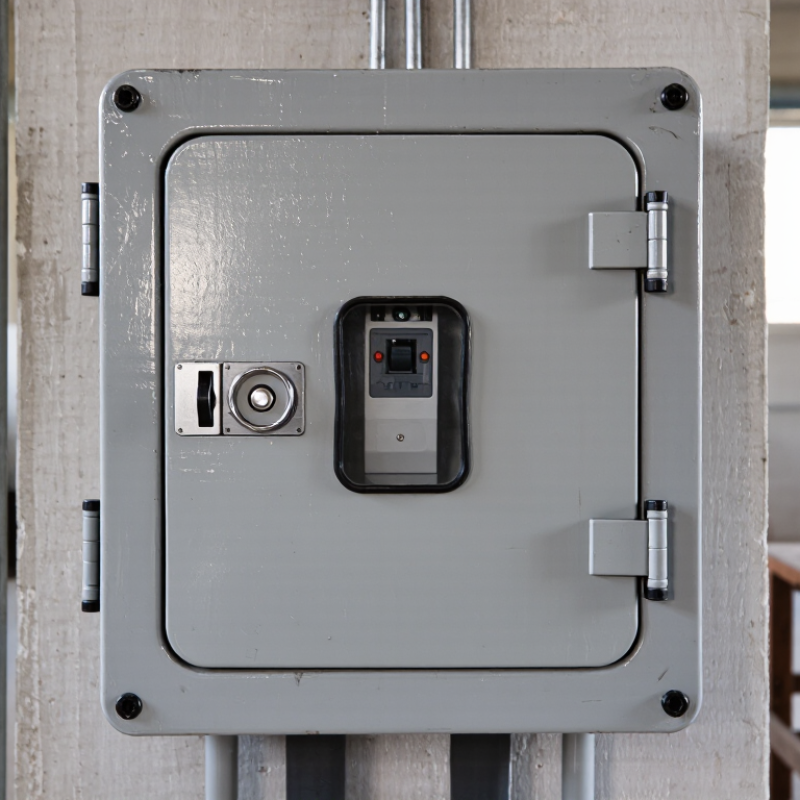
What an Enclosed Circuit Breaker Is and How It Is Built
An enclosed circuit breaker combines a switching mechanism, trip unit, terminals, and a protective housing. The housing is usually molded insulating material or metal. Inside, contacts open when an overload or short circuit triggers the trip mechanism. The enclosure helps limit accidental contact and shields components from dust, moisture, and impact, depending on its rating. It does not replace correct wiring or suitable overcurrent protection. Small details matter: terminal spacing, heat dissipation, and cable entry points all affect safe operation. The housing is not magic.
Protection levels need careful interpretation. IEC 60529 defines IP ratings for resistance to dust and water; the first digit addresses solids, while the second addresses water. An IP rating does not automatically mean a breaker can withstand every chemical, impact, or outdoor condition. NFPA’s Home Electrical Fires report, published in 2019, estimated 46,700 U.S. home fires annually involved electrical failure or malfunction during 2014–2018. That figure covers many electrical causes, not breaker enclosures alone, but it underscores why component selection and installation deserve attention.
Tips: Check the product’s enclosure and interrupting ratings against the actual location and system fault current. Look for clear markings on the device, then verify them against the manufacturer’s technical documentation. A sealed-looking cover can still admit water through an unsuitable cable opening. Have a qualified electrician assess the fit, especially in damp, dusty, or hot spaces.
How an Enclosed Circuit Breaker Detects and Interrupts Faults
An enclosed circuit breaker does not detect a fault through its outer case. Sensors and a trip mechanism inside the enclosure monitor current. In many common designs, a bimetal strip heats and bends during a sustained overload. A magnetic mechanism responds to a much larger short-circuit current. Some models use electronic trip units for adjustable protection. The response is fast.
When the trip mechanism releases, stored spring force separates the contacts. Current does not stop instantly: an electrical arc can form between them. An arc chute guides, divides, and cools that arc, helping the breaker interrupt current safely. The enclosure keeps people away from live components and helps protect internal parts, but its protection depends on the specific rating and installation conditions. Dust or moisture resistance should never be assumed.
For example, a motor drawing excessive current may trigger a delayed thermal response, while a sudden fault can prompt magnetic tripping. The right response depends on the breaker’s settings and the circuit’s design. That detail is easy to overlook. A breaker that trips repeatedly may signal a real wiring or equipment problem, not an inconvenience to bypass. Check its specifications, and have a qualified professional investigate persistent trips.
Why Choose an Enclosed Circuit Breaker for Your Needs? — How an Enclosed Circuit Breaker Detects and Interrupts Faults
| Condition or Feature | How It Is Detected or Provided | How the Breaker Responds | Why It Matters |
| Overload | A thermal or electronic trip unit monitors current over time. In thermal-magnetic designs, sustained excess current heats a bimetal element. | The trip mechanism opens the contacts when the overload persists long enough to reach its trip threshold. | Helps protect conductors and connected equipment from excessive heating. The permitted current and trip characteristics depend on the breaker rating and installation. |
| Short circuit | A magnetic element or electronic trip unit detects a very high current that rises rapidly. | The breaker trips rapidly and separates its contacts. Its arc-control system helps extinguish the arc as current is interrupted. | Limits the duration of fault current. The breaker must have an interrupting rating suitable for the available fault current at its installation point. |
| Ground fault | Ground-fault protection, when included, detects current flowing outside the intended circuit path, commonly by comparing current in the circuit conductors. | A compatible ground-fault trip function opens the circuit when its settings and operating conditions are met. | Can reduce risks associated with unintended current paths. Ground-fault protection is not included in every enclosed circuit breaker. |
| Arc fault | Specialized arc-fault protection analyzes electrical signals for patterns associated with hazardous arcing. | If the breaker incorporates this function and identifies a qualifying arc-fault signature, it trips the circuit. | Arc-fault detection is a specialized feature, not a standard function of every enclosed breaker; suitability depends on the application and applicable requirements. |
| Contact separation and arc control | When the trip mechanism operates, internal contacts move apart. An arc can form as current is interrupted. | The breaker’s arc-control components manage and extinguish the arc within the device’s rated operating limits. | Supports safe interruption when the breaker is correctly selected, installed, and used within its ratings. |
| Protective enclosure | The enclosure surrounds the breaker and helps limit access to live parts. Its construction and environmental rating determine the protection it provides. | The enclosure does not itself detect faults; the breaker’s trip unit performs detection and initiates interruption. | Can provide a defined mounting arrangement and protection against contact or environmental conditions when the enclosure is correctly rated for the location. |
| Reset after a trip | The breaker’s handle or trip indicator may show that the mechanism has operated; indication varies by design. | After the cause is identified and corrected, the breaker can generally be reset according to its operating instructions. | A trip should be investigated rather than repeatedly reset. Follow the device instructions and applicable electrical safety procedures. |
Selection note: Trip functions, ratings, enclosure protection, and applicable installation requirements vary by breaker design and application. Consult the device documentation and a qualified electrical professional for selection and installation.
How Its Enclosure Improves Safety and Environmental Protection
Why Choose an Enclosed Circuit Breaker for Your Needs?
A circuit breaker enclosure adds a physical barrier between live components and people, tools, dust, and moisture. In a workshop, that can mean fewer chances of accidental contact when someone reaches past a panel. It also helps keep conductive debris away from terminals. Dust gets everywhere. The enclosure’s protection depends on its design and installation, not its appearance. Check the specified IP rating: IEC 60529 classifies how effectively an enclosure resists dust and water ingress.
The need is practical. NFPA’s Electrical Fires report, using U.S. data from 2015–2019, estimates that electrical distribution and lighting equipment was involved in an average of 32,620 reported home structure fires each year. An enclosure cannot prevent every electrical fault, but it can reduce exposure to hazards and limit environmental contamination of internal parts.
Not by itself. Match the enclosure to the location: outdoor equipment may face rain and corrosion, while factories may have fine dust, vibration, or washdown. A rating for water resistance does not automatically mean protection from chemicals or impact. I would also leave room for inspection and heat dissipation; sealing a breaker too tightly can create problems of its own. Follow the manufacturer’s installation instructions and have a qualified professional assess site conditions.
Where Enclosed Circuit Breakers Are Commonly Used
Where Enclosed Circuit Breakers Are Commonly Used
Enclosed circuit breakers are common in factories, workshops, farms, and outdoor utility areas. Their casing helps reduce accidental contact with energized parts and can shield components from dust or splashes when its rating suits the environment. In a workshop, that might mean a breaker inside a sealed panel near machinery, rather than exposed beside a workbench. Conditions vary. Fine dust, washdown water, heat, and vibration each call for different enclosure specifications.
The need for careful protection is real. The National Fire Protection Association’s Electrical Fires report estimated 46,700 U.S. home fires involving electrical failure or malfunction each year from 2015 to 2019. That figure covers many kinds of electrical faults, not breaker enclosures alone, but it underscores the value of sound protection and maintenance. Enclosed units also appear in commercial service rooms, construction equipment, and agricultural buildings, where people or debris may come close to electrical gear. Still, an enclosure is not a cure-all. Choose a suitable environmental rating, and have qualified personnel check interrupting capacity and coordination. Dust matters. So does access: a poorly placed enclosure can make inspection harder, a detail that is easy to overlook.
Why Choose an Enclosed Circuit Breaker? Common Applications and System Voltages
Enclosed circuit breakers are used in homes, commercial buildings, and industrial facilities to provide overcurrent protection within a housing. The chart shows typical North American line-to-line system voltages found in these settings.
Examples shown are nominal system voltages, not breaker ratings. Actual voltages and equipment requirements vary by location and installation.
What to Consider When Choosing an Enclosed Circuit Breaker
When choosing an enclosed circuit breaker, start with the electrical system it must protect. Check the voltage, continuous current rating, number of poles, and available fault current. These values should match the equipment and installation, not just the load’s usual operating level. A motor that starts repeatedly, for example, may need different protection considerations than a steady lighting circuit. Get the ratings checked. Guessing is not a selection method.
The enclosure matters just as much. Consider dust, moisture, temperature, vibration, and the chance of accidental contact at the installation site. A workshop wall near grinding equipment needs a different level of protection from a clean indoor electrical room. Review the enclosure’s stated environmental rating and confirm it suits the actual conditions. Also check cable entry points, conductor space, and whether the door can open fully for inspection. That last detail is easy to miss.
Think about maintenance and future changes, too. Clear labels and accessible terminals can make routine checks less confusing. If the panel may gain circuits later, available space and compatible accessories are worth discussing before purchase. Read the manufacturer’s technical documentation, and have a qualified electrical professional verify ratings and installation requirements. Even a well-chosen breaker can perform poorly if wiring, coordination, or mounting is wrong. I would not assume a larger rating means better protection; it may leave equipment inadequately protected.