
How to Choose the Best High Pressure Hose Reel?
Choosing the right high pressure hose reel is not simply a matter of selecting the highest pressure rating. The reel must match the hose, fluid, temperature, working environment, and daily handling demands. A pressure washer in a vehicle bay faces different risks than a hydraulic service reel beside heavy machinery. Small details matter. Hose length affects pressure loss, while reel position affects safety and access.
Brendan Casey, a recognized hydraulic systems author and educator, offers a useful principle: “Choose components for the application, not the headline rating.” That advice applies directly to every high pressure hose reel purchase. A reel rated for 5,000 psi may still fail early if its hose bend radius is ignored. Corrosion, sharp edges, poor mounting, and repeated twisting can create trouble before the pressure limit is reached. The label is only one part of the decision.
This guide examines practical selection factors, including pressure capacity, hose compatibility, construction materials, swivel quality, retraction style, mounting options, and maintenance needs. It also considers operator experience. A strong spring reel can retract quickly, but that speed may become a hazard in a crowded workspace. Automatic locking can improve control, although it may require more inspection over time. There is no perfect reel for every site. That is the uncomfortable part. Buyers sometimes focus on price and overlook replacement intervals, access space, or water quality. A careful comparison prevents those mistakes and supports safer, more reliable work.
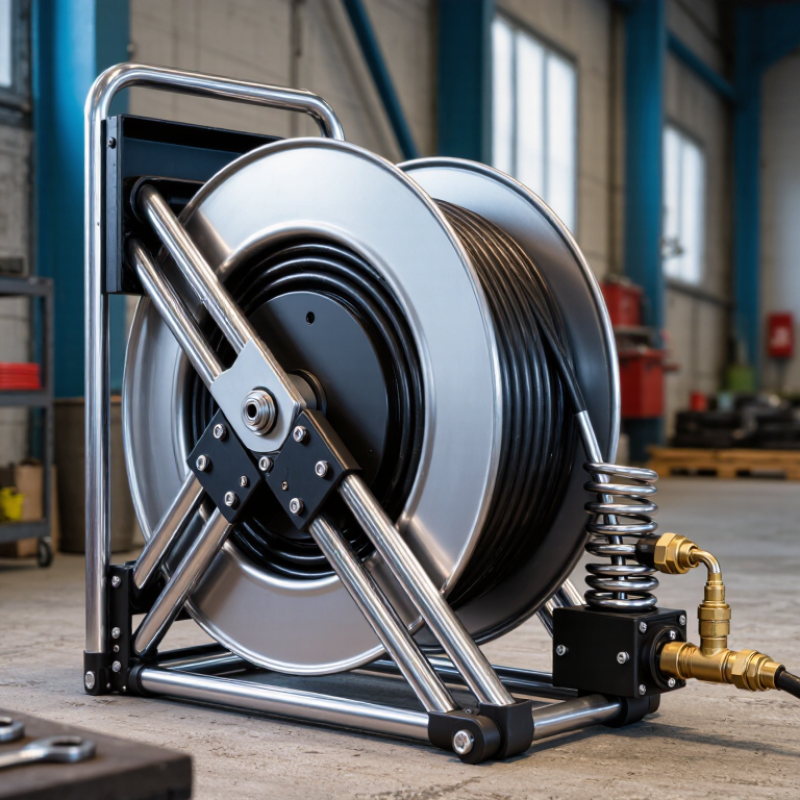
Define the Pressure, Flow, and Hose Requirements
Choosing the best high pressure hose reel starts with defining the pressure your system actually needs. Do not rely on the pump’s maximum rating alone. Check the equipment manual, operating pressure, and pressure spikes during startup.
Pressure matters most.
In field maintenance, I measure pressure at the hose connection while the tool is running. A reel should exceed the hose’s maximum working pressure, not merely match it. Keep a sensible safety margin, and verify the burst rating separately. A pressure washer may show 3,000 psi on paper, yet restricted fittings can change performance. I have seen operators choose by pressure alone and lose cleaning power through an undersized hose.
Flow requirements are equally important. Record the required gallons or liters per minute, then select a hose with a suitable inside diameter. A narrow hose creates pressure loss, especially over long runs. Hose length also affects reel capacity, drag, and storage. Measure the full route, including bends around equipment.
Choose carefully.
Confirm temperature range, fluid compatibility, and fitting size before ordering. A hose used near hot water needs different protection than one handling cold water. The reel must support the hose’s weight without sharp bends or forced winding. I once underestimated storage space and accepted a reel that fit the hose poorly. That mistake made maintenance harder. A qualified technician should review the final pressure, flow, and connection data before installation.
Compare Reel Types, Materials, and Mounting Options
How to Choose the Best High Pressure Hose Reel?
Choosing a high pressure hose reel starts with comparing reel types, materials, and mounting positions. Grand View Research estimated the global industrial hose market at about USD 14.6 billion in 2023. That growth reflects wider demand for safer, faster fluid handling. Manual open reels suit workshops with occasional use. They are simple and easier to inspect. Retractable reels save floor space and reduce loose hose loops. Enclosed models protect hoses from dust, sunlight, and accidental impact. However, springs and internal guides can complicate repairs. Convenience can hide maintenance needs.
Material selection affects weight, corrosion resistance, and service life. Powder-coated steel handles heavy impact but may rust after coating damage. Stainless steel performs better near moisture, salt, or cleaning chemicals. Aluminum reduces lifting effort, although it may dent more easily. Polymer housings resist many chemicals and keep surfaces cooler. Pressure ratings must exceed the pump’s maximum working pressure, including short pressure spikes. Do not trust appearance. Check the hose, fittings, swivel, and reel rating together. ISO 18752 classifies hydraulic hose performance by pressure, temperature, and impulse resistance.
Mounting changes daily handling. Wall mounts work well beside wash bays and service benches. Ceiling mounts keep walkways clear but need strong structural support. Vehicle mounts require vibration-resistant fasteners and protected hose routing. Measure the reel’s swing radius before drilling. The U.S. Bureau of Labor Statistics reported 5,283 fatal workplace injuries in 2023. That figure is not hose-specific, yet it reinforces basic control measures. Leave no hose across a wet walking path. One detail matters. After installation, pull the hose fully out and check whether the swivel twists.
Select the Correct Hose Length, Diameter, and Connections
Choosing the right high pressure hose reel starts with the hose, not the reel.
Measure the working distance from the water outlet to the farthest cleaning point. Add a small amount for movement, but avoid excessive length. A hose that is too long becomes heavy, difficult to drain, and easier to kink.
In many work areas, an extra 5 to 10 feet is practical. Still, every site is different. I once selected a reel by maximum reach alone and overlooked storage space near the wall.
Hose diameter affects both flow and pressure performance. A larger inner diameter can reduce pressure loss over long distances, while a smaller hose is lighter and easier to handle. Check the equipment manual before deciding.
The hose must also match the reel’s pressure and temperature ratings, with a safety margin above normal operating conditions. Connections deserve equal attention. Confirm the thread type, fitting size, swivel direction, and seal material.
A mismatched connector may leak under pressure, even when it appears secure. Quick-connect fittings save time, but they must be rated for the application.
Inspect them regularly. Tiny cracks matter. Avoid forcing adapters together, and replace damaged seals before use.
Reliable selection depends on measured dimensions, verified ratings, and realistic daily handling.
Evaluate Safety Features, Durability, and Ease of Maintenance
When choosing a high pressure hose reel, inspect its safety features before its appearance. Match the reel’s working pressure to the hose and equipment, leaving a sensible safety margin. Check the burst rating, fittings, swivel, and connection points. A secure locking mechanism should hold the hose firmly without sudden release. A guarded crank and stable mounting plate can reduce hand injuries and movement during use. Confirm that the hose guide supports the correct bend radius. Sharp bends create hidden stress.
Durability depends on daily conditions. For outdoor work, choose corrosion-resistant materials and sealed components. A strong frame should remain stable on uneven floors. The hose should rewind smoothly, without scraping against the drum. Maintenance also matters. Flush dirt from the hose, inspect fittings, and replace cracked seals quickly. Drain trapped water before storage, especially in cold environments. Follow the maintenance instructions for lubrication, because excess grease can attract grit. A perfect reel is unlikely. Even a durable model can fail when users ignore small leaks.
Tips: Test the locking system under light tension before full operation. Mark the hose’s maximum extension with a visible line. Keep the reel clean and dry after use. Do not force a stiff rewind. That small shortcut often becomes an expensive repair. Recheck mounting bolts regularly, since vibration can loosen them over time. If pressure behavior changes, stop and inspect the system rather than guessing.
How to Choose the Best High Pressure Hose Reel?
Evaluate safety features, durability, and ease of maintenance before selecting a high-pressure hose reel.
This scorecard uses a practical 1–5 evaluation scale. Safety focuses on pressure ratings, hose compatibility, guarding, and leakage control. Durability considers frame strength, corrosion resistance, and component service life. Maintenance measures access to replacement parts, swivel servicing, cleaning, and hose replacement.
Match the Reel to Your Budget, Workspace, and Intended Use
How to Choose the Best High Pressure Hose Reel?
Match the reel to your budget, workspace, and intended use. A reel for mobile washing needs different features from one fixed beside a production line. Check working pressure, burst pressure, temperature range, hose length, and inner diameter. The hose must exceed your equipment’s maximum working pressure, with a clear safety margin. ISO 4413:2010 stresses correct component selection, pressure control, and safe maintenance in pneumatic systems.
Space changes the decision. A wall-mounted reel can keep a narrow service bay clear, while a portable frame suits outdoor cleaning. Measure the mounting height and hose route before buying. A swivel bracket helps when technicians move around vehicles or machinery. For frequent use, spring-return systems save time. Manual reels may cost less and can be easier to repair. They are not always easier to use.
Budget needs practical judgment. A lower-priced reel may have a weak spring, poor seals, or a short service life. I learned this after replacing a reel that looked economical on paper. The U.S. Department of Energy’s Improving Compressed Air System Performance sourcebook reports that leaks can waste 20–30% of compressor output, so damaged fittings deserve attention. That figure concerns compressed-air systems, not every high-pressure application. Still, it shows why connection quality matters. Choose corrosion-resistant materials for wet areas, and inspect the hose after each demanding shift. Small details matter.
How to Choose the Best High Pressure Hose Reel? - Match the Reel to Your Budget, Workspace, and Intended Use
| Selection Factor | Entry-Level Option | Mid-Range Option | Heavy-Duty Option | What to Check |
|---|---|---|---|---|
| Typical budget | Approximately $80–$180 | Approximately $180–$400 | Approximately $400–$900+ | Prices vary with hose length, pressure rating, materials, drive system, and included fittings. |
| Recommended hose length | 25–50 ft | 50–100 ft | 100–200 ft or custom length | Choose enough length to reach the work area without excessive loops, bends, or unused hose. |
| Common working pressure | Up to 2,000–3,000 psi | Up to 3,000–4,000 psi | Up to 4,000–5,000 psi or higher | The reel and every hose and fitting must meet or exceed the pressure of the washer. Never exceed the lowest-rated component. |
| Suitable hose type | Light-duty thermoplastic or rubber hose | Reinforced rubber or thermoplastic hose | Multi-layer steel-braided or heavy-duty rubber hose | Verify compatibility with pressure, temperature, cleaning chemicals, and the required bend radius. |
| Reel construction | Powder-coated steel or reinforced polymer | Powder-coated or stainless steel frame | Heavy-gauge steel or stainless steel frame | Select corrosion-resistant materials for wet, coastal, food-processing, or chemical environments. |
| Retraction system | Manual crank or basic spring rewind | Spring rewind with controlled retraction | Heavy-duty spring rewind, motorized, or assisted system | A controlled rewind system reduces whipping, tangles, and premature hose wear. |
| Mounting style | Portable, wall, or bench mount | Wall, ceiling, vehicle, or swivel mount | Fixed industrial, vehicle, service-cart, or custom mount | Check mounting surface strength, available clearance, hose exit direction, and access for maintenance. |
| Workspace size | Small garages, workshops, and occasional-use areas | Medium workshops, wash bays, and service areas | Large facilities, fleet yards, production areas, and multiple workstations | Measure the reel footprint, swivel range, hose path, and clearance around vehicles or equipment. |
| Swivel function | Fixed or limited swivel | Multi-directional swivel bracket | Heavy-duty swivel with replaceable seals or bearings | A swivel helps align the hose with the operator and reduces side loading at the reel inlet. |
| Temperature suitability | Usually cold-water applications | Cold or hot water, commonly up to about 200°F depending on hose | Hot-water and demanding washdown applications, subject to hose rating | The hose, seals, swivel, and fittings must all be rated for the operating temperature. |
| Best intended use | Home cleaning, light vehicle washing, and occasional maintenance | Vehicle detailing, commercial cleaning, agriculture, and regular workshop use | Fleet washing, construction equipment, industrial maintenance, and frequent daily use | Match duty cycle and environmental exposure to the reel’s materials and service rating. |
| Fitting size | Commonly 1/4 in or 3/8 in connections | Commonly 3/8 in connections | 3/8 in, 1/2 in, or application-specific connections | Confirm thread type, diameter, pressure rating, and compatibility with the pressure washer and spray gun. |
| Maintenance needs | Inspect hose, fittings, and mounting hardware regularly | Inspect seals, swivel, rewind mechanism, and hose guide | Scheduled inspection, seal replacement, lubrication where specified, and protective cleaning | Drain water after use, avoid sharp bends, replace damaged hoses promptly, and follow the manual. |
Related Posts
-
7 Key Advantages of Using a High Pressure Hose Reel in Your Operations
-

2026 Best Hose Reel Options for Easy and Efficient Gardening?
-
2026 Best Electric Hose Reel for Effortless Watering Solutions?
-
China Top Stainless Steel Hose Reel Manufacturers?
-
Maximize Efficiency: The Ultimate Guide to Choosing the Right Heavy Duty Hose Reel for Your Needs
-
5 Best Strategies for Choosing the Right Hose Reel for Your Needs