
Top Electric Hose Reel Suppliers for Global Buyers
Choosing an electric hose reel supplier is not merely a price comparison. Global buyers must examine product consistency, motor performance, safety controls, and after-sales support. A reliable supplier should explain torque ratings, hose compatibility, ingress protection, voltage options, and expected service life clearly. Vague specifications create expensive surprises.
John B. Cox, a hose-reel industry executive, once observed, “A reel is only as dependable as the system supporting it.” That practical view remains relevant. During supplier evaluations, buyers should request factory photographs, inspection records, sample units, and references from similar industries. A warehouse manager may notice details that brochures ignore: uneven rewinding, sharp hose bending, noisy motors, or weak mounting brackets. These small faults matter.
Real operating conditions matter more.
This guide reviews top electric hose reel suppliers serving global buyers, including manufacturers with established production experience, customization capacity, and responsive technical teams. It considers agricultural, industrial, automotive, firefighting, and facility-maintenance applications. Each supplier is assessed through evidence rather than polished marketing claims. Important factors include materials, control systems, warranty terms, replacement parts, packaging, export experience, and communication quality.
The comparison is not perfect. Supplier data can change, and regional distributors may offer different support. Buyers should verify current certifications and installation requirements before ordering. A low-cost electric hose reel may appear attractive, yet downtime, incompatible voltage, or delayed parts can erase the savings. The strongest choice is usually the supplier that balances dependable engineering, transparent documentation, and practical service after delivery. That balance deserves careful attention.
Understanding Electric Hose Reels and Their Industrial Applications
Top Electric Hose Reel Suppliers for Global Buyers
Understanding Electric Hose Reels and Their Industrial Applications
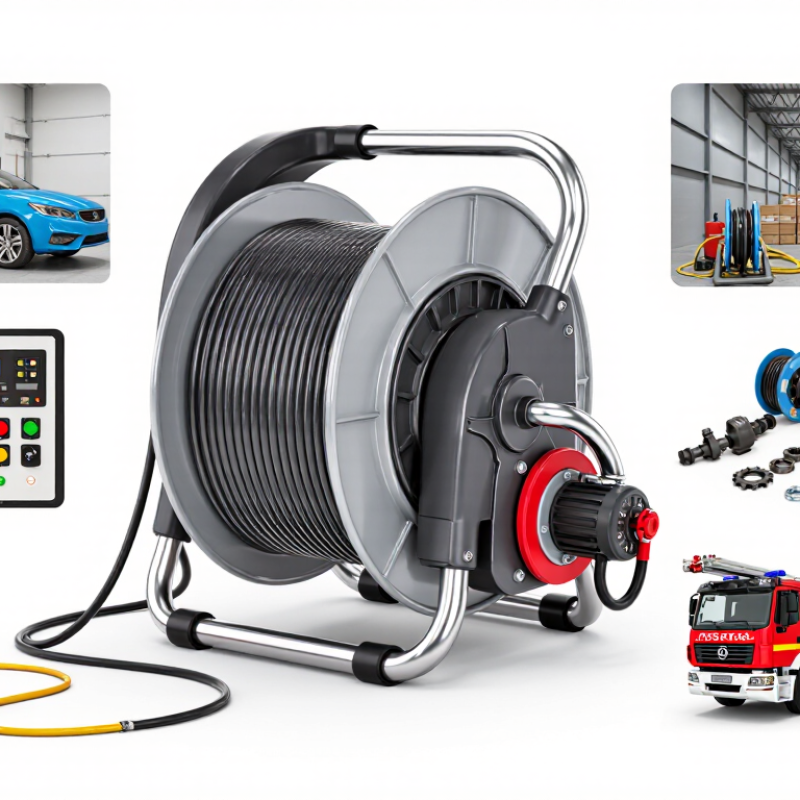
Electric hose reels store and dispense hoses with controlled motor power. They reduce manual handling around workshops, factories, service bays, and loading areas. A typical unit includes a motor, drum, swivel joint, limit switch, and thermal protection. These parts must work together under repeated movement.
In industrial cleaning, electric reels manage water or approved cleaning fluids near production lines. In maintenance areas, they support air, oil, or hydraulic service hoses. Construction sites also use them for organized cable and hose deployment. The correct reel depends on hose length, diameter, pressure, temperature, and duty cycle. A ten-meter reel may suit a service cart, while a longer reel needs stronger torque and mounting support.
Global buyers should examine voltage, frequency, enclosure rating, and installation instructions before placing an order. A supplier should provide load data, material details, test records, and spare-part guidance. Corrosion-resistant steel or coated aluminum can improve performance in damp facilities. However, stainless construction is not automatically the best choice. It may increase weight and complicate installation.
Field checks often reveal overlooked problems, such as poor swivel alignment or insufficient wall strength. A dependable supplier should help verify these details before shipment. Packaging also matters. Moisture damage during transport can affect electrical connections. Specifications are useful, but real operating conditions remain harder to predict.
Key Criteria for Evaluating Global Electric Hose Reel Suppliers
Choosing an electric hose reel supplier requires more than comparing catalog prices. Global buyers should examine motor performance, hose compatibility, reel capacity, and control options. A reliable supplier can explain torque, duty cycles, ingress protection, and expected service life in clear language.
Ask for inspection records, product test reports, material specifications, and traceable batch information. Experienced suppliers should provide samples before large orders. Check whether the reel supports your regional voltage, plug requirements, and installation conditions. Warranty terms also matter, especially when replacement parts must cross borders. Response time is a practical test. Ask a detailed technical question and measure the quality of the reply.
Tips: Compare suppliers using the same specification sheet. Request a sample under realistic load. Inspect winding smoothness, braking control, cable connections, and noise levels. Do not rely only on polished product photos.
A strong supplier should discuss failures, not hide them. Ask how the reel performs in dust, humidity, cold storage, or frequent operation. I have found that lower prices sometimes conceal weaker springs or limited after-sales support. Yet expensive equipment is not automatically better. This is where careful testing matters. Consider production capacity, packaging quality, documentation, and communication across time zones. A supplier with consistent records may be safer than one making impressive promises. Mistakes can still happen, so define acceptance standards before payment.
Leading Supplier Regions and Their Manufacturing Strengths
Top Electric Hose Reel Suppliers for Global Buyers
Leading Supplier Regions and Their Manufacturing Strengths
East Asia remains a strong sourcing region for electric hose reels. Its factories combine automated winding, stamped metal parts, and high-volume motor assembly. The International Federation of Robotics reported record global robot installations in 2023, supporting this production advantage. Buyers often find competitive pricing and quick design changes there. However, inspection depth can vary between factories. That point deserves attention.
European suppliers usually emphasize engineering accuracy, enclosure protection, and documented safety testing. Many facilities follow ISO 9001 quality systems and apply relevant electrical safety standards. The ISO Survey recorded more than one million ISO 9001 certificates worldwide, showing broad adoption of formal quality controls. Yet certification alone proves little about reel durability. Ask for load-cycle results, cable-temperature data, and ingress-protection evidence.
North American manufacturers often provide customized reels for workshops, utilities, and industrial maintenance. Their strengths include robust housings, service support, and integration with existing power systems. UNIDO’s industrial performance data also highlights the value of advanced manufacturing capabilities in mature industrial economies. India and Southeast Asia offer growing metalworking capacity and increasingly capable electrical assembly. Lead times may be attractive. Documentation can be uneven. Buyers should compare motor torque, spring balance, thermal protection, and replacement-part availability before selecting a regional supplier.
Product, Customization, Certification, and Export Capabilities
Top Electric Hose Reel Suppliers for Global Buyers
A dependable supplier should show product details beyond motor power and hose length. Ask for duty-cycle ratings, torque control, thermal protection, brake performance, and enclosure protection. IP65 may suit dusty outdoor work, but it does not guarantee chemical resistance. Request test records, wiring diagrams, spare-part lists, and a sample reel before approving volume orders. In field purchasing, small gaps matter. A polished catalog is not proof of reliability.
Customization should match the worksite, not merely the buyer’s logo. Useful options include stainless-steel frames, longer cables, swivel joints, wall or ceiling mounts, different voltage inputs, and foot-pedal controls. Certification must also fit the destination market. Check electrical safety reports, EMC testing, material declarations, and traceable serial numbers. The ISO Survey 2023 recorded more than 1.26 million ISO 9001 certificates worldwide, yet certification alone cannot prove every product batch is consistent. Factory audits and random inspections remain necessary.
Tips: Compare a supplier’s export documents before comparing prices. Request commercial invoices, packing specifications, country-of-origin data, and multilingual manuals. The World Bank’s Logistics Performance Index 2023 assessed 139 economies across customs, infrastructure, shipments, and delivery reliability. Use those categories when checking a supplier’s shipping record. Confirm carton dimensions, pallet limits, lead time, and after-sales response in writing. I would also test one reel under realistic load; laboratory performance can look better than workshop reality.
| Supplier Profile | Typical Product Range | Hose Length & Size | Working Pressure | Drive System & Electrical Options | Customization Capabilities | Certification & Compliance Support | Export Capabilities |
|---|---|---|---|---|---|---|---|
| Profile 01 Industrial Standard |
Automatic electric reels for compressed air, water, cleaning liquid, and light-duty hydraulic applications. Powder-coated steel or impact-resistant polymer housings. |
10–30 m
1/4–3/4 in. Common hose materials include rubber, PVC, TPU, and hybrid polymer. |
Typically 8–25 bar for air and water models; higher pressure requires a dedicated hose and swivel assembly. | 0.25–0.75 kW motor options; 110 V, 220–240 V, or 380–400 V configurations; IP54–IP65 enclosure options. | Hose material, reel diameter, mounting bracket, outlet position, cable length, color, plug type, and automatic stop function. | Documentation may include CE-related technical files, RoHS declarations, EMC/LVD test documentation, and ISO 9001 manufacturing-system certification where applicable. | Suitable for palletized container shipments, mixed-model orders, private-label packaging, and standard commercial export documentation. |
| Profile 02 Heavy-Duty Hydraulic |
Motorized reels designed for hydraulic oil, high-pressure water, grease, and industrial fluid-transfer applications. Reinforced steel frames and high-strength swivel joints. |
15–40 m
3/8–1 in. Hydraulic hoses commonly use oil-resistant synthetic rubber with textile or wire reinforcement. |
Approximately 100–350 bar, depending on hose construction, bore size, temperature, and fitting selection. | 0.55–1.5 kW geared motors; thermal overload protection; optional variable-speed control; IP55–IP66 options. | Hose pressure rating, fitting standard, swivel material, spring or motor rewind, torque settings, corrosion-resistant coating, and custom base frames. | Buyers commonly request pressure-test records, material certificates, CE documentation for applicable markets, and conformity information for supplied components. | Export packaging can include steel frames, moisture protection, shock protection, serial-number labels, and container-loading plans for industrial projects. |
| Profile 03 Washdown & Food-Process |
Electric reels for hot-water washdown, sanitation, beverage production, and food-processing environments. Stainless-steel or hygienic coated constructions. |
10–25 m
1/2–3/4 in. Food-contact suitability depends on the specific hose, seal, lubricant, and fluid application. |
Commonly 20–80 bar for washdown systems; temperature ratings are specified separately by hose and seal material. | 0.37–1.1 kW motor options; 220–240 V or 380–400 V supply; IP65–IP66 protection for wet areas. | 304 or 316 stainless steel, hygienic fasteners, drain-friendly design, hose color coding, chemical-resistant seals, and customized mounting hardware. | Depending on the application, buyers may request IP test evidence, food-contact declarations for relevant hose materials, RoHS/REACH information, and CE technical documentation. | Appropriate for project exports requiring stainless-steel packaging protection, batch traceability, cleaning instructions, and multilingual product labels. |
| Profile 04 Automotive Service |
Compact electric reels for vehicle workshops, service centers, fleet maintenance, and mobile maintenance units. Configurations for air, water, oil, grease, and electrical service lines. |
8–20 m
1/4–1/2 in. Compact reel bodies are designed for wall, ceiling, vehicle, or service-bay installation. |
Typically 8–25 bar for air and water; oil and grease versions may use different pressure and hose specifications. | 0.18–0.55 kW motors; 110–120 V or 220–240 V; optional remote control, foot switch, limit switch, and emergency stop. | Reel dimensions, hose end fittings, vehicle mounting plates, remote-control layout, cable plugs, labels, and packaging configuration. | Export buyers commonly request CE/UKCA market documentation where relevant, EMC/LVD evidence for electrical models, and electrical safety test reports. | Suitable for distributor programs, small-batch mixed orders, carton packaging, barcode labels, spare-part kits, and consolidated international shipments. |
| Profile 05 Outdoor & Construction |
Rugged motorized reels for construction sites, utility maintenance, rental fleets, agricultural service, and outdoor cleaning applications. |
20–50 m
1/2–1 in. Larger drums accommodate heavier hoses and extended operating distances. |
Usually 10–40 bar for water and air; specialized hydraulic versions may be rated significantly higher. | 0.55–1.5 kW motors; 220–240 V or 380–400 V; IP55–IP66 options; optional brake, torque limiter, and manual override. | Galvanized or stainless components, weather-resistant coating, reinforced frame, custom drum capacity, hose guide, and cable protection. | Buyers may request ingress-protection test results, corrosion-treatment specifications, electrical conformity files, and component-level safety documentation. | Designed for export in reinforced crates or pallets, with spare hoses, replacement seals, installation hardware, loading diagrams, and maintenance manuals. |
| Profile 06 OEM & Project Supply |
Engineered electric hose-reel systems for production lines, municipal equipment, fire-service support, energy facilities, and specialized machinery. |
Custom length
Custom bore Drum capacity, hose construction, fittings, and guide systems are selected according to the operating envelope. |
Project-specific; pressure, temperature, flow rate, bend radius, and chemical compatibility must be validated before production. | Motor and gearbox selected by torque requirement; available controls may include PLC integration, sensors, encoder feedback, VFD compatibility, and remote operation. | Full engineering customization, 2D/3D drawings, prototype development, mounting interfaces, wiring diagrams, control logic, and system integration. | Compliance packages may include risk assessment, declaration of conformity, EMC/LVD files, RoHS/REACH information, IP testing, material traceability, and customer-specific inspection records. | Supports project-based export orders, technical approvals, pre-shipment inspection, customized documentation, spare-parts planning, and sea, air, or rail logistics. |
How Global Buyers Can Select and Compare Suitable Suppliers
Top Electric Hose Reel Suppliers for Global Buyers
How Global Buyers Can Select and Compare Suitable Suppliers
Choosing an electric hose reel supplier requires more than comparing online prices. Buyers should examine product experience, manufacturing control, and after-sales support. Ask how long the supplier has produced hose reels and which industries they serve. Request test reports, material specifications, and clear production photos.
Check the reel’s motor strength, hose capacity, winding speed, and mounting design. A workshop may need different performance from a mobile service vehicle. Request a sample before placing a large order. Test its cable protection, emergency stop, noise level, and repeated winding cycles. Small details matter.
Reliability depends on communication, too. Compare response times, packaging methods, replacement parts, and warranty terms. A supplier should explain quality inspections without hiding behind vague claims. Verify factory addresses and audit records where possible. Third-party inspections can reveal weak assembly or inconsistent components.
Price is only one part of the decision. Calculate freight, spare parts, maintenance, and expected service life. Some low-cost reels look attractive but require frequent repairs. I have seen buyers overlook connector quality and regret it later. My own comparison process is not perfect; factory visits can also create a misleadingly positive impression. Recheck evidence after production begins. Keep written specifications, approval samples, and inspection results for every shipment.
Related Posts
-
5 Best Strategies for Choosing the Right Hose Reel for Your Needs
-
7 Essential Tips to Maximize Efficiency with Electric Hose Reels: Boost Your Productivity by 30%
-
What to Know About High Pressure Hose Reel Options in 2026?
-
Top Electric Hose Reel Options for Easy Gardening Efficiency?
-
China Top Stainless Steel Hose Reel Manufacturers?
-
7 Key Advantages of Using a High Pressure Hose Reel in Your Operations