
Why Choose a Commercial Hose Reel?
In busy workshops, farms, service bays, and washdown areas, hose handling is rarely a small issue. A loose hose can collect dirt, form sharp bends, and become a trip hazard. A commercial hose reel offers a controlled storage point and a faster way to deploy water, air, or approved fluids. It keeps the working area clearer. More importantly, it can reduce repeated bending and dragging during daily tasks. From practical maintenance experience, its value is easiest to see during peak work. An operator pulls out only the needed length, completes the job, then guides the hose back into place.
Choosing the right commercial hose reel requires more than checking its appearance. Capacity, hose diameter, pressure rating, mounting position, swivel quality, and retraction method must match the application. A reel designed for light garden use may fail under continuous commercial demand. That difference matters. Reliable manufacturers publish specifications and installation guidance, while responsible users inspect fittings, seals, and hose condition regularly. The reel is not a magic fix. Poor anchoring, incorrect pressure, or careless winding can still cause damage and downtime. In some settings, manual models may be more dependable than powered units, especially where simple servicing matters. The best choice comes from observing actual workflow, environmental exposure, and operator habits. This guide examines these factors, helping readers judge whether the investment improves safety, efficiency, and long-term equipment control.
What Is a Commercial Hose Reel?
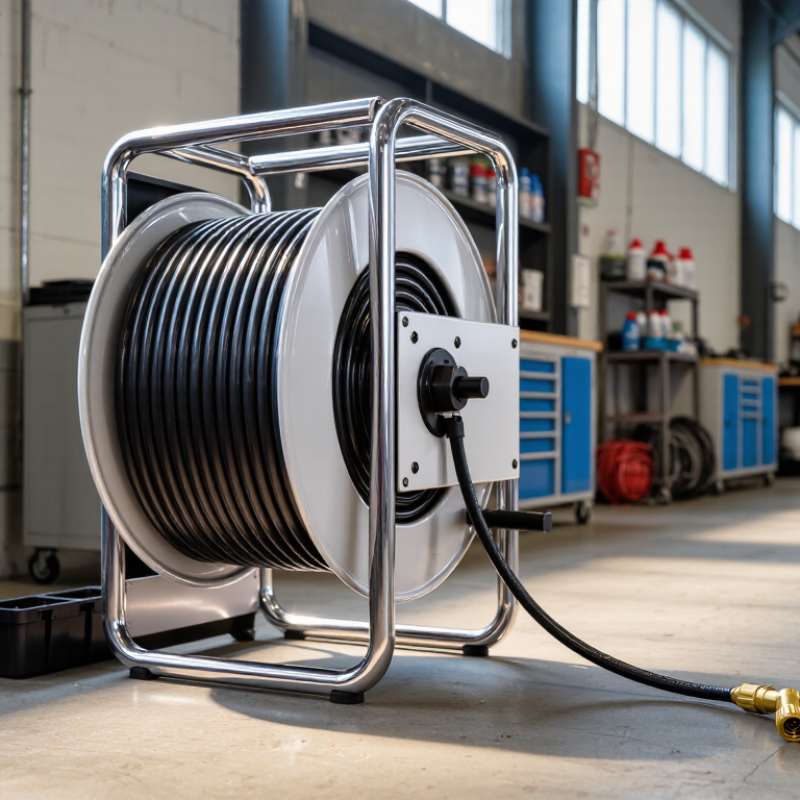
A commercial hose reel is a mechanical device that stores, protects, and dispenses flexible hose in demanding workplaces. It may use a spring, hand crank, or powered drive. The reel keeps the hose coiled around a drum, while a swivel connection supports controlled movement. Unlike a basic household reel, commercial equipment is designed for frequent use, longer hose lengths, and harsher conditions.
In workshops, service bays, factories, and washdown areas, the reel can keep hoses away from walkways, sharp edges, and vehicle tires. A guide arm helps reduce twisting. A locking mechanism controls the working length. Some models also include adjustable stops, enclosed drums, or automatic rewind systems. These details matter when workers repeatedly pull out and return heavy hose during a shift. The U.S. Bureau of Labor Statistics recorded about 2.6 million nonfatal private-industry workplace injuries and illnesses in 2023. The report does not attribute those cases to hose handling, but it highlights why small workplace hazards deserve attention.
A reel is not automatically safe. Incorrect mounting, excessive pressure, or a damaged hose can still create serious problems. NFPA 1962 emphasizes inspection, maintenance, and service testing for fire hose equipment. Similar discipline is useful for other commercial hose systems. In practice, technicians should check fittings, seals, recoil tension, and hose surfaces before use. That step is often skipped. It should not be. Selecting a reel only by price may also overlook flow requirements, temperature limits, and installation space.
How Commercial Hose Reels Work
A commercial hose reel is a controlled storage and delivery system for demanding work areas. Its main parts include a rotating drum, swivel joint, mounting frame, and hose guide. When an operator pulls the hose, the drum turns smoothly and releases a measured length. A locking mechanism holds it in place during use.
Many reels use a spring-powered return system. The spring stores energy as the hose extends, then retracts it when released. Other models use a motor or hand crank for heavier hoses. The swivel joint helps prevent twisting at the connection point. This small component often determines how smoothly the reel performs under pressure.
In daily use, I have found that alignment matters more than many installers expect. A reel mounted too low may scrape the hose against concrete. A poor inlet connection can also create leaks. Not every setup is perfect. Regular inspection remains necessary.
Tips: Mount the reel on a stable surface. Keep the hose clean before rewinding. Check fittings for cracks and wear. Retract the hose slowly, not forcefully. Leave enough clearance for the handle or drum to rotate.
Key Benefits of Using a Commercial Hose Reel
A commercial hose reel brings order to demanding work areas. It keeps long hoses elevated, protected, and ready for repeated use. In a busy workshop, this can reduce tangles around carts, doors, and walkways. It also helps workers spend less time dragging equipment across the floor.
Durability is a major benefit. Commercial reels usually support frequent use, heavier hoses, and harsher working conditions. A controlled rewind system reduces sudden movement and limits hose damage. Wall, ceiling, and floor-mounted options can match different workspaces. The right mounting position also improves reach without creating unnecessary strain. Small details matter here.
Safety improves when the hose returns neatly after use. Fewer loops on the ground mean fewer trip hazards and less contact with oil, dust, or sharp edges. A reel can also protect fittings from repeated impact. Still, no reel removes every risk. I once saw a well-built unit fail because its mounting surface was too weak. Proper installation deserves equal attention.
Maintenance becomes more predictable as well. Operators can inspect the hose during rewinding and notice cracks, leaks, or worn couplings earlier. This supports more reliable daily operation and helps prevent avoidable downtime. However, a reel should not be treated as a replacement for inspection. Springs wear, swivels loosen, and storage areas collect debris. Regular checks keep the equipment dependable.
Types of Commercial Hose Reels and Their Applications
Commercial hose reels reduce clutter, protect hoses, and make daily work more controlled.
The right reel depends on the hose, pressure, environment, and frequency of use. Space matters.
Spring-driven reels suit busy washdown stations, service bays, and maintenance areas. Their automatic rewind keeps hoses off wet floors and reduces trip hazards. They work well when operators need quick access and consistent storage.
A hand-crank reel offers better control for long, heavy hoses. It is useful on utility vehicles, agricultural equipment, and large industrial work areas. The operator can stop winding whenever the hose reaches a preferred position.
Motorized reels support frequent use and heavier hose assemblies. They are practical for production lines, emergency service vehicles, and fixed cleaning systems. However, power requirements and control placement need careful planning. A poor installation can create more maintenance work. That mistake is common.
Retractable reels for air, water, or low-pressure fluid service often fit workshops and commercial kitchens. Chemical-transfer reels require compatible seals, tubing, and fittings. Food-service environments may also need smooth surfaces and easy sanitation.
Before selection, verify working pressure, temperature range, hose length, mounting method, and bend radius. Follow local electrical and workplace safety requirements.
A reel rated for the hose is not automatically suitable for every fluid. Inspect swivel joints and rewind tension regularly, because small leaks can become expensive interruptions.
Even experienced installers sometimes underestimate cleaning access. Choose carefully.
How to Choose the Right Commercial Hose Reel
Why Choose a Commercial Hose Reel?
Choosing the right commercial hose reel starts with the working environment. A busy workshop needs controlled movement, strong mounting, and quick access. Measure the required hose length before comparing models. Ten extra feet can create unnecessary loops, trip hazards, and storage problems.
Check pressure, temperature, fluid compatibility, and flow requirements together. A reel rated for water may not suit compressed air or chemical service. The U.S. Department of Energy reports that compressed-air leaks can waste 20–30% of compressor output. A poorly fitted hose connection can increase that waste. Select a hose with suitable inner diameter, then match the reel’s fittings and swivel.
Safety details matter. OSHA 29 CFR 1910.242(b) limits compressed air used for cleaning to below 30 psi, with effective chip guarding. A reel cannot replace safe operating procedures. Look for a reliable latching system, controlled retraction, and a protective guide. I once chose a reel mainly for its high pressure rating. The mounting position was wrong. It pulled awkwardly and wore the hose near the outlet. That mistake changed my checklist.
For wall mounting, confirm the surface can handle repeated pulling forces. For overhead use, inspect the support structure and hose clearance. ISO 4414 also emphasizes safe pneumatic system design and maintenance. Record inspection dates, damaged sections, and coupling condition. Small details matter.
Related Posts
-
5 Best Strategies for Choosing the Right Hose Reel for Your Needs
-
China Top Stainless Steel Hose Reel Manufacturers?
-
China Top 10 Heavy Duty Hose Reel Manufacturers?
-
7 Key Advantages of Using a High Pressure Hose Reel in Your Operations
-

2026 Best Hose Reel Options for Easy and Efficient Gardening?
-
2026 Best Electric Hose Reel for Effortless Watering Solutions?