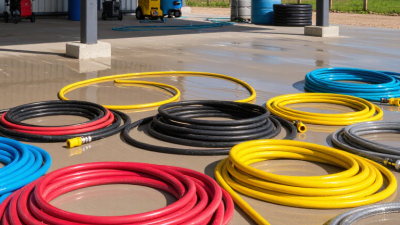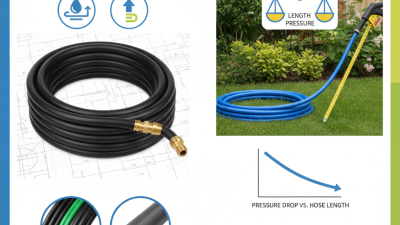
10 Best Power Washer Hoses for Global Buyers?

Choosing the right power washer hose can greatly affect cleaning performance, equipment safety, and long-term operating costs. Global buyers face different water pressures, climates, connector standards, and product quality levels. A hose that works smoothly in a warm workshop may become stiff, cracked, or difficult to coil in colder regions. Small details matter, including inner diameter, maximum pressure, temperature rating, length, fitting material, and resistance to abrasion.

This guide reviews 10 power washer hose options for household users, contractors, vehicle detailers, and commercial cleaning teams. Each selection should be judged against the pressure rating of the washer, not only its advertised appearance. Quick-connect fittings can save time, while durable rubber or hybrid materials may handle repeated bending better than basic PVC. Look closely.

Real-world use often reveals what product descriptions miss. A hose can kink beside a driveway wall, drag across rough concrete, or leak after repeated winter storage. We consider these practical conditions, along with manufacturer specifications, available replacement parts, warranty support, and compatibility with common global connection systems. No hose is perfect. Some models offer excellent flexibility but cost more; others provide strong pressure resistance but feel heavy during extended work. Buyers should verify local availability and connection requirements before ordering. Careful comparison can reduce fitting problems, downtime, and unnecessary returns.
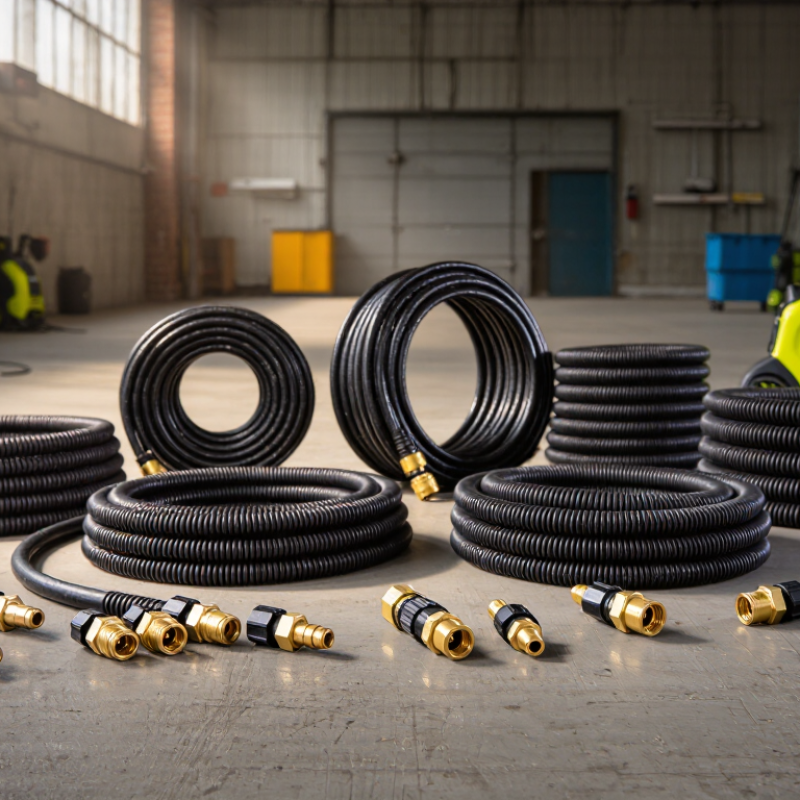
10 Best Power Washer Hoses for Global Buyers?

Understanding Power Washer Hoses and Their Main Applications

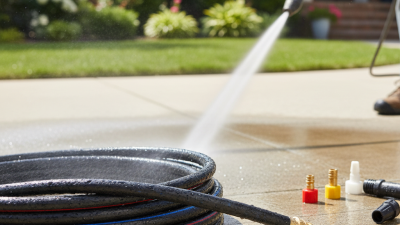
Power washer hoses carry pressurized water from the machine to the spray gun, but they do more than connect parts. Their inner tube, reinforcement layers, and outer cover must suit the washer’s rated pressure and water temperature. A hose that is too narrow can reduce flow; one that is too short may pull the machine across a wet driveway. Common uses include rinsing patios, washing vehicles, clearing mud from equipment, and cleaning siding. Each task differs. A flexible, lighter hose can help around a car, while extra reach may matter on larger surfaces.

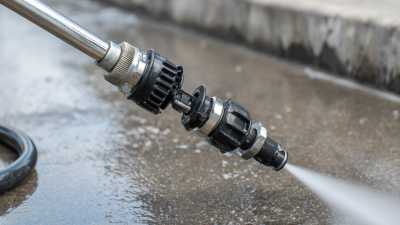
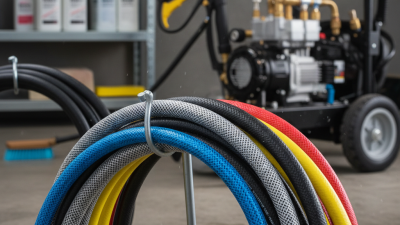
Check the pressure rating, temperature limit, connection type, and length before buying. The hose rating should meet or exceed the washer’s maximum working pressure, not merely its usual setting. An abrasion-resistant cover can help if the hose crosses concrete or rough ground. Still, “heavy duty” is not a precise specification, and a stiff hose can be awkward to store. A common oversight is the fittings: even a durable hose will not work if its ends do not match the washer and spray gun. Drain and coil it loosely after use, then inspect for bulges, cuts, or leaks.

Tips: Keep the hose away from hot engine parts and sharp edges. Release pressure before disconnecting it. Small habits help. Replace damaged hoses instead of patching a pressurized line.

Key Features to Compare When Choosing a Power Washer Hose

A power washer hose should match the machine’s working pressure, not merely its advertised maximum. Check the pressure rating and temperature limit against the washer manual, especially if you use heated water. A hose rated for cold water may soften or wear faster when exposed to heat. Small details matter.

Length affects both reach and handling. A longer hose can help you clean a driveway without moving the washer, but it may feel heavy and reduce convenience during storage. Compare the inner diameter too: it can affect water flow, so follow the equipment maker’s specifications rather than guessing. A thicker hose is not automatically better; it may be stiff around tight corners. That trade-off is easy to overlook.

Inspect the construction and fittings before buying. Reinforcement and an abrasion-resistant outer layer can help when the hose crosses rough concrete, though no cover prevents all damage. Look for compatible connection types and secure seals, then check that fittings are corrosion-resistant for your intended use. If possible, confirm the hose’s bend radius and replacement availability. A quick fit check can prevent leaks, but it cannot replace regular inspection for bulges, cracks, or worn connectors.

Types of Power Washer Hoses for Different Cleaning Requirements

Power washer hoses differ in flexibility, temperature tolerance, and resistance to wear. For patios, vehicles, and routine home cleaning, a standard high-pressure hose is often practical. Check its rated pressure against the washer’s maximum output, not just the pressure you usually use. Fit matters. The connectors must match securely, and a hose that repeatedly kinks can interrupt work or wear faster.

Hot-water cleaning calls for a hose specifically rated for elevated temperatures. Ordinary cold-water hoses may soften or deteriorate when exposed to heat. For farms, workshops, or other rough surfaces, abrasion-resistant covers can help protect against dragging across concrete and gravel. They may feel stiffer, though, which makes tight corners harder to reach.

Long-reach hoses reduce the need to move the washer around a building, but added length can affect handling and pressure at the nozzle. Sewer-cleaning hoses are narrower and designed for specialized jetting tasks, not general surface washing. It happens. A hose can look sound outside while its fittings or inner lining are wearing; inspect for bulges, leaks, exposed reinforcement, and loose connections before use. Exact compatibility still depends on the washer, fittings, temperature, and working pressure.

Evaluation of the 10 Best Power Washer Hoses for Global Buyers

This evaluation compares ten power washer hoses through practical criteria: working pressure, temperature tolerance, length, material, and fitting compatibility. For global buyers, a hose’s printed rating matters more than bold marketing claims. Check that its pressure rating meets or exceeds the washer’s operating pressure, and confirm the connectors match the machine and spray gun. Small differences can stop a purchase from being useful.

Length affects both reach and handling. A longer hose can reduce machine repositioning, but it may feel heavy or drag across rough concrete. Reinforced construction can resist abrasion, while flexible materials may coil more easily in a cold garage. Look for clear specifications on burst pressure, bend radius, and temperature range. Some details are easy to miss. A specification table cannot show how a hose behaves after repeated coiling, so verified user feedback can help fill that gap.

For cross-border purchasing, check the stated units, included adapters, and replacement-part availability before ordering. Do not assume two fittings are interchangeable because they look similar; verify dimensions and connection type. Storage also deserves attention: tight bends and hot surfaces can shorten service life. The “best” choice depends on the washer, work area, and maintenance habits. Even a high-rated hose may be awkward on a compact patio.

10 Best Power Washer Hoses for Global Buyers? – Evaluation of the 10 Best Power Washer Hoses for Global Buyers

The entries below are hose configurations for different needs, not specific branded products. Pressure and temperature figures are representative rating targets; always check the hose label and washer manual before purchase.

Rank Hose configuration Typical inner diameter Common length Representative working-pressure range Typical construction and temperature rating Best suited for Buyer checks
1 General-purpose reinforced hose 1/4 in (6.4 mm) 25–50 ft (7.6–15.2 m) 2,500–3,200 psi (172–221 bar) Reinforced thermoplastic or rubber; often rated to about 140–180°F (60–82°C) Routine home and light commercial washing Match the washer’s maximum pressure, temperature, and connector type.
2 Compact hose for portable washers 1/4 in (6.4 mm) 15–25 ft (4.6–7.6 m) 1,800–2,500 psi (124–172 bar) Lightweight thermoplastic; commonly for cool or warm water within the stated hose rating Small patios, balconies, and portable electric units Shorter hoses are easier to store but limit working reach.
3 Long-reach residential hose 1/4 in (6.4 mm) 50–100 ft (15.2–30.5 m) 2,000–3,000 psi (138–207 bar) Flexible reinforced thermoplastic or rubber; temperature rating varies by construction Washing vehicles, walls, and larger home areas with fewer machine moves Longer or narrower hoses can increase pressure loss; check the washer manual’s length guidance.
4 High-pressure single-wire braided hose 1/4 in (6.4 mm) 25–50 ft (7.6–15.2 m) 3,000–4,000 psi (207–276 bar) Wire-braided reinforced hose; some versions are rated to about 250°F (121°C) Higher-pressure residential or light commercial equipment Confirm whether the rating is a working-pressure rating, not a burst-pressure figure.
5 Hot-water-rated hose 1/4 in (6.4 mm) 25–50 ft (7.6–15.2 m) 2,500–4,000 psi (172–276 bar) Heat-resistant rubber or thermoplastic; select a model with an explicit rating for the intended water temperature, often up to 250–300°F (121–149°C) Hot-water pressure washers and grease-removal tasks Never assume a cold-water hose is suitable for hot water; verify the equipment’s maximum inlet temperature.
6 3/8-inch high-flow hose 3/8 in (9.5 mm) 50–100 ft (15.2–30.5 m) 3,000–5,000 psi (207–345 bar), depending on design Reinforced rubber or thermoplastic; temperature limits vary by model Professional machines and setups requiring greater flow or longer runs Check that the pump, gun, and fittings support the hose diameter and pressure.
7 Non-marking outer-cover hose 1/4 in (6.4 mm) 25–50 ft (7.6–15.2 m) 2,500–4,000 psi (172–276 bar) Abrasion-resistant, non-marking polymer cover over a reinforced pressure tube Indoor work, finished floors, and surfaces where scuff marks are a concern “Non-marking” describes the cover’s intended surface contact, not immunity to dirt or abrasion.
8 Abrasion-resistant commercial hose 1/4 or 3/8 in (6.4 or 9.5 mm) 50–100 ft (15.2–30.5 m) 3,000–5,000 psi (207–345 bar) Heavy-duty rubber or thermoplastic cover with reinforced pressure layers Frequent job-site use and hose routing over rough surfaces A tougher cover can add weight; compare bend radius and storage requirements.
9 Quick-connect-ready replacement hose Usually 1/4 in (6.4 mm) 25–50 ft (7.6–15.2 m) 2,000–4,000 psi (138–276 bar) Reinforced hose supplied with compatible quick-connect ends; temperature rating depends on hose material Buyers seeking faster hose changes and simpler setup Quick-connect sizes and profiles are not universally interchangeable; verify both ends.
10 Metric-market replacement hose configuration Typically 6–10 mm 10–30 m (33–98 ft) 150–300 bar (2,176–4,351 psi), depending on equipment Reinforced thermoplastic or rubber; check the stated temperature rating in °C International buyers replacing hoses on metric-specification machines Match thread standard, fitting profile, diameter, pressure, and temperature—not just the unit system.

Safety note: Use a hose whose working-pressure and temperature ratings meet or exceed the washer manufacturer’s requirements. Inspect for cuts, bulges, leaks, and damaged fittings before each use, and depressurize the system before disconnecting.

Global Compatibility, Safety Standards, and Purchasing Considerations

For global buyers, compatibility starts at the machine connection, not the hose label.

Check thread type, size, gender, and sealing method; BSP, NPT, and metric fittings are not interchangeable. Quick-connect profiles also vary. A hose that nearly fits can leak under pressure. Measure the inlet and outlet, then confirm the fitting drawing with the supplier.

Pressure ratings need equal care. ISO 7751:2016 sets proof- and burst-pressure ratios by hose category; some pressure-hose classes use 2:1 proof and 4:1 burst benchmarks. These are not universal specifications.

Ask for the applicable test standard and a traceable test certificate, then match the hose’s working pressure to the washer’s maximum output. EN 1829-2:2010 addresses safety requirements for high-pressure water-jet hoses and connectors.

Small details matter. A high burst figure alone does not prove suitability for repeated use, heat, or abrasion.

Before ordering, confirm the operating temperature, water exposure, bend radius, and expected movement.

Check whether replacement seals and fittings are available in the destination market. Packaging should state pressure, temperature range, hose length, and connection details clearly.

A useful rule, though imperfect, is to reject listings that provide only a headline pressure number. Request clear product documentation instead.

One overlooked fitting can delay installation; one undocumented rating leaves buyers guessing.