2026 Top Types of Pressure Gauges for Global Buyers

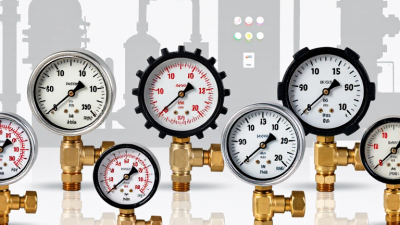
Pressure gauges remain essential in plants where operators need a quick, local reading—not just a signal on a control-room screen. A dial beside a pump can reveal a rising discharge pressure; a compact digital gauge can make readings easier to record during inspection. Yet “pressure gauge” covers several distinct designs, and choosing by price or dial size alone can lead to poor fit.

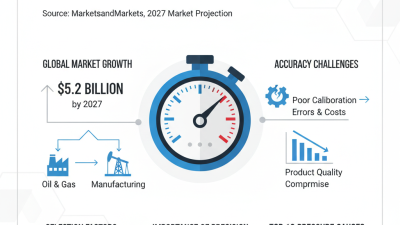
The market context is changing. MarketsandMarkets’ Pressure Sensor Market forecast projected growth from USD 14.7 billion in 2023 to USD 21.8 billion by 2028. This is a related measurement category, not a pressure-gauge market estimate, so the figures should not be treated as direct gauge sales. Still, the trend reflects wider demand for pressure monitoring across industrial systems. For buyers, the practical questions remain specific: gauge pressure or absolute pressure, liquid-filled or dry case, analog or digital display, and what range suits the process?

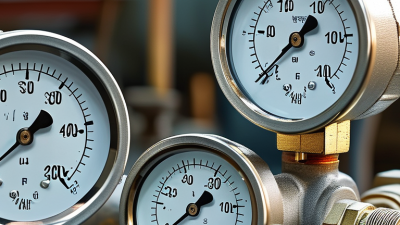
Small details matter. Vibration can blur a pointer; a pulsating line can shorten instrument life. ASME B40.100 and relevant product documentation offer useful reference points, but neither replaces checking the actual operating conditions. This guide compares common pressure gauges for global buyers, including their strengths, limitations, and typical applications. Not every selection is straightforward. A careful review of accuracy, connection, environment, and maintenance needs is often more valuable than a familiar brand name.
2026 Top Types of Pressure Gauges for Global Buyers

How Pressure Gauges Measure and Display Pressure

Pressure gauges turn hidden force into a readable signal. In a mechanical gauge, pressure pushes against a sensing element, such as a Bourdon tube or diaphragm. The element flexes, moving a linkage and pointer across a calibrated dial. Small movement. Clear reading. A digital gauge uses a sensor whose diaphragm strain changes an electrical signal; circuitry converts it into a displayed value. The reading may be gauge, absolute, or differential pressure, so the reference point matters.

That distinction is easy to miss. A dial showing 200 kPa gauge does not mean 200 kPa absolute. The BIPM SI Brochure lists standard atmospheric pressure as 101,325 Pa, a useful reference for conversion. Near that pressure, 200 kPa gauge is about 301 kPa absolute. Actual ambient pressure varies, so this is an estimate, not a field calibration. Buyers should check pressure range, medium compatibility, readability, vibration, and calibration needs. ASME B40.100 addresses pressure gauges and attachments, but a standard cannot replace a job-specific review. A crowded dial or poor pressure connection can undermine a sound instrument. Worth checking twice.

2026 Top Types of Pressure Gauges for Global Buyers — How Pressure Gauges Measure and Display Pressure

Pressure gauges sense pressure and display it in a selected unit. The chart shows how the same pressure reading—10 bar—converts into units commonly used around the world.

How to read it: These bars represent equivalent values, not different pressures. Bourdon tube, diaphragm, capsule, and digital gauges use different sensing and display methods; the appropriate type and pressure range depend on the application. Unit conversions shown are standard pressure equivalents.

Mechanical Pressure Gauge Types and Their Sensing Principles

2026 Top Types of Pressure Gauges for Global Buyers

Mechanical Pressure Gauge Types and Their Sensing Principles

Mechanical pressure gauges convert pressure into visible pointer movement without requiring electrical power. In a Bourdon tube gauge, pressure enters a curved metal tube and makes it gradually straighten. A linkage transfers this movement to the pointer. This design suits many general-purpose applications, such as monitoring compressed air lines or pump outlets. Simple, but not foolproof.

Diaphragm gauges use a flexible membrane that deflects under pressure. They can measure lower pressures and, with suitable material selection or a seal, help isolate the sensing element from harsh or dirty media. Capsule gauges join two diaphragms to create a sensitive element, often used for low-pressure gases. The choice depends on pressure range, media, temperature, and vibration. A gauge that reads steadily on a bench may flutter beside a pulsating pump.

Tips: Check the dial range, connection size, and wetted materials before ordering. Keep normal operating pressure near the middle of the scale, rather than at its limit. Compare readings with a trusted reference during scheduled inspections. If the pointer sticks or fails to return to zero, investigate before relying on the reading. Calibration intervals should reflect actual service conditions, not just a convenient calendar date.

Digital and Specialized Gauges for Modern Applications

Digital and specialized gauges now serve applications where a dial alone may not reveal enough. A digital gauge can show pressure changes clearly, store readings, and support remote monitoring. On a compressor line, a technician can compare pressure near the receiver and at a distant tool. Small differences matter. The U.S. Department of Energy’s Improving Compressed Air System Performance: A Sourcebook for Industry estimates that leaks can waste 20–30% of compressor output in many systems. That figure is not universal, but it shows why frequent pressure checks can be valuable.

Specialized gauges fit conditions that general-purpose instruments may handle poorly. Differential gauges track pressure drops across filters; sanitary designs suit washdown environments; and vibration-resistant models help on pulsating lines. Match the range and materials to the process, not just the connection size. A digital display cannot correct a clogged impulse line or an overdue calibration. Not automatically. In practice, teams should verify readings against a reference instrument and consider temperature, vibration, and pressure spikes. Wireless logging can expose overnight pressure loss, though connectivity gaps and battery changes still need attention. The technology helps, but installation and maintenance remain part of the measurement.

2026 Top Types of Pressure Gauges for Global Buyers - Digital and Specialized Gauges for Modern Applications

Gauge Type How It Measures Pressure Typical Measurement Range Examples Common Output or Display Typical Applications Key Selection Considerations
Bourdon Tube Gauge A curved elastic tube changes shape as pressure rises; its movement drives a pointer. Commonly available from low pressure, such as 0–0.6 bar, to high-pressure ranges of hundreds of bar. Exact ranges depend on design. Analog dial with pointer Pumps, compressors, hydraulic systems, process piping, and general industrial service Check pressure range, case and wetted-part materials, vibration, pulsation, and compatibility with the process fluid.
Diaphragm Gauge A flexible diaphragm deflects under pressure and transfers motion to an indicating mechanism. Often used for low-to-medium pressures; ranges are application-specific and can extend into tens of bar. Analog dial; some designs provide an electrical signal Viscous, contaminated, or corrosive media; chemical processing; food and pharmaceutical equipment Consider diaphragm material, chemical compatibility, cleanability, and whether a diaphragm seal is needed to isolate the instrument.
Capsule Gauge Pressure causes a sealed, corrugated capsule element to expand or contract. Typically suited to very low pressures, often in the range of a few millibar up to several hundred millibar. Sensitive analog dial Gas systems, ventilation, low-pressure monitoring, and filter or room-pressure checks Choose for low-pressure gas measurement; verify overpressure limits and avoid unsuitable liquid or pulsating-pressure service.
Differential Pressure Gauge Measures the pressure difference between two ports rather than pressure at a single point. Ranges can start at a few pascals for low-pressure applications and extend to higher differential pressures, depending on the design. Analog dial, digital display, or electrical output Filter monitoring, HVAC systems, flow measurement, and pressure-drop checks across equipment Confirm both the differential range and the maximum static pressure that the instrument can withstand.
Digital Pressure Gauge An electronic pressure sensor converts pressure into a numerical reading. Available across a broad span, from low-pressure measurement to hundreds of bar; range depends on the sensor and model. Digital display; some models offer data logging, alarms, or electrical communication Calibration checks, test benches, maintenance, mobile equipment, and applications needing clear numeric readings Review accuracy, display resolution, battery or power requirements, environmental protection, and calibration needs.
Absolute Pressure Gauge Measures pressure relative to a sealed vacuum reference. Ranges may cover vacuum and low absolute pressure through higher absolute pressures, according to the instrument design. Analog dial or digital display Vacuum systems, altitude-related testing, laboratory work, and processes where atmospheric pressure changes matter Distinguish absolute pressure from gauge pressure; confirm the reference, operating range, and required accuracy.
Vacuum Gauge Indicates pressure below local atmospheric pressure; some instruments measure absolute pressure instead. May be scaled in negative gauge pressure, such as −1 to 0 bar, or in units such as mbar, kPa, or inches of mercury. Analog dial or digital display Vacuum pumps, packaging equipment, laboratory apparatus, and vacuum process lines Check whether the reading is gauge vacuum or absolute pressure, and select a suitable range and sensor technology.
Pressure Transmitter An electronic sensing element converts pressure into a standardized signal for remote monitoring or control. Specified for the process; available for low, medium, and high-pressure applications. Common industrial signals include 4–20 mA; digital communication options depend on the instrument. Process automation, remote measurement, control systems, and continuous monitoring Check signal compatibility, power supply, process connection, wetted materials, accuracy, and environmental rating.
Sanitary Pressure Gauge Uses a pressure-sensing element with hygienic process connections and cleanable surfaces. Range is selected for the process and is commonly specified in bar, kPa, or psi. Analog dial or digital display; optional diaphragm seal configurations Food and beverage, pharmaceutical, and other hygienic production processes Verify connection type, surface finish, seal material, cleaning requirements, and applicable hygiene standards.
High-Pressure Gauge Uses a pressure-rated sensing element and construction designed for elevated operating pressures. Specialized models can cover hundreds or, in some designs, thousands of bar; the maximum is model-specific. Usually an analog dial; digital versions are also available Hydraulic testing, pressure intensifiers, high-pressure gas systems, and industrial test equipment Confirm working pressure, proof and burst ratings, connection rating, fluid compatibility, and safe installation practices.

Selection note: Range examples are indicative, not universal product specifications. Actual availability, accuracy, pressure limits, materials, and connection standards vary by instrument design and application. Select a gauge for the measured pressure, expected overpressure, process medium, temperature, and installation conditions.

Key Differences in Range, Accuracy, Materials, and Environments

2026 Top Types of Pressure Gauges for Global Buyers
Key Differences in Range, Accuracy, Materials, and Environments

Choosing a pressure gauge starts with the pressure range. Normal readings should sit comfortably within the dial, not crowd its maximum. A gauge that is too large may hide small changes. One that is undersized can suffer damage during pressure spikes. Accuracy also matters: many gauges state accuracy as a percentage of full scale, so a wider range can mean larger reading errors. Check whether you need gauge, absolute, or differential pressure measurement.

Materials must suit the process fluid and surroundings. Brass components may work for compatible, non-corrosive media, while stainless steel is often selected for harsher service. Viscous or dirty fluids may call for a diaphragm seal to protect the sensing element. Temperature, vibration, and pressure pulsation can shorten service life, even when the gauge looks robust. Real installations are messy; a specification sheet cannot capture every pipe vibration or sudden temperature swing.

Tips: Confirm the connection size, mounting position, and wetted materials before ordering. Compare the stated accuracy with your actual operating range. For pulsating lines, consider a suitable dampener, and verify readings against a calibrated reference during maintenance. It is easy to overlook these details. A quick field check can still reveal that the selected range was not ideal.

How Global Buyers Choose Gauges for Their Systems

Global buyers should choose a pressure gauge around the system, not just the listed pressure range. A Bourdon tube gauge suits many steady industrial readings, while a diaphragm gauge can be useful for low pressures or applications where the sensing element needs separation from the process. For pulsating lines, a liquid-filled case may steady the pointer, but it is not a universal fix. Check the process medium, operating temperature, vibration, and expected pressure peaks before selecting a model. Small details matter.

Range selection deserves care. Normal operating pressure should sit in a readable part of the dial, with enough headroom for expected surges. A gauge that is too large in range may make small changes hard to see; one with too little capacity may wear prematurely. Confirm dial units, connection size, thread form, mounting position, and required accuracy with the equipment supplier. Global projects can involve different drawings and conventions, so do not assume a familiar fitting will match. I would still leave room for a mistake here: specifications sometimes omit the actual peak pressure. Ask operators what the line does during startup, shutdown, and cleaning. Then compare mechanical gauges with digital options if remote reading, logging, or clearer low-light display matters. Check calibration and maintenance access too. A gauge is only useful when people can read and service it.