
How to Choose the Best Stainless Steel Hose Reel?
A stainless steel hose reel can keep a work area orderly, protect hose from kinks, and make watering or washdown easier. The best choice depends less on appearance than on the hose, water pressure, mounting location, and exposure. In everyday use, a reel beside a greenhouse tap faces different demands from one near a coastal wash bay. Small details matter. Check the frame, drum, fasteners, and swivel connection; stainless construction does not mean every component has equal corrosion resistance. A polished surface can still hide weak fittings or a mount that flexes under a full hose. Looks are not enough.
Before comparing models, note your hose’s length, inner diameter, and working pressure. Allow extra capacity, since a tightly packed hose may bind or resist smooth rewinding. Check whether the reel is manual or spring-driven, and whether its rewind mechanism can be adjusted or serviced. For wall installation, verify that the mounting surface and hardware can support a loaded reel. For portable use, check base stability and handle comfort. Ask about swivel material, hose fittings, replacement parts, and cleaning access. Rinsing away grit or salt deposits may help, but care needs vary by material grade and setting.
This guide looks at capacity, construction, mounting, operation, and maintenance to help you compare options. It also points out questions worth asking before purchase, including whether a product’s specifications match your actual hose and water supply. There is no universal winner: a compact garden reel may be wrong for a busy workshop. Choose by documented specifications and realistic use, not by the “stainless” label alone. Check the details twice.
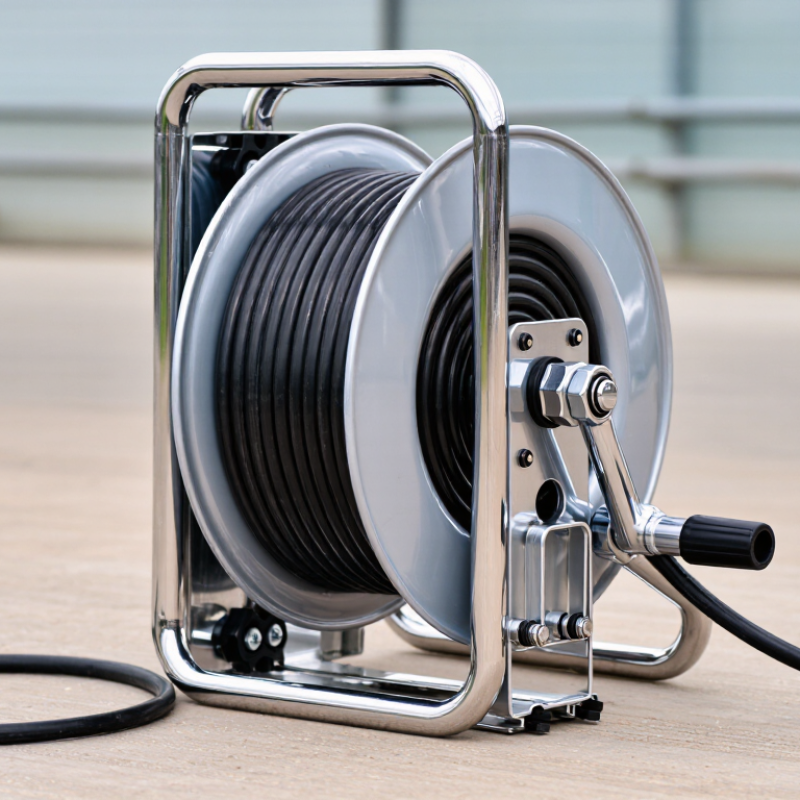
Identify the Intended Use and Operating Conditions
Before comparing stainless steel hose reels, define the job the reel must do. A washdown station, food-processing area, and outdoor service bay can demand very different setups. Note the hose’s required length, inside diameter, and working pressure. Then check the fluid and its temperature. Stainless steel resists many forms of corrosion, but the grade, fittings, and hose material still need to suit the fluid. Stainless steel alone is not a compatibility guarantee.
Look closely at daily operating conditions. Will the reel face salt spray, cleaning chemicals, steam, dust, or repeated impacts? Check the temperature range and pressure against the hose and reel specifications, not just one component’s rating. Consider mounting space, hose pull direction, and whether the reel needs a swivel or controlled retraction. A heavy hose may feel manageable in a showroom but awkward when pulled across a wet floor. That matters. Measure the installation area, including clearance for the handle and hose path. One detail is easy to miss: how often staff will use and clean the reel. Frequent use may call for sturdier components and simpler maintenance. I would double-check the actual work pattern before choosing; estimates can be wrong. A short site observation can reveal more than a broad product description.
Choose the Reel Type, Hose Length, and Capacity
Choosing a stainless steel hose reel starts with how you will use it, not its finish. A wall-mounted reel suits a fixed wash area, while a portable frame helps when watering beds or moving between work zones. If the reel stays outdoors, check the frame, swivel, and fasteners for corrosion resistance. Stainless steel on the drum alone does not make every component stainless. Small detail, big difference.
Match hose length to the farthest point you need to reach, then allow extra slack for turns and repositioning. Too little hose pulls on the fitting. Too much crowds the drum and can kink near the outlet. Measure the route, including corners and height changes. That extra allowance is easy to overlook.
Capacity depends on hose diameter as well as length. A reel rated for a thin garden hose may hold less of a wider, heavier hose. Check the capacity chart and leave room for orderly winding; packed coils are harder to unwind and can trap grit. Compare inlet size, working pressure, and mounting load with your water system and wall. If any specifications are unclear, verify them before buying. The reel that fits your actual hose is often more useful than the largest one.
Compare Stainless Steel Grades and Corrosion Resistance
Choosing a stainless steel hose reel starts with its environment, not its shine. Grade 304 suits many indoor and mild outdoor settings, but chloride exposure can trigger pitting. Grade 316 contains molybdenum, which generally improves resistance to chloride-related pitting and crevice corrosion. That matters near seawater, coastal air, or salty washdown areas. It is not corrosion-proof.
The NACE IMPACT study estimated corrosion costs at US$2.5 trillion globally, or 3.4% of world GDP, using 2013 data. That figure covers many industries; it is not a hose-reel comparison. Still, it shows why material selection and maintenance deserve attention. ASTM G48 provides laboratory methods for evaluating pitting and crevice corrosion in stainless steels. A test result is useful, but real performance also depends on surface finish, weld quality, deposits, and cleaning.
Check the grade of every wetted component, not just the drum. Ask for material documentation and confirm whether fittings, fasteners, and welds match the intended exposure. Rinsing away salt and letting the reel dry can reduce deposits. Small details matter. I would not choose from a grade chart alone; actual water chemistry and cleaning habits can change the decision.
Check Mounting Options, Fittings, and Safety Features
Mounting choice affects how steadily a stainless steel hose reel pays out. A wall-mounted unit suits a wash bay when studs or masonry can support the load. For a cart or shared work area, a freestanding base offers mobility but needs a wide, level footprint. Check the reel’s full swing and hose path before drilling; a handle that clears today may hit a shelf later. Small details matter. Use corrosion-resistant fasteners suited to the mounting surface, and follow the reel’s stated load limits.
Fittings should match the hose diameter, working pressure, and connection type. Compare thread standards carefully; similar-looking threads may not seal properly. An inlet swivel helps reduce twisting, while a compatible quick-connect can speed up tool changes. Inspect seals and couplers for cuts, flattened edges, or looseness before use. Never solve a mismatch by overtightening. That can damage threads and still leave a leak. Verify an adapter’s fit rather than guessing.
Look for a positive hose lock, controlled rewind, and a guide that prevents rubbing against sharp corners. A hose that snaps back can strike hands or nearby equipment. Keep fingers clear during retraction, and release the lock gradually. Anchor the reel securely, route the hose away from walkways, and inspect it after the first few uses. Installation is rarely perfect on the first try; reassess if the hose drags or the reel shifts under tension.
How to Choose the Best Stainless Steel Hose Reel? - Check Mounting Options, Fittings, and Safety Features
| Selection factor | Options or details to check | How to choose | Practical safety note |
|---|---|---|---|
| Mounting position | Wall, floor, ceiling, vehicle, or a swivel-mounted bracket | Match the reel to the available space and the direction the hose needs to travel. Check that the mounting surface and fasteners can support the loaded reel and operating forces. | Install according to the reel instructions. Keep the hose path clear of walkways, sharp edges, and moving equipment. |
| Hose length and inside diameter | Required reach, hose inside diameter, and compatible hose type | Select enough length to reach the work area without stretching. Confirm the reel accommodates the hose diameter and length; a longer or smaller-diameter hose can increase flow restriction. | Do not exceed the reel’s stated hose capacity or bend the hose below its minimum bend radius. |
| Pressure and temperature | Maximum working pressure and temperature ratings for the reel, hose, fittings, and swivels | Check the ratings of every component in the assembly and ensure they suit the system’s operating conditions. Use the lowest-rated component as the limiting rating. | Never use a working-pressure rating as a substitute for a proof or burst rating. Depressurize the line before servicing. |
| Inlet and outlet fittings | Thread standard, size, gender, sealing method, and fluid compatibility | Match the connection to the supply line and hose. Verify whether threads are, for example, NPT or BSP; similar-looking thread types are not automatically interchangeable. | Use the specified seal or gasket and avoid forcing mismatched threads, which can damage connections and cause leaks. |
| Stainless steel grade and wetted parts | Grade of exposed steel, plus the materials of the swivel, shaft, seals, and fittings | Confirm material compatibility with the environment and conveyed fluid. Type 316 stainless steel generally offers better resistance to chloride-related corrosion than Type 304, but suitability depends on conditions. | A stainless steel frame does not mean every fluid-contact component is stainless steel. Check all wetted materials for compatibility. |
| Rewind and locking mechanism | Manual crank, spring rewind, motorized rewind, ratchet lock, or controlled rewind feature | Choose a mechanism suited to how often the hose is used and the level of operator control required. Confirm that any lock engages and releases as intended. | Keep hands clear of moving parts. Do not allow a spring-rewind hose to retract freely if the instructions require controlled retraction. |
| Hose stop and guides | Adjustable hose stop, roller guide, and hose outlet alignment | Check that the stop can be positioned for the required reach and that the guide supports smooth payout and retraction from the intended direction. | A hose stop helps prevent the end fitting from being pulled into the reel; it does not replace safe handling or inspection. |
| Maintenance and inspection | Access to fittings, swivel, hose, spring mechanism, and mounting hardware | Choose a design that allows routine inspection and follow the manufacturer’s maintenance schedule and applicable workplace procedures. | Remove damaged hoses or leaking fittings from service. Isolate and depressurize the system before repairs or replacement. |
Evaluate Maintenance Needs, Warranty, and Overall Value
A stainless steel hose reel earns its value through dependable daily use, not a polished finish. Check the swivel joint, spring tension, mounting bolts, and hose guide every few months. Look for salt residue, pitting, or a slow drip beneath the connection. Rinse away corrosive deposits and dry the reel, especially near coastal air or chemical wash areas. Small details matter. The U.S. Department of Energy’s Operations & Maintenance Best Practices guide reports that effective maintenance can reduce facility energy use by 5–20%. That figure is not specific to hose reels, but it supports a practical point: routine care can prevent avoidable operating costs.
Compare warranty length with what it actually covers. Ask whether the reel body, spring, swivel, and hose are covered separately, and whether corrosion or wear is excluded. Keep the written terms. A long warranty means little if common failures are excluded or replacement parts are difficult to obtain. For overall value, weigh purchase price against expected service life, repair access, and the cost of downtime. A reel with replaceable seals may be more economical than a cheaper unit requiring full replacement. Yet estimates can be imperfect; usage, water quality, and installation all change wear rates. Check those conditions before deciding.
How to Choose the Best Stainless Steel Hose Reel? — Evaluate Maintenance Needs, Warranty, and Overall Value
Suggested evaluation weights for comparing hose reels. These are a practical decision framework, not market-survey results.
Give maintenance and warranty substantial weight: check cleaning and inspection requirements, warranty duration and exclusions, and the availability of replacement parts. Assess overall value using the purchase price plus expected upkeep, and choose corrosion resistance appropriate to the reel’s environment.
Related Posts
-
5 Best Strategies for Choosing the Right Hose Reel for Your Needs
-
7 Essential Tips to Maximize Efficiency with Electric Hose Reels: Boost Your Productivity by 30%
-
What to Know About High Pressure Hose Reel Options in 2026?
-
Top Electric Hose Reel Options for Easy Gardening Efficiency?
-
China Top Stainless Steel Hose Reel Manufacturers?
-
Top Electric Hose Reel Suppliers for Global Buyers