7 Tips for Choosing the Best Electric Hose Reel?

Choosing the best electric hose reel is less about shiny features and more about daily reliability. A reel may promise effortless watering, yet its motor can struggle with a long, heavy hose. Wall space, outlet distance, water pressure, and storage conditions also influence performance. Even a powerful model may disappoint if its mounting bracket flexes during retraction.

Electric hose reel specialist Daniel Mercer offers a practical reminder: “A good reel should remove frustration, not add another maintenance task.” That principle guides the seven tips in this article. We will examine hose length, motor strength, swivel range, automatic rewind, safety controls, weather resistance, and after-sales support. Small details matter. A smooth guide arm can prevent messy loops. An emergency stop can protect children, pets, and equipment nearby. A sealed housing can help during light rain, but it does not make every reel waterproof.

Real use can expose weaknesses that product pages hide. A reel might retract beautifully on day one, then slow after dust enters the housing. Some models sound quiet indoors but become sharp and irritating beside a patio wall. I also think buyers sometimes overestimate maximum hose length. Less capacity may provide better tension and longer service life. There is no perfect choice. The right electric hose reel should match your garden, climate, storage habits, and willingness to maintain it. That final judgment deserves careful thought.
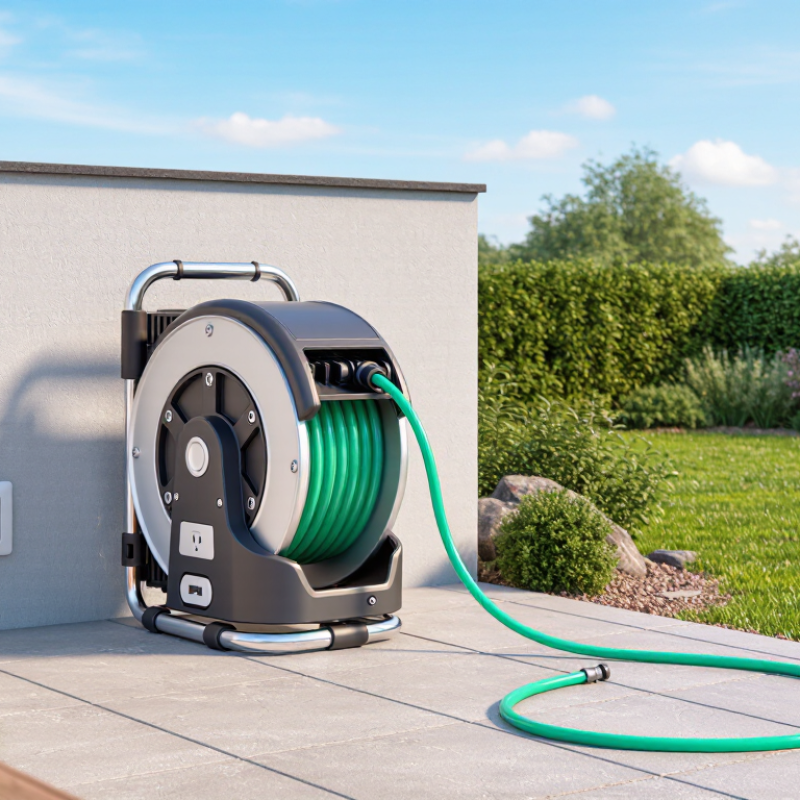
7 Tips for Choosing the Best Electric Hose Reel?

Define Electric Hose Reel Types, Voltage Ratings, and Motor Power

Electric hose reels commonly come in manual-assist, spring-driven, and fully electric designs. This comparison focuses on powered models. Choose a fixed reel for a workshop bay or service vehicle, and a portable unit when hose locations change. Enclosed housings help shield the drum from dust and splashes; open frames are easier to inspect. Check the hose’s length, diameter, and working pressure before choosing a reel. A long, heavy hose needs more pulling force.

Match the reel’s voltage rating to the available supply, such as a vehicle battery or a facility outlet. Do not assume that a higher voltage automatically means better performance. Confirm the wiring, connector, and power source are compatible, and check the manufacturer’s specifications. A mismatch can cause unreliable operation or damage. Keep some margin for voltage drop on long cables.

Motor power matters, but it is only part of the picture. Look for torque, duty cycle, and the load the motor can handle while winding a full hose. A reel used occasionally may not need the same motor as one cycling throughout a workday. It is easy to overbuy here. Yet an undersized motor may stall when the hose is wet, kinked, or dragging across concrete. Specifications can look tidy on paper; real hose routing is often less tidy. Before purchase, compare the motor rating with the hose and mounting setup, then verify the details with the supplier.

7 Tips for Choosing the Best Electric Hose Reel

Compare the nominal voltage options shown below with the power supply available at your installation site.

12 V and 24 V are common low-voltage DC system ratings; 120 V and 230 V are common AC supply ratings in different regions. These are representative electrical system voltages, not guaranteed specifications for every hose reel. Check the reel’s nameplate, motor power, duty cycle, and local electrical requirements before choosing.

Compare Hose Length, Diameter, Material, and Pressure Ratings

When comparing electric hose reels, start with the hose you actually use. A 50-foot hose may reach a driveway, but a longer hose adds weight and can strain the rewind motor. Measure the farthest tap-to-work distance, then allow a little slack for turns. Do not buy extra length just because it sounds useful. It can make storage harder.

Diameter affects flow and handling. A 5/8-inch hose generally carries more water than a 1/2-inch hose, but the reel must support that diameter and its added weight. Check the hose material, too. Rubber often stays flexible in cooler weather, while lighter materials can be easier to lift. ISO 1307 specifies dimensions and tolerances for rubber and plastics hoses; use it as a reference, not a substitute for the reel maker’s compatibility details. Feel matters. A stiff hose can kink at the reel entrance.

Pressure ratings need careful comparison. Read the hose’s maximum working pressure, not just its burst pressure, and make sure it suits your water supply and intended nozzle. ISO 1402 describes hydrostatic pressure testing for rubber and plastics hoses, offering a recognized basis for rating information. Keep a margin rather than matching the rating exactly. I have seen people overlook pressure loss from long runs and narrow fittings; it is an easy detail to miss. A reel’s motor rating does not prove that its hose can safely handle the same pressure.

Check Flow Rate, Duty Cycle, and Rewind Speed for Your Workload

An electric hose reel should match the real flow demand, not just the hose diameter. Check the pump’s required flow in gallons per minute and the pressure at the nozzle; a reel that restricts either can leave a washer or irrigation line underfed. The U.S. Department of Energy’s Improving Pumping System Performance sourcebook notes that pumping systems can account for 25–50% of energy use in some industrial facilities. That makes efficient matching worthwhile, though the figure is not a prediction for every workplace. Ask for pressure-drop data at your expected flow, not just a maximum rating.

Duty cycle matters just as much. A reel used for a few short pulls each hour faces a different load from one rewound repeatedly across a full shift. Compare the motor’s permitted operating time and cooling interval with your actual schedule. Then check rewind speed under load, since a fast no-load figure may not reflect a wet, heavy hose. Keep hands clear. For a simple field check, time several full rewinds with the hose attached and note whether speed changes or the motor warms noticeably. It is an imperfect test, but useful. Specs and test conditions should still guide the purchase.

Evaluate Safety Features, IP Ratings, Braking Systems, and Thermal Protection

Safety features deserve a close look before an electric hose reel goes into daily use. Check for a guarded switch, a clear emergency stop, and controls that remain reachable when the reel is mounted. The hose should wind evenly without forcing fingers near moving parts. Small details matter.

An IP rating indicates resistance to dust and water, but it does not mean a reel can be submerged or left in every storm. Match the rating to the actual setting: a damp workshop, a dusty garage, or an exposed outdoor wall. Also inspect the cable entry and housing seals, since wear can reduce protection over time. A label alone is not enough.

Braking systems help control rewind speed and reduce sudden stops. Test whether the reel slows smoothly, especially with a long or heavy hose attached. Thermal protection is equally important. It should interrupt operation if the motor overheats, then allow a safe restart after cooling. Leave ventilation space around the housing, and avoid repeated cycling when the reel feels hot. I would not assume a safety feature works just because it is listed; check the manual and inspect it periodically. That takes a few minutes.

7 Tips for Choosing the Best Electric Hose Reel: Evaluate Safety Features, IP Ratings, Braking Systems, and Thermal Protection

Tip What to Evaluate Why It Matters Practical Check
1. Confirm the intended application Hose type, length, diameter, fluid or air service, operating pressure, and temperature range. Reels and hoses have specified operating limits. Exceeding them can lead to premature wear or unsafe operation. Compare the reel and hose documentation with the application requirements; do not rely on hose length alone.
2. Check electrical safety Supply voltage and frequency, grounding requirements, overload protection, cable condition, and applicable electrical approvals. Correct electrical ratings and protective measures help reduce shock, overheating, and equipment damage risks. Verify the rating plate and installation instructions match the site supply. Use a qualified electrician where required.
3. Interpret the IP rating correctly The enclosure’s IP code and the exact conditions it covers, such as dust exposure or water spray. IP ratings describe protection against defined ingress tests; they do not automatically mean the reel is suitable for every outdoor or washdown environment. Select a rating suited to the actual exposure and check whether covers, connectors, and installation orientation affect protection.
4. Assess the braking and rewind system Rewind speed control, stopping behavior, brake or clutch design, and any hose guide or locking mechanism. Controlled rewind can help limit hose whip, sudden movement, and damage caused by uncontrolled retraction. Review the operating instructions and inspect the mechanism for smooth, predictable stopping; never test it while standing in the hose path.
5. Look for thermal protection Motor duty rating, over-temperature protection, ventilation needs, and stated limits on operating cycles. Frequent or prolonged use can generate heat. Protection and suitable duty ratings help prevent overheating-related failures. Check the manual for duty-cycle limits and required cooling time; keep vents clear and stop use if abnormal heat or odor occurs.
6. Verify mounting and hose routing Mounting surface and fasteners, reel orientation, clearance, hose bend radius, and access for maintenance. A secure installation and suitable hose routing help prevent excessive strain, kinking, snagging, and accidental contact. Follow the manufacturer’s mounting instructions and confirm the structure can support the loaded reel and expected operating forces.
7. Consider maintenance and support Inspection points, replaceable wear parts, service access, documentation, and availability of technical support. Routine inspection can identify damaged hoses, worn mechanisms, loose fasteners, or electrical issues before they become more serious. Choose a design with clear maintenance instructions and establish periodic checks based on the operating environment and usage.

Always follow the reel and hose manufacturers’ instructions, applicable electrical codes, and site safety procedures.

Assess Installation, Warranty, Maintenance Costs, and Expected Service Life

Before choosing an electric hose reel, check installation conditions, not just the advertised cable length. Measure the mounting surface, power supply, hose path, and clearance around the drum. A reel mounted beside a tight corner may kink the hose or block access to its motor. Ask whether the unit needs a dedicated circuit or extra protection from dust and moisture. Small details matter.

Compare warranty terms with the expected workload. Read what the warranty covers, including the motor, wiring, and rewind mechanism, and note any exclusions for frequent cycling.

The U.S. Department of Energy’s Operations & Maintenance Best Practices Guide reports that effective maintenance programs can reduce energy use by 5–20% compared with less effective practices. That figure is not specific to hose reels, but it shows why routine care deserves a place in lifetime-cost estimates.

Check whether replacement parts are available and priced clearly. A cheap reel can become expensive if a spring or control switch is difficult to replace.

Estimate service life using the maker’s rated cycles, operating environment, and your own use pattern. A reel in a dusty workshop may need more frequent cleaning than one used occasionally in a clean garage. Ask for a written maintenance schedule. Then compare installation, inspections, repairs, and likely downtime over several years. Be realistic. Your actual usage may differ.